

Ready & Packaged Foods
All →Vegetables & Legumes
All →Desserts & Confectionery
All →Meat & Protein
All →Grains & Bakery
All →Beverages
All →Milk & Dairy
All →

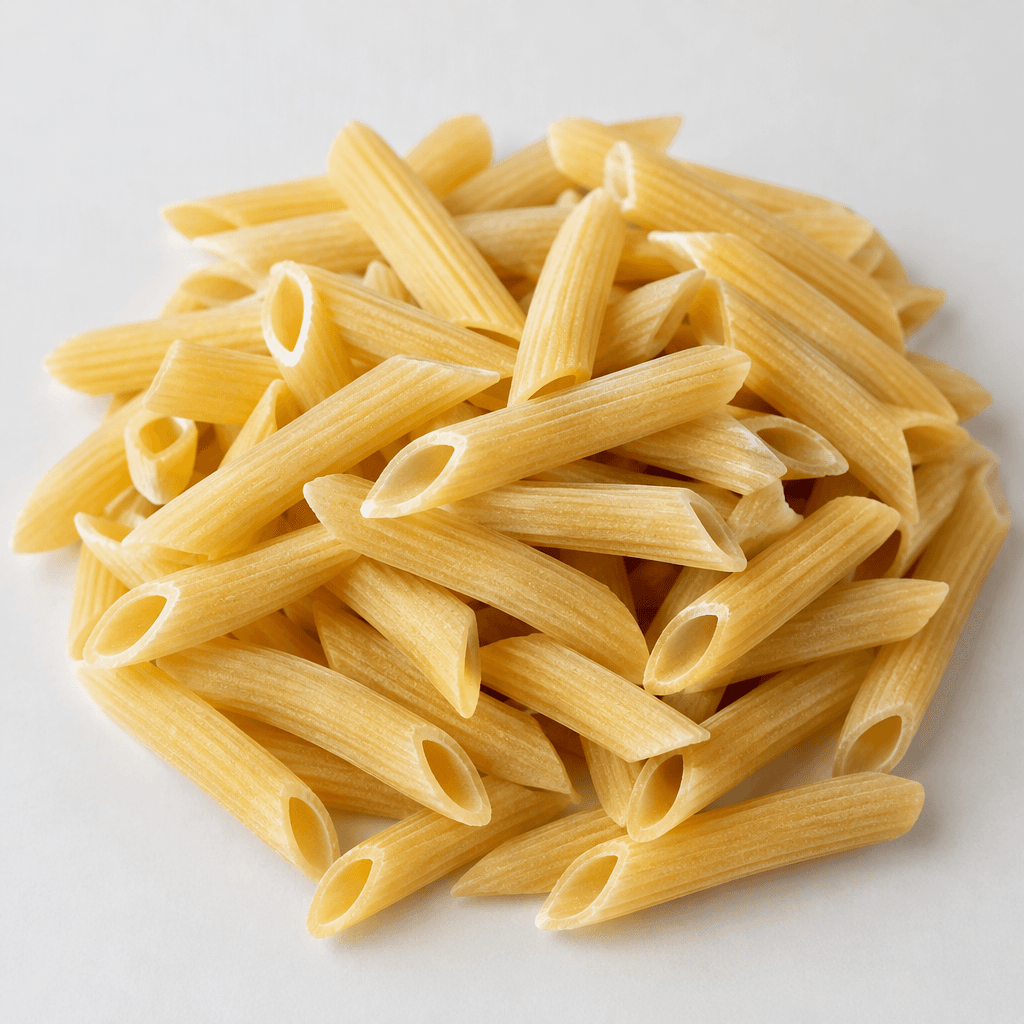
Pasta (Raw) Calories
Energy source, complex carbohydrate, low fat
In season: Spring · Summer · Autumn · Winter
CALORIES
GI
POTASSIUM
FIBER
Quick answer
1 cup (medium) of Pasta (Raw) (90 g) has 320 calories. That works out to 355 calories per 100 g. It contains 64.8 g of carbs, 11.3 g of protein, 1.4 g of fat and 2.9 g of fiber. Its 34.2 µg of Selenium covers 62% of the Daily Value. Its glycemic index is 45 (medium), so it raises blood sugar at a moderate pace.
What is Pasta (Raw)?
Pasta (raw) is dried, uncooked pasta, commonly made from durum wheat semolina and water. It is strongly associated with Italian cooking, though it is now a pantry staple around the world. Its shapes range from strands to tubes and shells; boiling softens the firm pieces and gives them a tender, slightly chewy texture.
In Italy and elsewhere, it is typically cooked in salted water and served with a sauce, or added to soups and baked dishes. Its mild flavour takes well to tomato, vegetables, herbs and cheese. Nutritionally, it is mainly a source of complex carbohydrates and is low in fat. Pair it with vegetables and beans, fish or meat for a more filling, balanced meal.
Pasta (Raw) Nutrition Facts
Selected: 100 g
355
KCAL / 100G
Carbs
72g
· 26% DV
Protein
12.5g
· 25% DV
Fat
1.5g
· 2% DV
Fiber
3.2g
· 11% DV
DV is the share of the daily value covered, on a 2,000 kcal reference diet.
Calories come from: Carbs 82% · Protein 14% · Fat 4%
Pasta (Raw) Vitamins & Minerals
Vitamins
B1
0.15mg · 13% DV
B3
1.3mg · 8% DV
B5
0.4mg · 8% DV
B6
0.08mg · 5% DV
Minerals
Selenium
38µg · 69% DV
Manganese
1mg · 43% DV
Phosphorus
120mg · 17% DV
Magnesium
36mg · 9% DV
How Nutritious Is Pasta (Raw)?
Nutrient density
Low
How many vitamins, minerals and how much fiber this food carries per calorie. A high score means a lot of nutrition for few calories.
Satiety score
Medium
An EatBetter score computed from fiber, protein and calorie density. A high score means staying full longer on the same calories.
Both scores are calculated per 100 g and do not change with the selected portion. The satiety score is EatBetter's own calculation, not a clinical measure.
Pasta (Raw) Glycemic Index
GLYCEMIC INDEX
GLYCEMIC LOAD
Accounts for portion size — a more realistic measure than GI alone.
How to Burn Off Pasta (Raw)
To burn the 355 calories in 100 g:
🚶
Walking (5 km/h)
🏃
Running (8 km/h)
🚴
Cycling
🏊
Swimming
Times are calculated with the MET equation for a 70 kg adult. Actual burn varies with your weight, age and pace.
Is Pasta (Raw) Processed?
NOVA 3
Processed
1. Unprocessed
2. Minimally Processed
3. Processed
4. Ultra-Processed
NOVA classifies foods into 4 groups by industrial processing. NOVA 1 (unprocessed) is the healthiest.
Does Pasta (Raw) Contain Allergens?
Contains these allergens:
Which Diets Is Pasta (Raw) Good For?
Vegan
✓ Suitable
Vegetarian
✓ Suitable
Gluten-Free
— Not suitable
Dairy-Free
— Not suitable
Mediterranean
✓ Suitable
Paleo
— Not suitable
Whole30
— Not suitable
DASH
— Not suitable
Keto
— Not suitable
Low FODMAP
— Not suitable
Pasta (Raw) Fat Profile
SATURATED
0.3g
MONOUNSATURATED
0.2g
POLYUNSATURATED
0.7g
Omega 6:3 ratio 11.7:1
Above the ideal 4:1 (11.7:1).
Compare Pasta (Raw)
Foods Similar to Pasta (Raw)
Frequently Asked Questions About Pasta (Raw)
How do you cook dry pasta?
Add dry pasta to a pot of rapidly boiling water and stir it, especially during the first minute. Cook until it reaches the texture you like, then drain. If you are finishing it in a pan of sauce, take it out slightly firm.
How long should dry pasta boil?
Dry pasta usually takes the cooking time printed on its package, which varies by shape and thickness. Start tasting it near the end of that time rather than relying on the clock alone; pasta cooks further if tossed in hot sauce.
Should you rinse dry pasta after cooking?
Usually, no. Rinsing cooked pasta washes away surface starch that helps sauce cling to it. Rinsing can make sense for a cold pasta salad, where you want to stop the cooking and cool the pasta before mixing it with other ingredients.
How much dry pasta should you cook per person?
About one medium cup of dry pasta is a practical starting portion for one person. Pasta expands as it cooks, so adjust the amount for appetite and whatever else you are serving. Measuring before cooking also helps avoid making too much.
Why does dry pasta stick together when boiling?
Dry pasta tends to stick when there is too little water or when the pieces are left undisturbed as they begin cooking. Use a roomy pot, add pasta only after the water boils, and stir well during the first minute.
Should you add oil to water when boiling dry pasta?
No, oil is not needed in the pasta water. It floats on top and can leave a coating that makes sauce cling less effectively. To prevent sticking, use plenty of boiling water and stir the pasta soon after adding it.
How much salt should you put in water for dry pasta?
Salt the boiling water so the pasta itself tastes seasoned, rather than relying on the sauce alone. Use less if your sauce or other ingredients are already salty. You can also save a little pasta water to adjust the sauce later.
How do you store an opened package of dry pasta?
Keep opened dry pasta in an airtight container in a cool, dry cupboard away from sunlight and moisture. A tightly closed package or container also helps keep out pantry pests. Follow the package date and storage instructions.
Can you eat dry pasta without cooking it?
It is not a good idea to eat dry pasta uncooked. Its hard texture can be difficult to chew and may cause digestive discomfort, while cooking makes it tender and pleasant to eat. Cook it according to the package directions.
Can you freeze dry pasta?
Freezing dry pasta is unnecessary and can expose it to moisture when it is taken in and out of the freezer. Store unopened or opened pasta in a cool, dry cupboard instead. Cooked pasta, on the other hand, can be frozen.
Have another question about Pasta (Raw)?
Ask the AI nutrition coach — calories, portions, alternatives and more, answered in seconds in the app.

Scan calories with your camera
Instant AI nutrition analysis

Nutrition data compiled from USDA FoodData Central and scientific sources.