

Ready & Packaged Foods
All →Vegetables & Legumes
All →Desserts & Confectionery
All →Meat & Protein
All →Grains & Bakery
All →Beverages
All →Milk & Dairy
All →

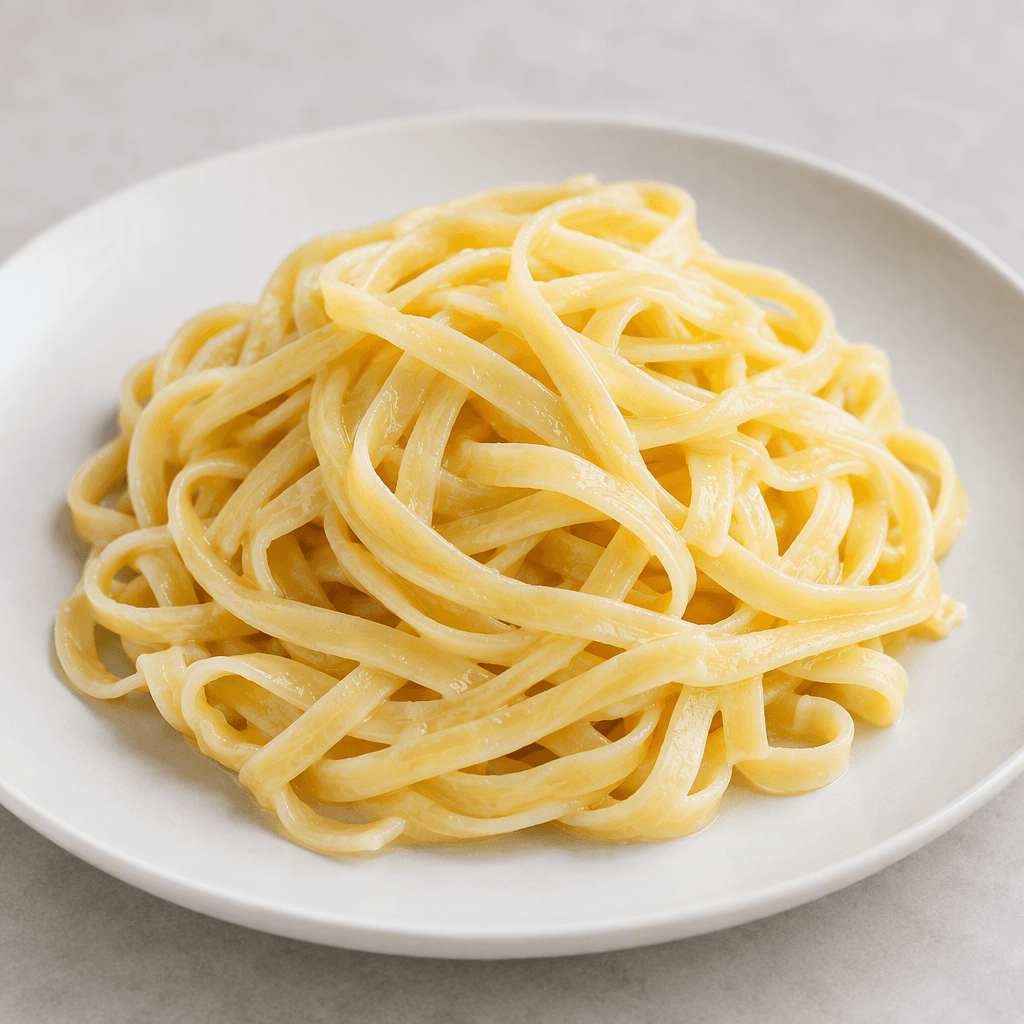
Pasta (Low Oil) Calories
Low oil, carbohydrate source, low fat
In season: Spring · Summer · Autumn · Winter
CALORIES
GI
POTASSIUM
FIBER
Quick answer
1 cup (medium) of Pasta (Low Oil) (150 g) has 218 calories. That works out to 145 calories per 100 g. It contains 42.8 g of carbs, 7.8 g of protein, 1.8 g of fat and 2.4 g of fiber. Its 22.5 µg of Selenium covers 41% of the Daily Value. Its glycemic index is 45 (medium), so it raises blood sugar at a moderate pace.
What is Pasta (Low Oil)?
Pasta (low oil) is cooked pasta tossed with little oil, rather than a rich sauce. Pasta is closely associated with Italian cooking, though versions made from wheat are enjoyed around the world. Its mild flavour and soft, slightly springy texture make it an easy base for many meals.
In Italy it may be served simply with a light sauce or as part of a larger meal; elsewhere, it works as a quick lunch or a side alongside vegetables, meat or beans. It is mainly a source of carbohydrates and is low in fat: per 100 g, it has 28.5 g of carbohydrates and 1.2 g of fat. Add vegetables and a protein-rich topping for a more balanced plate, keeping added oil modest.
Pasta (Low Oil) Nutrition Facts
Selected: 100 g
145
KCAL / 100G
Carbs
28.5g
· 10% DV
Protein
5.2g
· 10% DV
Fat
1.2g
· 2% DV
Fiber
1.6g
· 6% DV
DV is the share of the daily value covered, on a 2,000 kcal reference diet.
Calories come from: Carbs 78% · Protein 14% · Fat 8%
Pasta (Low Oil) Vitamins & Minerals
Vitamins
B1
0.12mg · 10% DV
B3
1.1mg · 7% DV
B5
0.25mg · 5% DV
Biotin
1.2µg · 4% DV
Minerals
Selenium
15µg · 27% DV
Zinc
1mg · 9% DV
Phosphorus
52mg · 7% DV
Iron
1mg · 6% DV
How Nutritious Is Pasta (Low Oil)?
Nutrient density
Low
How many vitamins, minerals and how much fiber this food carries per calorie. A high score means a lot of nutrition for few calories.
Satiety score
Medium
An EatBetter score computed from fiber, protein and calorie density. A high score means staying full longer on the same calories.
Both scores are calculated per 100 g and do not change with the selected portion. The satiety score is EatBetter's own calculation, not a clinical measure.
Pasta (Low Oil) Glycemic Index
GLYCEMIC INDEX
GLYCEMIC LOAD
Accounts for portion size — a more realistic measure than GI alone.
How to Burn Off Pasta (Low Oil)
To burn the 145 calories in 100 g:
🚶
Walking (5 km/h)
🏃
Running (8 km/h)
🚴
Cycling
🏊
Swimming
Times are calculated with the MET equation for a 70 kg adult. Actual burn varies with your weight, age and pace.
Is Pasta (Low Oil) Processed?
NOVA 3
Processed
1. Unprocessed
2. Minimally Processed
3. Processed
4. Ultra-Processed
NOVA classifies foods into 4 groups by industrial processing. NOVA 1 (unprocessed) is the healthiest.
Does Pasta (Low Oil) Contain Allergens?
Contains these allergens:
Which Diets Is Pasta (Low Oil) Good For?
Vegan
— Not suitable
Vegetarian
✓ Suitable
Gluten-Free
— Not suitable
Dairy-Free
— Not suitable
Mediterranean
— Not suitable
Paleo
— Not suitable
Whole30
— Not suitable
DASH
— Not suitable
Keto
— Not suitable
Low FODMAP
— Not suitable
Pasta (Low Oil) Fat Profile
SATURATED
0.2g
MONOUNSATURATED
0.1g
POLYUNSATURATED
0.2g
Omega 6:3 ratio 15:1
Above the ideal 4:1 (15:1).
Compare Pasta (Low Oil)
Foods Similar to Pasta (Low Oil)
Frequently Asked Questions About Pasta (Low Oil)
Should you rinse low-oil pasta after cooking?
Usually, no. Rinsing low-oil pasta washes away surface starch that helps sauce cling to it. Rinse it only if you are making a cold pasta salad or need to stop the cooking quickly; drain it and mix with the dressing or sauce.
Does adding oil to the water stop low-oil pasta from sticking?
No, oil floating on the water does not reliably stop low-oil pasta from sticking. Use plenty of water and stir the pasta soon after adding it. If you want to keep it from sticking after draining, toss it promptly with sauce.
How do you cook low-oil pasta al dente?
Start tasting low-oil pasta at the earliest cooking time listed on its package. It is al dente when tender on the outside but still slightly firm in the centre. Drain it then, especially if it will finish cooking in hot sauce.
Why save the cooking water from low-oil pasta?
Low-oil pasta cooking water contains starch that helps sauce cling and gives it a smoother consistency. Before draining, reserve a little, then stir it into the sauce a splash at a time until the pasta is evenly coated.
How long does cooked low-oil pasta last in the fridge?
Cooked low-oil pasta generally keeps for three to four days in a covered container in the refrigerator. Refrigerate it promptly after cooking rather than leaving it out for hours, and discard it if it develops an unusual smell, texture, or mould.
Can you freeze cooked low-oil pasta?
Yes, cooked low-oil pasta can be frozen, though it may be softer after thawing. Cool it, divide it into portions, and seal it in freezer-safe containers. Thaw it in the refrigerator and reheat it thoroughly before serving.
How do you reheat low-oil pasta without drying it out?
Reheat low-oil pasta in a covered pan with a small splash of water, stirring until hot. You can also use a covered microwave-safe dish and stir partway through. The added moisture helps restore the pasta’s texture without needing much oil.
What sauce goes well with low-oil pasta?
Tomato, vegetable, and herb-based sauces pair well with low-oil pasta. For a creamy texture without relying on much oil, mix in a little reserved pasta water. Add the sauce while the pasta is hot so it coats the strands evenly.
Should you salt the water for low-oil pasta?
Yes, salting the water seasons low-oil pasta from the inside as it cooks. Add salt to the boiling water before the pasta, then taste the finished dish before adding more, particularly if the sauce or toppings are already salty.
Is low-oil pasta good for weight loss?
Low-oil pasta can fit into a weight-loss eating plan, but removing oil does not make its portion unlimited. Pairing a moderate serving with vegetables and a protein-rich food can make the meal more filling than serving pasta on its own.
Have another question about Pasta (Low Oil)?
Ask the AI nutrition coach — calories, portions, alternatives and more, answered in seconds in the app.

Scan calories with your camera
Instant AI nutrition analysis

Nutrition data compiled from USDA FoodData Central and scientific sources.