

Ready & Packaged Foods
All →Vegetables & Legumes
All →Desserts & Confectionery
All →Meat & Protein
All →Grains & Bakery
All →Beverages
All →Milk & Dairy
All →

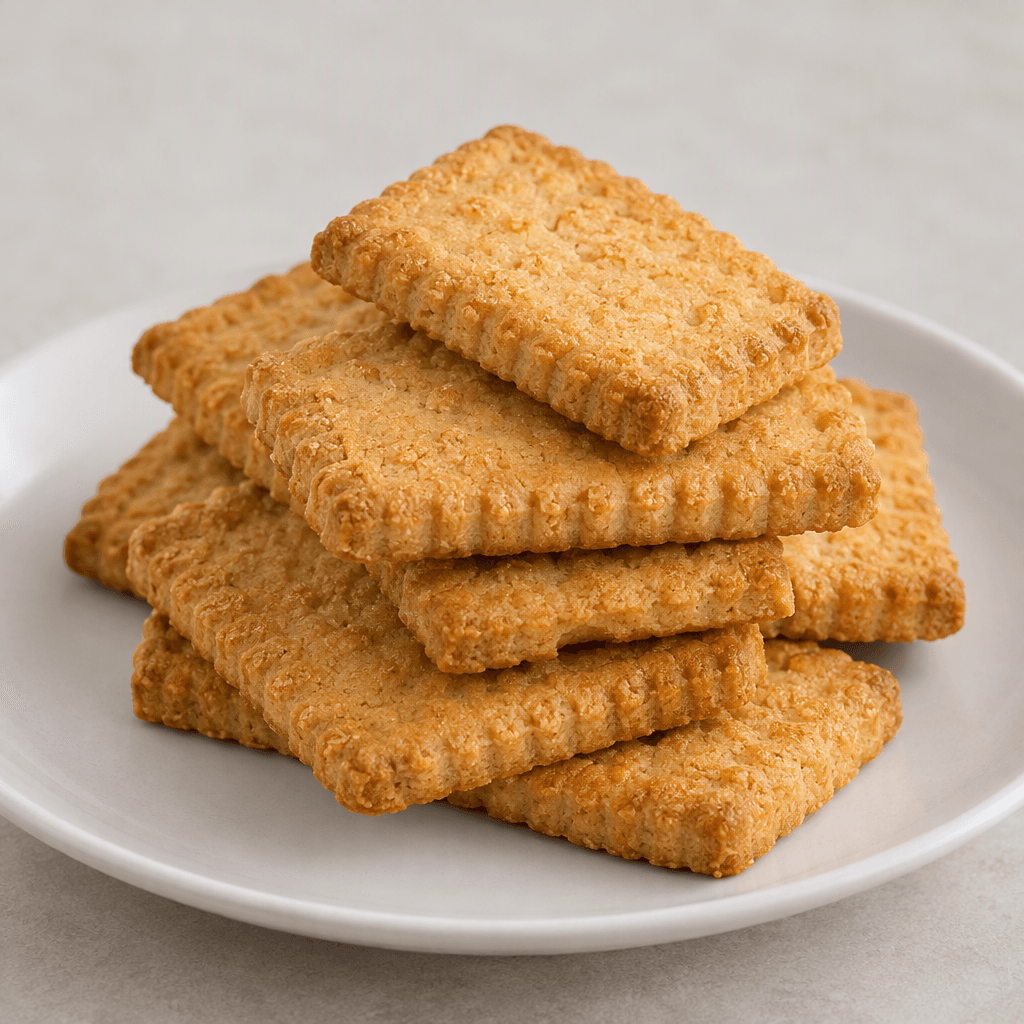
Packaged biscuit Calories
Packaged sweet biscuit
CALORIES
GI
POTASSIUM
FIBER
Quick answer
4 piece (medium) of Packaged biscuit (32 g) has 47 calories. That works out to 146 calories per 100 g. It contains 6.8 g of carbs, 0.3 g of protein, 2 g of fat and 0 g of fiber. Its 0.1 mg of B1 covers 7% of the Daily Value. Its glycemic index is 68 (medium), so it raises blood sugar at a moderate pace.
What is Packaged biscuit?
A packaged biscuit is a sweet baked snack sold ready to eat, commonly made with flour, sugar and fat. Recipes vary by brand and style, with some versions flavoured or made with additional ingredients; it is a product category rather than a dish from one particular place.
These biscuits are usually crisp, lightly sweet and easy to keep on hand. In the UK and other places where “biscuit” is the usual term, they’re often served with tea; elsewhere, they work as a quick snack alongside coffee, milk or fruit. Their nutrition is mainly carbohydrate, with no fibre listed and little protein. For a more filling snack, pair a few with yoghurt or fresh fruit.
Packaged biscuit Nutrition Facts
Selected: 100 g
146
KCAL / 100G
Carbs
21.3g
· 8% DV
Protein
0.8g
· 2% DV
Fat
6.3g
· 8% DV
Fiber
0g
· 0% DV
DV is the share of the daily value covered, on a 2,000 kcal reference diet.
Calories come from: Carbs 59% · Protein 2% · Fat 39%
Packaged biscuit Vitamins & Minerals
Vitamins
B1
0.25mg · 21% DV
B2
0.2mg · 15% DV
B3
2.4mg · 15% DV
Biotin
3µg · 10% DV
Minerals
Sodium
420mg · 18% DV
Selenium
8µg · 15% DV
Phosphorus
85mg · 12% DV
Iron
2mg · 11% DV
How Nutritious Is Packaged biscuit?
Nutrient density
Low
How many vitamins, minerals and how much fiber this food carries per calorie. A high score means a lot of nutrition for few calories.
Satiety score
Low
An EatBetter score computed from fiber, protein and calorie density. A high score means staying full longer on the same calories.
Both scores are calculated per 100 g and do not change with the selected portion. The satiety score is EatBetter's own calculation, not a clinical measure.
Packaged biscuit Glycemic Index
GLYCEMIC INDEX
GLYCEMIC LOAD
Accounts for portion size — a more realistic measure than GI alone.
How to Burn Off Packaged biscuit
To burn the 146 calories in 100 g:
🚶
Walking (5 km/h)
🏃
Running (8 km/h)
🚴
Cycling
🏊
Swimming
Times are calculated with the MET equation for a 70 kg adult. Actual burn varies with your weight, age and pace.
Is Packaged biscuit Processed?
NOVA 4
Ultra-Processed
1. Unprocessed
2. Minimally Processed
3. Processed
4. Ultra-Processed
NOVA classifies foods into 4 groups by industrial processing. NOVA 1 (unprocessed) is the healthiest.
Does Packaged biscuit Contain Allergens?
Contains these allergens:
Which Diets Is Packaged biscuit Good For?
Vegan
— Not suitable
Vegetarian
✓ Suitable
Gluten-Free
— Not suitable
Dairy-Free
— Not suitable
Mediterranean
— Not suitable
Paleo
— Not suitable
Whole30
— Not suitable
DASH
— Not suitable
Keto
— Not suitable
Low FODMAP
— Not suitable
Packaged biscuit Fat Profile
SATURATED
8.2g
MONOUNSATURATED
6.1g
POLYUNSATURATED
4.1g
Omega 6:3 ratio 76:1
Above the ideal 4:1 (76:1).
Compare Packaged biscuit
Foods Similar to Packaged biscuit
Frequently Asked Questions About Packaged biscuit
What is a packaged biscuit made of?
A packaged biscuit is usually made with flour, fat and a sweetener, though recipes vary by brand and type. Chocolate, cream-filled and plain biscuits can have quite different ingredients, so the package list is the best way to identify what is in a particular one.
Can you eat packaged biscuits every day?
Yes, you can eat packaged biscuits every day, but they work better as an occasional snack than as a replacement for meals. Pairing one with fruit or yogurt can make a snack more filling than eating biscuits alone.
How should you store an opened pack of biscuits?
Store opened packaged biscuits in an airtight container in a cool, dry place. Exposure to air and humidity makes them lose their crisp texture; sealing the original pack tightly or transferring the biscuits to a lidded container helps keep them crunchy.
Can packaged biscuits go out of date?
Yes, packaged biscuits can go stale or spoil, especially after the pack has been opened or damaged. Follow the date and storage instructions on the package, and discard biscuits with mold, an unusual smell or a noticeably changed taste.
Why do packaged biscuits go soft after opening?
Packaged biscuits go soft mainly because they absorb moisture from the air. Leaving the wrapper open or storing biscuits somewhere humid speeds this up; an airtight container in a dry cupboard helps preserve their crispness.
Are packaged biscuits different from homemade biscuits?
Yes, packaged biscuits are made to a more standardized recipe and production process, while homemade biscuits let you choose the ingredients and sweetness. Packaged versions are often designed to keep longer unopened; homemade biscuits are generally best eaten sooner.
Can you freeze packaged biscuits?
Yes, you can freeze packaged biscuits, although keeping them dry in an airtight container is usually simpler. Seal them well before freezing, then let them return to room temperature while still wrapped to reduce condensation and help preserve their texture.
Are packaged biscuits a good breakfast?
Packaged biscuits can be part of breakfast, but they are not very filling on their own. Add a protein-rich food such as yogurt, eggs or milk, plus fruit, to make breakfast more substantial than biscuits alone.
Why do packaged biscuits crumble when dipped in tea?
Packaged biscuits crumble in tea when they absorb liquid and soften. Thin or crisp varieties can break quickly, so dip them briefly and lift them out gently; a thicker biscuit may hold together better.
How can you tell if packaged biscuits have gone stale?
Stale packaged biscuits usually lose their crunch and may taste flat. If they have only softened and still smell normal, moisture is often the cause; discard them if you notice mold, an off smell or an unusual taste.
Have another question about Packaged biscuit?
Ask the AI nutrition coach — calories, portions, alternatives and more, answered in seconds in the app.

Scan calories with your camera
Instant AI nutrition analysis

Nutrition data compiled from USDA FoodData Central and scientific sources.