

Ready & Packaged Foods
All →Vegetables & Legumes
All →Desserts & Confectionery
All →Meat & Protein
All →Grains & Bakery
All →Beverages
All →Milk & Dairy
All →

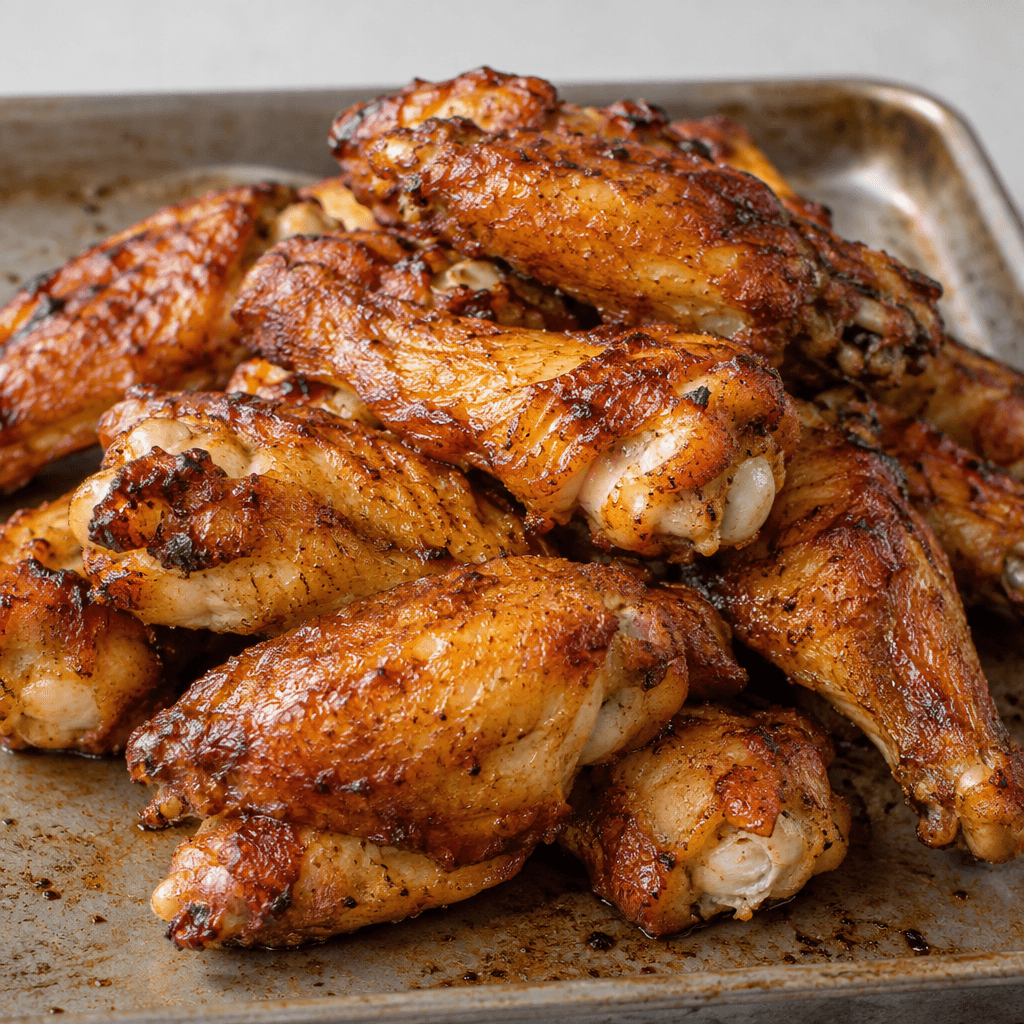
Oven chicken wings Calories
Protein source, oven-baked, lower fat
CALORIES
GI
POTASSIUM
FIBER
Quick answer
5 piece (medium) of Oven chicken wings (120 g) has 252 calories. That works out to 210 calories per 100 g. It contains 0.2 g of carbs, 27 g of protein, 16.2 g of fat and 0 g of fiber. Its 5.4 mg of B3 covers 34% of the Daily Value. Its glycemic index is 0 (low), so it raises blood sugar slowly.
What is Oven chicken wings?
Oven chicken wings are chicken wing portions seasoned and baked until the skin is browned, with the meat around the joints still juicy. They can be simply seasoned with salt and pepper or coated in spices or a sauce; the particular flavour depends on the cook rather than a single regional recipe.
They’re popular as a shareable appetiser, game-day food or casual main, often served with a dip and crisp vegetables. In Turkey, wings also fit a home-cooked meal alongside salad, rice or yoghurt. Baking avoids the extra oil used for deep-frying. They provide plenty of protein and very little carbohydrate, though the skin contributes fat. For a lighter plate, serve a modest portion with salad and a yoghurt-based dip.
Oven chicken wings Nutrition Facts
Selected: 100 g
210
KCAL / 100G
Carbs
0.2g
· 0% DV
Protein
22.5g
· 45% DV
Fat
13.5g
· 17% DV
Fiber
0g
· 0% DV
DV is the share of the daily value covered, on a 2,000 kcal reference diet.
Calories come from: Carbs 0% · Protein 42% · Fat 58%
Oven chicken wings Vitamins & Minerals
Vitamins
B3
4.5mg · 28% DV
B5
1.1mg · 22% DV
B6
0.38mg · 22% DV
Biotin
6µg · 20% DV
Minerals
Selenium
13µg · 24% DV
Phosphorus
165mg · 24% DV
Zinc
1mg · 9% DV
Iron
1mg · 6% DV
How Nutritious Is Oven chicken wings?
Nutrient density
High
How many vitamins, minerals and how much fiber this food carries per calorie. A high score means a lot of nutrition for few calories.
Satiety score
Medium
An EatBetter score computed from fiber, protein and calorie density. A high score means staying full longer on the same calories.
Both scores are calculated per 100 g and do not change with the selected portion. The satiety score is EatBetter's own calculation, not a clinical measure.
Oven chicken wings Glycemic Index
GLYCEMIC INDEX
GLYCEMIC LOAD
Accounts for portion size — a more realistic measure than GI alone.
How to Burn Off Oven chicken wings
To burn the 210 calories in 100 g:
🚶
Walking (5 km/h)
🏃
Running (8 km/h)
🚴
Cycling
🏊
Swimming
Times are calculated with the MET equation for a 70 kg adult. Actual burn varies with your weight, age and pace.
Is Oven chicken wings Processed?
NOVA 2
Minimally Processed
1. Unprocessed
2. Minimally Processed
3. Processed
4. Ultra-Processed
NOVA classifies foods into 4 groups by industrial processing. NOVA 1 (unprocessed) is the healthiest.
Does Oven chicken wings Contain Allergens?
No known major allergens
Which Diets Is Oven chicken wings Good For?
Vegan
— Not suitable
Vegetarian
— Not suitable
Gluten-Free
✓ Suitable
Dairy-Free
— Not suitable
Mediterranean
✓ Suitable
Paleo
✓ Suitable
Whole30
— Not suitable
DASH
— Not suitable
Keto
✓ Suitable
Low FODMAP
— Not suitable
Oven chicken wings Fat Profile
SATURATED
3.7g
MONOUNSATURATED
5.2g
POLYUNSATURATED
2.2g
Omega 6:3 ratio 20:1
Above the ideal 4:1 (20:1).
Compare Oven chicken wings
Foods Similar to Oven chicken wings
Frequently Asked Questions About Oven chicken wings
How do you make oven chicken wings?
To make oven chicken wings, pat them dry, toss with a little oil and your chosen seasonings, then arrange them in a single layer on a baking tray. Bake in a preheated oven, turning once, until browned and cooked through.
How do you get crispy oven chicken wings?
For crispy oven chicken wings, dry the skin thoroughly and leave space between pieces so steam can escape. A wire rack over the baking tray helps air circulate underneath; finish with a brief broil if needed, watching closely to prevent burning.
What temperature and how long should you bake oven chicken wings?
Bake oven chicken wings at 400–425°F (200–220°C) for about 35–45 minutes, turning them once. Exact timing varies with wing size and oven performance, so check that the thickest part reaches 165°F (74°C) before serving.
Can you bake oven chicken wings from frozen?
Yes, you can bake oven chicken wings from frozen, but they take longer and may brown less evenly at first. Separate the pieces as they loosen, drain excess liquid from the tray if needed, and make sure every wing reaches a safe internal temperature before eating.
Should you cover oven chicken wings with foil while baking?
Usually, no: leave oven chicken wings uncovered so moisture can escape and the skin can brown. Foil can help prevent excessive browning if they are darkening too quickly, but remove it near the end if you want the skin to crisp.
What is the best marinade for oven chicken wings?
A simple marinade for oven chicken wings combines garlic, paprika, black pepper, a little oil, and lemon juice or vinegar. Marinate them in the refrigerator, not on the counter, and scrape off excess liquid before baking so the skin can brown.
How can you tell when oven chicken wings are done?
Oven chicken wings are safely cooked when a thermometer inserted into the thickest part, without touching bone, reads 165°F (74°C). Clear juices or meat pulling away from the bone can be useful clues, but they are less reliable than checking the temperature.
What sauce goes well with oven chicken wings?
Buffalo-style hot sauce, barbecue sauce, honey mustard, and garlic-parmesan sauce all pair well with oven chicken wings. Toss the wings with sauce just before serving to keep their baked skin crisp, or serve the sauce on the side for dipping.
How long do leftover oven chicken wings last in the fridge?
Leftover oven chicken wings keep for three to four days in the refrigerator when stored in a covered container. Refrigerate them within two hours of cooking, and discard them if they have been left at room temperature longer than that.
How do you reheat oven chicken wings without drying them out?
Reheat oven chicken wings in a 350°F (175°C) oven until hot throughout, placing them in a single layer. This warms the meat more gently than prolonged high heat and helps restore some crispness; cover loosely only if the skin is browning too fast.
Have another question about Oven chicken wings?
Ask the AI nutrition coach — calories, portions, alternatives and more, answered in seconds in the app.

Scan calories with your camera
Instant AI nutrition analysis

Nutrition data compiled from USDA FoodData Central and scientific sources.