

Ready & Packaged Foods
All →Vegetables & Legumes
All →Desserts & Confectionery
All →Meat & Protein
All →Grains & Bakery
All →Beverages
All →Milk & Dairy
All →

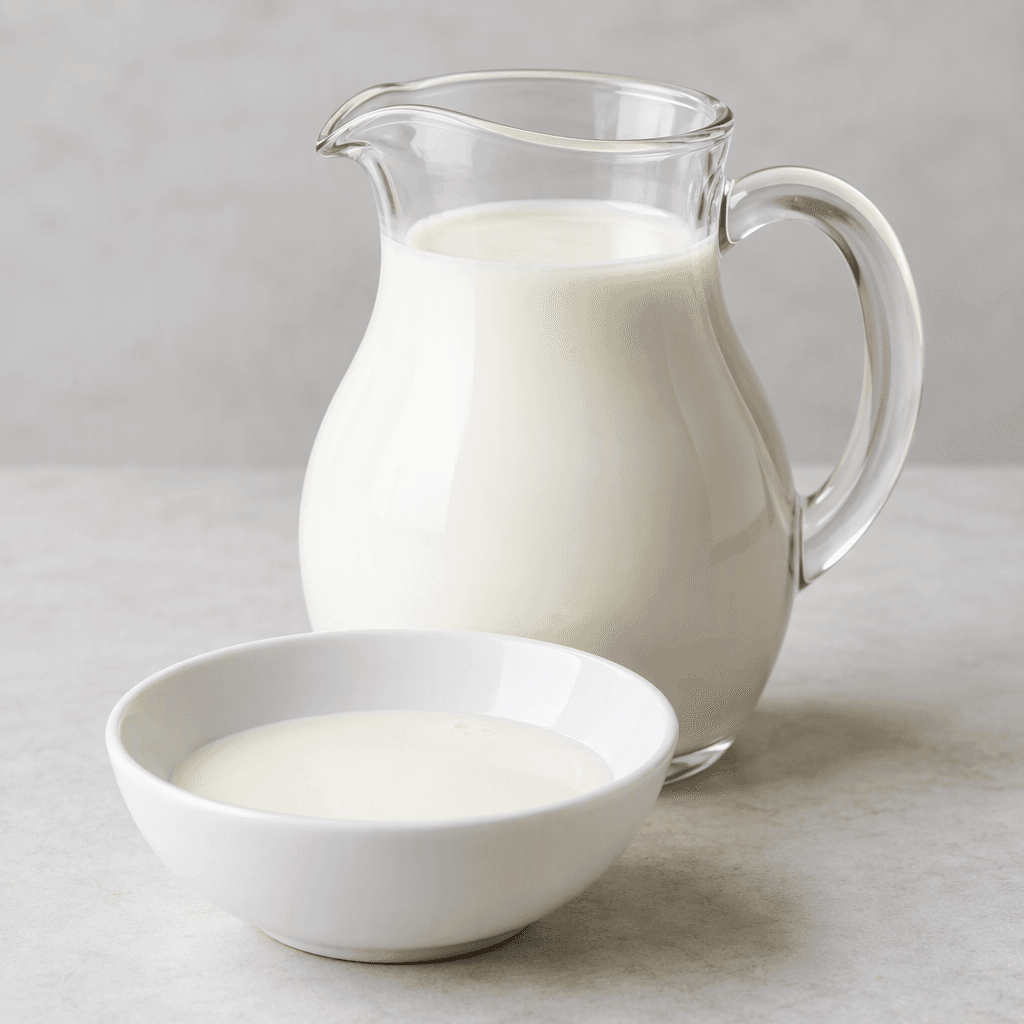
Organic milk Calories
Organic, additive-free milk
In season: Spring · Summer · Autumn · Winter
CALORIES
GI
POTASSIUM
FIBER
Quick answer
1 cup (medium) of Organic milk (240 g) has 149 calories. That works out to 62 calories per 100 g. It contains 11.5 g of carbs, 7.7 g of protein, 7.9 g of fat and 0 g of fiber. Its 1.1 µg of B12 covers 45% of the Daily Value. Its glycemic index is 47 (low), so it raises blood sugar slowly.
What is Organic milk?
Organic milk comes from cows raised under organic farming standards, which set requirements for practices such as feed and animal care. Its everyday uses are much the same as those of conventional cow’s milk, though its flavour and richness can vary with the fat content and the way it is handled.
Smooth and mildly sweet, it is often poured over cereal, stirred into coffee or tea, or used in baking, sauces and puddings. It supplies protein alongside carbohydrates and fat; a 100-gram portion has 3.2 grams of protein. Drink it by the glass or use it wherever a recipe calls for milk. For a lighter cup or recipe, compare the fat content on the pack.
Organic milk Nutrition Facts
Selected: 100 g
62
KCAL / 100G
Carbs
4.8g
· 2% DV
Protein
3.2g
· 6% DV
Fat
3.3g
· 4% DV
Fiber
0g
· 0% DV
DV is the share of the daily value covered, on a 2,000 kcal reference diet.
Calories come from: Carbs 31% · Protein 21% · Fat 48%
Organic milk Vitamins & Minerals
Vitamins
B12
0.45µg · 19% DV
B2
0.18mg · 14% DV
Biotin
3.5µg · 12% DV
B5
0.35mg · 7% DV
Minerals
Phosphorus
95mg · 14% DV
Calcium
120mg · 12% DV
Iodine
16µg · 11% DV
Selenium
2µg · 4% DV
How Nutritious Is Organic milk?
Nutrient density
High
How many vitamins, minerals and how much fiber this food carries per calorie. A high score means a lot of nutrition for few calories.
Satiety score
Medium
An EatBetter score computed from fiber, protein and calorie density. A high score means staying full longer on the same calories.
Both scores are calculated per 100 g and do not change with the selected portion. The satiety score is EatBetter's own calculation, not a clinical measure.
Organic milk Glycemic Index
GLYCEMIC INDEX
GLYCEMIC LOAD
Accounts for portion size — a more realistic measure than GI alone.
How to Burn Off Organic milk
To burn the 62 calories in 100 g:
🚶
Walking (5 km/h)
🏃
Running (8 km/h)
🚴
Cycling
🏊
Swimming
Times are calculated with the MET equation for a 70 kg adult. Actual burn varies with your weight, age and pace.
Is Organic milk Processed?
NOVA 2
Minimally Processed
1. Unprocessed
2. Minimally Processed
3. Processed
4. Ultra-Processed
NOVA classifies foods into 4 groups by industrial processing. NOVA 1 (unprocessed) is the healthiest.
Does Organic milk Contain Allergens?
Contains these allergens:
Which Diets Is Organic milk Good For?
Vegan
— Not suitable
Vegetarian
✓ Suitable
Gluten-Free
— Not suitable
Dairy-Free
— Not suitable
Mediterranean
✓ Suitable
Paleo
— Not suitable
Whole30
— Not suitable
DASH
— Not suitable
Keto
— Not suitable
Low FODMAP
— Not suitable
Organic milk Fat Profile
SATURATED
2.1g
MONOUNSATURATED
0.8g
POLYUNSATURATED
0.1g
Omega 6:3 ratio 4:1
Below the ideal 4:1 — a good omega balance.
Compare Organic milk
Foods Similar to Organic milk
Frequently Asked Questions About Organic milk
What is the difference between organic milk and regular milk?
Organic milk comes from cows raised under organic farming standards, which govern feed, pasture access, and medication use. Its basic nutrients are similar to those in regular milk; the main difference is how the cows are raised and how production is certified.
Is organic milk healthier than regular milk?
Organic milk is not clearly more nutritious than regular milk. Both provide protein and nutrients such as calcium; organic standards mainly describe farming practices, not a major nutritional advantage.
Does organic milk contain antibiotics or hormones?
Organic rules restrict antibiotic use, and milk from an animal treated with antibiotics cannot be sold as organic under many certification systems. Organic milk still contains naturally occurring hormones, as all milk from cows does.
Does organic milk taste different from regular milk?
Organic milk may taste different, but it is not reliably richer or sweeter. Cow breed, feed, season, fat content, and processing can all affect flavour, so the organic label alone does not predict how it will taste.
Does organic milk need to be boiled before drinking?
No, pasteurized or UHT organic milk does not need to be boiled before drinking. Organic does not automatically mean raw, but raw organic milk is sold in some places and should be heated appropriately before consumption.
How should you store organic milk after opening?
Keep opened organic milk sealed in the refrigerator, preferably on an interior shelf rather than in the door, where temperatures fluctuate more. Follow the package’s storage directions and return the carton to the fridge promptly after pouring.
Can you freeze organic milk?
Yes, you can freeze organic milk, though it may separate or become grainy after thawing. Leave room in the container for expansion, thaw it in the refrigerator, and shake it well; the changed texture is usually less noticeable in cooking.
Is organic milk lactose-free?
No, organic milk contains lactose unless it is specifically labelled lactose-free. Organic farming standards do not remove milk sugar; lactose-free milk is made by separately breaking down the lactose.
Can you make yogurt with organic milk?
Yes, organic milk works for homemade yogurt. Warm it to the temperature needed for your starter and let it ferment; UHT milk can also work, although the finished yogurt’s firmness depends on the milk and starter.
Can babies drink organic milk?
No, babies under 12 months should not have cow’s milk, including organic milk, as their main drink; breast milk or infant formula is appropriate. After the first birthday, pasteurized whole milk can generally be introduced as part of meals.
Have another question about Organic milk?
Ask the AI nutrition coach — calories, portions, alternatives and more, answered in seconds in the app.

Scan calories with your camera
Instant AI nutrition analysis

Nutrition data compiled from USDA FoodData Central and scientific sources.