

Ready & Packaged Foods
All →Vegetables & Legumes
All →Desserts & Confectionery
All →Meat & Protein
All →Grains & Bakery
All →Beverages
All →Milk & Dairy
All →

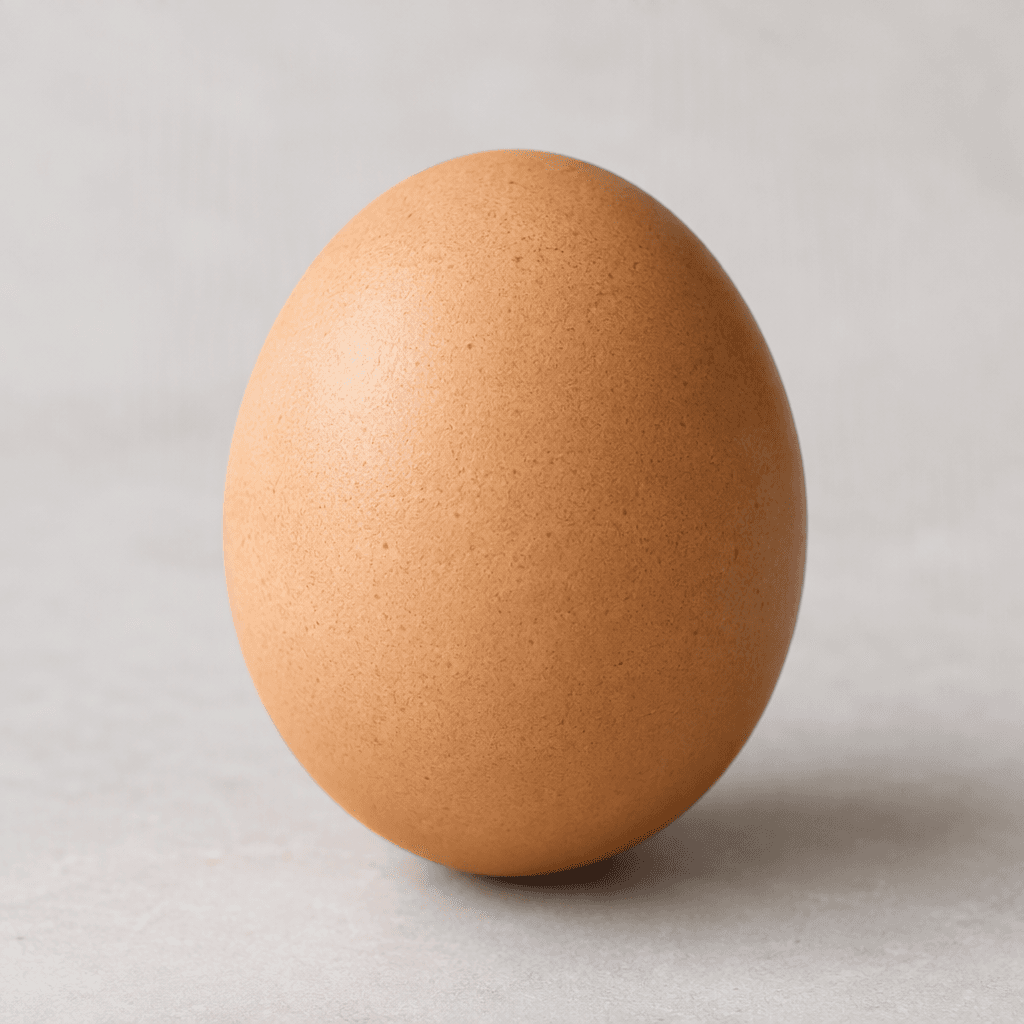
Organic Egg Calories
High-quality protein, source of B12 and choline
In season: Spring · Summer · Autumn · Winter
CALORIES
GI
POTASSIUM
FIBER
Quick answer
1 piece (medium) of Organic Egg (55 g) has 79 calories. That works out to 143 calories per 100 g. It contains 0.6 g of carbs, 6.9 g of protein, 5.4 g of fat and 0 g of fiber. Its 11 µg of Biotin covers 37% of the Daily Value. Its glycemic index is 0 (low), so it raises blood sugar slowly.
What is Organic Egg?
An Organic Egg is laid by a hen raised under organic production standards, which set requirements for matters such as feed and keeping conditions. Shells can range from cream to light brown; colour alone does not tell you whether an egg is organic.
It is eaten boiled, fried or scrambled, served at breakfast, and used in baking and many everyday dishes. The yolk is rich and tender, while the white sets softly or firmly depending on how long it is cooked. With 12.6 g of protein per 100 g, it is a protein-rich, versatile ingredient. For a lighter meal, boil it or cook it with little added fat, and pair it with vegetables or wholegrain toast.
Organic Egg Nutrition Facts
Selected: 100 g
143
KCAL / 100G
Carbs
1.1g
· 0% DV
Protein
12.6g
· 25% DV
Fat
9.9g
· 13% DV
Fiber
0g
· 0% DV
DV is the share of the daily value covered, on a 2,000 kcal reference diet.
Calories come from: Carbs 3% · Protein 35% · Fat 62%
Organic Egg Vitamins & Minerals
Vitamins
Biotin
20µg · 67% DV
B12
1.1µg · 46% DV
B2
0.5mg · 38% DV
B5
1.4mg · 28% DV
Minerals
Selenium
30µg · 55% DV
Iodine
47µg · 31% DV
Phosphorus
198mg · 28% DV
Zinc
1mg · 9% DV
How Nutritious Is Organic Egg?
Nutrient density
Very high
How many vitamins, minerals and how much fiber this food carries per calorie. A high score means a lot of nutrition for few calories.
Satiety score
Medium
An EatBetter score computed from fiber, protein and calorie density. A high score means staying full longer on the same calories.
Both scores are calculated per 100 g and do not change with the selected portion. The satiety score is EatBetter's own calculation, not a clinical measure.
Organic Egg Glycemic Index
GLYCEMIC INDEX
GLYCEMIC LOAD
Accounts for portion size — a more realistic measure than GI alone.
How to Burn Off Organic Egg
To burn the 143 calories in 100 g:
🚶
Walking (5 km/h)
🏃
Running (8 km/h)
🚴
Cycling
🏊
Swimming
Times are calculated with the MET equation for a 70 kg adult. Actual burn varies with your weight, age and pace.
Is Organic Egg Processed?
NOVA 1
Unprocessed
1. Unprocessed
2. Minimally Processed
3. Processed
4. Ultra-Processed
NOVA classifies foods into 4 groups by industrial processing. NOVA 1 (unprocessed) is the healthiest.
Does Organic Egg Contain Allergens?
Contains these allergens:
Which Diets Is Organic Egg Good For?
Vegan
— Not suitable
Vegetarian
✓ Suitable
Gluten-Free
✓ Suitable
Dairy-Free
— Not suitable
Mediterranean
✓ Suitable
Paleo
✓ Suitable
Whole30
— Not suitable
DASH
— Not suitable
Keto
✓ Suitable
Low FODMAP
— Not suitable
Organic Egg Fat Profile
SATURATED
3.1g
MONOUNSATURATED
3.7g
POLYUNSATURATED
2g
Omega 6:3 ratio 18.6:1
Above the ideal 4:1 (18.6:1).
Compare Organic Egg
Foods Similar to Organic Egg
Frequently Asked Questions About Organic Egg
What does organic mean on an organic egg carton?
It means the eggs come from hens raised under certified organic production rules. Those rules cover matters such as feed and husbandry, so “organic” is a regulated claim rather than simply a description of a brown shell or farm-style packaging.
Are organic eggs the same as free-range eggs?
No. Free-range describes access to outdoor space, while organic certification also sets requirements for feed and other production practices. A free-range egg is not automatically organic; look for an organic certification claim on the carton.
How can you tell if an egg is organic?
Check the carton for an organic certification label and the egg’s producer code. In systems that use a 0–3 code, 0 denotes organic production; a brown shell or a farm name alone does not prove an egg is organic.
Do organic eggs taste different from regular eggs?
Sometimes, but organic eggs do not have a reliably stronger flavor just because they are organic. Taste can vary with the hens’ feed and freshness, so differences between cartons may reflect those factors rather than the production label alone.
Are organic eggs more nutritious than conventional eggs?
Not necessarily. Organic production does not guarantee a meaningful nutritional advantage over conventional eggs; the main distinction is how the hens are raised and fed. Eggs themselves provide protein and nutrients such as vitamin B12 and choline.
Can you eat an organic egg raw?
It is safer not to eat an organic egg raw or undercooked. Organic production does not eliminate the risk of Salmonella, so cook the white and yolk until set, especially when serving eggs to people more vulnerable to foodborne illness.
How should you store organic eggs, and how long do they last?
Keep organic eggs refrigerated in their carton, away from strong-smelling foods, and follow the date on the package. Consistent refrigeration helps preserve quality; discard eggs that are cracked or smell unpleasant when opened.
Should you wash an organic egg before using it?
No, do not wash organic eggs before storing them. Washing can damage the shell’s natural protective coating and make it easier for bacteria to enter; wipe off dry dirt and wash only just before use if needed.
Why is the yolk of an organic egg orange?
An orange yolk usually reflects pigments in the hen’s feed. Yolk color can vary in organic eggs and does not by itself show that an egg is fresher, more nutritious, or genuinely organic.
Does the water test show whether an organic egg is fresh?
It can offer a rough freshness check: a fresh organic egg usually sinks in water, while an older one may stand upright or float as its air cell grows. The test cannot confirm food safety, so discard cracked or bad-smelling eggs.
Have another question about Organic Egg?
Ask the AI nutrition coach — calories, portions, alternatives and more, answered in seconds in the app.

Scan calories with your camera
Instant AI nutrition analysis

Nutrition data compiled from USDA FoodData Central and scientific sources.