

Ready & Packaged Foods
All →Vegetables & Legumes
All →Desserts & Confectionery
All →Meat & Protein
All →Grains & Bakery
All →Beverages
All →Milk & Dairy
All →

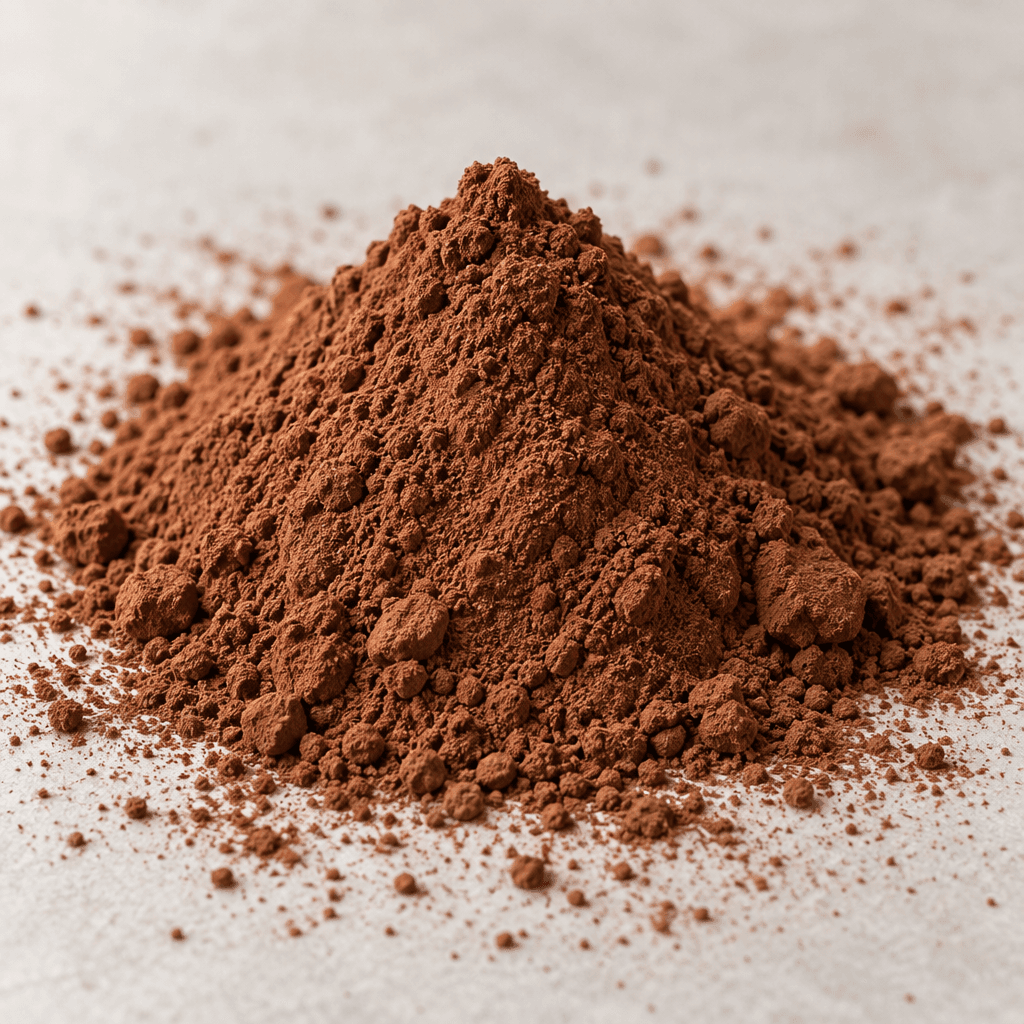
Organic Cocoa Powder Calories
High in antioxidants, magnesium and iron
In season: Spring · Summer · Autumn · Winter
CALORIES
GI
POTASSIUM
FIBER
Quick answer
1 tablespoon (medium) of Organic Cocoa Powder (5 g) has 11 calories. That works out to 228 calories per 100 g. It contains 2.9 g of carbs, 1 g of protein, 0.7 g of fat and 1.7 g of fiber. Its 0.2 mg of Copper covers 21% of the Daily Value. Its glycemic index is 20 (low), so it raises blood sugar slowly.
What is Organic Cocoa Powder?
Organic cocoa powder is made from cacao beans that are processed and ground after some of their cocoa butter has been pressed out. It has a deep brown colour and a robust, earthy flavour with a pleasantly bitter edge. It is used around the world in baking and desserts, and stirred into milk for hot cocoa; you can also add it to oats, yoghurt or smoothies.
It contributes notable fibre and protein, while a small spoonful brings plenty of chocolate-like flavour to a recipe. Since unsweetened cocoa is naturally bitter, balance it with fruit, milk or a little sweetener if you prefer a softer taste. For a smooth drink, first whisk the powder with a splash of warm liquid, then add the rest.
Organic Cocoa Powder Nutrition Facts
Selected: 100 g
228
KCAL / 100G
Carbs
57.9g
· 21% DV
Protein
19.6g
· 39% DV
Fat
13.7g
· 18% DV
Fiber
33.2g
· 119% DV
DV is the share of the daily value covered, on a 2,000 kcal reference diet.
Calories come from: Carbs 53% · Protein 18% · Fat 29%
Organic Cocoa Powder Vitamins & Minerals
Vitamins
Biotin
8µg · 27% DV
B2
0.24mg · 18% DV
B3
2.2mg · 14% DV
B6
0.13mg · 8% DV
Minerals
Copper
4mg · 444% DV
Manganese
4mg · 174% DV
Magnesium
499mg · 119% DV
Phosphorus
734mg · 105% DV
How Nutritious Is Organic Cocoa Powder?
Nutrient density
Very high
How many vitamins, minerals and how much fiber this food carries per calorie. A high score means a lot of nutrition for few calories.
Satiety score
High
An EatBetter score computed from fiber, protein and calorie density. A high score means staying full longer on the same calories.
Both scores are calculated per 100 g and do not change with the selected portion. The satiety score is EatBetter's own calculation, not a clinical measure.
Organic Cocoa Powder Glycemic Index
GLYCEMIC INDEX
GLYCEMIC LOAD
Accounts for portion size — a more realistic measure than GI alone.
How to Burn Off Organic Cocoa Powder
To burn the 228 calories in 100 g:
🚶
Walking (5 km/h)
🏃
Running (8 km/h)
🚴
Cycling
🏊
Swimming
Times are calculated with the MET equation for a 70 kg adult. Actual burn varies with your weight, age and pace.
Is Organic Cocoa Powder Processed?
NOVA 2
Minimally Processed
1. Unprocessed
2. Minimally Processed
3. Processed
4. Ultra-Processed
NOVA classifies foods into 4 groups by industrial processing. NOVA 1 (unprocessed) is the healthiest.
Does Organic Cocoa Powder Contain Allergens?
No known major allergens
Which Diets Is Organic Cocoa Powder Good For?
Vegan
✓ Suitable
Vegetarian
✓ Suitable
Gluten-Free
✓ Suitable
Dairy-Free
— Not suitable
Mediterranean
✓ Suitable
Paleo
✓ Suitable
Whole30
— Not suitable
DASH
— Not suitable
Keto
✓ Suitable
Low FODMAP
— Not suitable
Organic Cocoa Powder Fat Profile
SATURATED
8.1g
MONOUNSATURATED
3.7g
POLYUNSATURATED
0.6g
Omega 6:3 ratio 5.5:1
Above the ideal 4:1 (5.5:1).
Compare Organic Cocoa Powder
Foods Similar to Organic Cocoa Powder
Frequently Asked Questions About Organic Cocoa Powder
Can you use organic cocoa powder instead of cacao powder?
Usually, yes, in smoothies, oatmeal, and many baked goods, though the flavor and texture can differ. “Cacao” often refers to less-processed products, but naming is not consistent across brands, so check whether the recipe specifies natural or Dutch-process cocoa.
Does organic cocoa powder contain caffeine?
Yes. Organic cocoa powder contains some caffeine as well as theobromine, another naturally occurring stimulant. It generally provides less caffeine than coffee, but a cocoa drink late in the day may still affect sleep if you are sensitive to stimulants.
How do you make hot chocolate with organic cocoa powder?
Whisk organic cocoa powder with a small splash of warm milk or water until smooth, then gradually add the rest and heat. Sweeten to taste; plain cocoa powder is not the same as a sweetened hot chocolate mix.
What is the difference between natural and Dutch-process organic cocoa powder?
Dutch-process cocoa is treated with alkali to reduce acidity and create a milder flavor and darker color. Natural organic cocoa remains more acidic, so swapping the two can change how baking soda or baking powder works in a recipe.
How should you store organic cocoa powder after opening?
Keep organic cocoa powder tightly sealed in a cool, dry, dark cupboard, away from steam and strong odors. A dry spoon helps prevent moisture getting into the container; refrigeration is unnecessary and can introduce condensation.
Can organic cocoa powder be added to coffee?
Yes. Whisk a little organic cocoa powder with a small amount of hot coffee first to make a smooth paste, then add the remaining coffee. This helps prevent floating clumps and adds a chocolate-like flavor without making the drink sweet.
Is organic cocoa powder good for you?
Organic cocoa powder provides naturally occurring antioxidants and minerals, but it is not a treatment or a cure. Its benefits depend on how you use it; adding large amounts of sugar in brownies or sweet drinks can change the overall nutritional picture.
Why does organic cocoa powder taste bitter?
Organic cocoa powder is naturally bitter because it contains cocoa solids without the sugar found in many chocolate products. A pinch of salt, milk, or a small amount of sweetener can balance the flavor, depending on the recipe.
Can you eat organic cocoa powder without cooking it?
Yes. Food-grade organic cocoa powder can be stirred into yogurt, oatmeal, or smoothies without cooking. Its unsweetened flavor is quite intense, and using it raw does not make it equivalent to eating cocoa beans.
Does organic cocoa powder mean the product is pesticide-free?
No. “Organic” means the cocoa was produced under certified organic farming rules; it does not guarantee that every trace of pesticide is absent. The term also does not tell you whether the powder is sweetened or how it tastes.
Have another question about Organic Cocoa Powder?
Ask the AI nutrition coach — calories, portions, alternatives and more, answered in seconds in the app.

Scan calories with your camera
Instant AI nutrition analysis

Nutrition data compiled from USDA FoodData Central and scientific sources.