

Ready & Packaged Foods
All →Vegetables & Legumes
All →Desserts & Confectionery
All →Meat & Protein
All →Grains & Bakery
All →Beverages
All →Milk & Dairy
All →

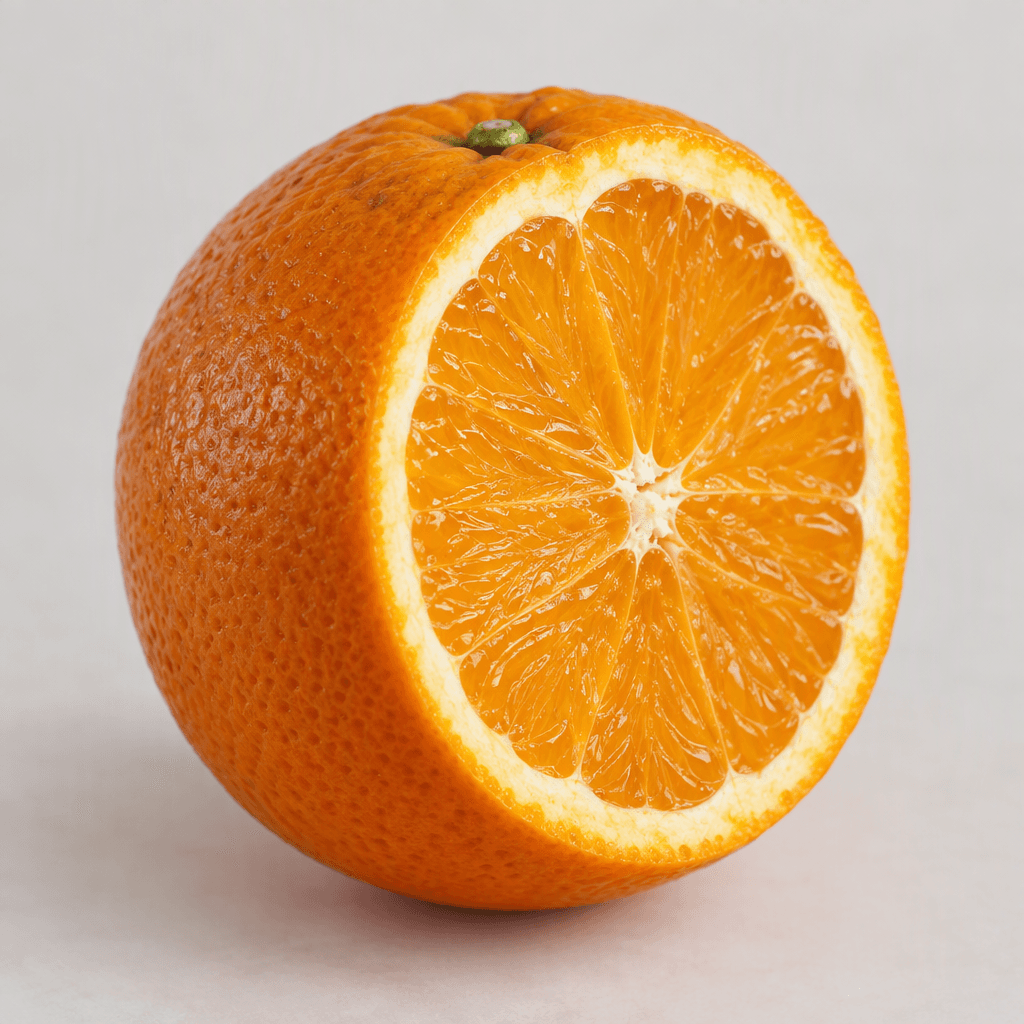
Orange Calories
Vitamin C, fiber, low calorie, antioxidant
In season: Winter · Spring
CALORIES
GI
POTASSIUM
FIBER
Quick answer
1 piece (medium) of Orange (130 g) has 61 calories. That works out to 47 calories per 100 g. It contains 15.3 g of carbs, 1.2 g of protein, 0.1 g of fat and 3.1 g of fiber. Its 69.2 mg of Vitamin C covers 77% of the Daily Value. Its glycemic index is 43 (low), so it raises blood sugar slowly.
What is Orange?
An orange is a juicy citrus fruit with segments that separate easily and a sweet-tart flavour. It is widely grown in warm climates, including Mediterranean countries, and is eaten fresh around the world. You can peel and eat it as a snack, add segments to fruit salads, or squeeze it for juice; in many places it is also a familiar breakfast fruit.
Oranges provide fibre and vitamin C while remaining relatively low in calories: 100 g contains 47 calories. Eating the whole fruit rather than drinking its juice keeps the fibre in your snack. Pair it with yoghurt or a handful of nuts for a more filling option.
Orange Nutrition Facts
Selected: 100 g
47
KCAL / 100G
Carbs
11.8g
· 4% DV
Protein
0.9g
· 2% DV
Fat
0.1g
· 0% DV
Fiber
2.4g
· 9% DV
DV is the share of the daily value covered, on a 2,000 kcal reference diet.
Calories come from: Carbs 91% · Protein 7% · Fat 2%
Orange Vitamins & Minerals
Vitamins
Vitamin C
53.2mg · 59% DV
B1
0.09mg · 8% DV
Folate
30µg · 8% DV
B5
0.25mg · 5% DV
Minerals
Potassium ⭐
181mg · 5% DV
Calcium
40mg · 4% DV
Magnesium
10mg · 2% DV
Phosphorus
14mg · 2% DV
How Nutritious Is Orange?
Nutrient density
Very high
How many vitamins, minerals and how much fiber this food carries per calorie. A high score means a lot of nutrition for few calories.
Satiety score
Medium
An EatBetter score computed from fiber, protein and calorie density. A high score means staying full longer on the same calories.
Both scores are calculated per 100 g and do not change with the selected portion. The satiety score is EatBetter's own calculation, not a clinical measure.
Orange Glycemic Index
GLYCEMIC INDEX
GLYCEMIC LOAD
Accounts for portion size — a more realistic measure than GI alone.
How to Burn Off Orange
To burn the 47 calories in 100 g:
🚶
Walking (5 km/h)
🏃
Running (8 km/h)
🚴
Cycling
🏊
Swimming
Times are calculated with the MET equation for a 70 kg adult. Actual burn varies with your weight, age and pace.
Is Orange Processed?
NOVA 1
Unprocessed
1. Unprocessed
2. Minimally Processed
3. Processed
4. Ultra-Processed
NOVA classifies foods into 4 groups by industrial processing. NOVA 1 (unprocessed) is the healthiest.
Does Orange Contain Allergens?
No known major allergens
Which Diets Is Orange Good For?
Vegan
✓ Suitable
Vegetarian
✓ Suitable
Gluten-Free
✓ Suitable
Dairy-Free
— Not suitable
Mediterranean
✓ Suitable
Paleo
✓ Suitable
Whole30
— Not suitable
DASH
— Not suitable
Keto
— Not suitable
Low FODMAP
— Not suitable
Orange Fat Profile
SATURATED
0.02g
MONOUNSATURATED
0.02g
POLYUNSATURATED
0.03g
Omega 6:3 ratio 2:1
Below the ideal 4:1 — a good omega balance.
Compare Orange
Foods Similar to Orange
Frequently Asked Questions About Orange
Are oranges good for you?
Yes, oranges are a nutritious whole fruit, providing fiber and vitamin C along with other plant compounds. Eating the fruit rather than relying only on juice also gives you its pulp, which supports fullness and makes it easier to pace your intake.
Is orange juice as healthy as eating an orange?
No, orange juice is not quite the same as eating a whole orange. Juicing removes much of the pulp, and it is easy to drink the juice of several oranges quickly. Choose whole fruit more often when you want the fiber and a more filling snack.
Can you eat orange peel?
Yes, orange peel is edible. Wash and scrub the fruit well before using the peel, and grate just the colored outer layer for a less bitter flavor. Zest works well in baking, sauces, and marinades.
How can you tell if an orange is ripe?
A ripe orange usually feels heavy for its size and has firm, evenly colored skin. Avoid fruit with soft spots, mold, or damaged areas. A little green coloring on the peel does not necessarily mean the orange is unripe.
Should oranges be refrigerated?
Refrigerating oranges is a good way to keep them fresh for longer. If you plan to eat them soon, they can also sit in a cool, dry, well-ventilated place. Keep them dry in storage and wash them just before eating.
Can you freeze oranges?
Yes, you can freeze peeled orange segments or slices in an airtight container. Their texture becomes softer after thawing, so frozen oranges are often better for smoothies, sauces, or cooking than for eating as fresh segments.
Do oranges prevent colds?
No, eating oranges does not prevent or cure a cold. Their vitamin C contributes to normal immune function, but it cannot stop an infection on its own. Oranges can still be a refreshing source of food and fluid while you are unwell.
Are orange seeds safe to eat?
Yes, accidentally swallowing a few orange seeds is generally harmless. They can taste bitter, so most people remove them while eating. There is no need to eat the seeds deliberately to get the benefits of the fruit.
Can oranges cause heartburn?
Yes, oranges can trigger heartburn in some people because they are acidic. If you notice symptoms after eating them, try a smaller amount or avoid having them close to bedtime. The reaction varies from person to person.
How do you zest an orange without getting the bitter white pith?
Use a fine grater or zester lightly over the orange, turning the fruit as you go. Stop once the bright outer skin is removed; the white layer underneath is pith and can make the zest taste bitter.
Have another question about Orange?
Ask the AI nutrition coach — calories, portions, alternatives and more, answered in seconds in the app.

Scan calories with your camera
Instant AI nutrition analysis

Nutrition data compiled from USDA FoodData Central and scientific sources.