

Ready & Packaged Foods
All →Vegetables & Legumes
All →Desserts & Confectionery
All →Meat & Protein
All →Grains & Bakery
All →Beverages
All →Milk & Dairy
All →

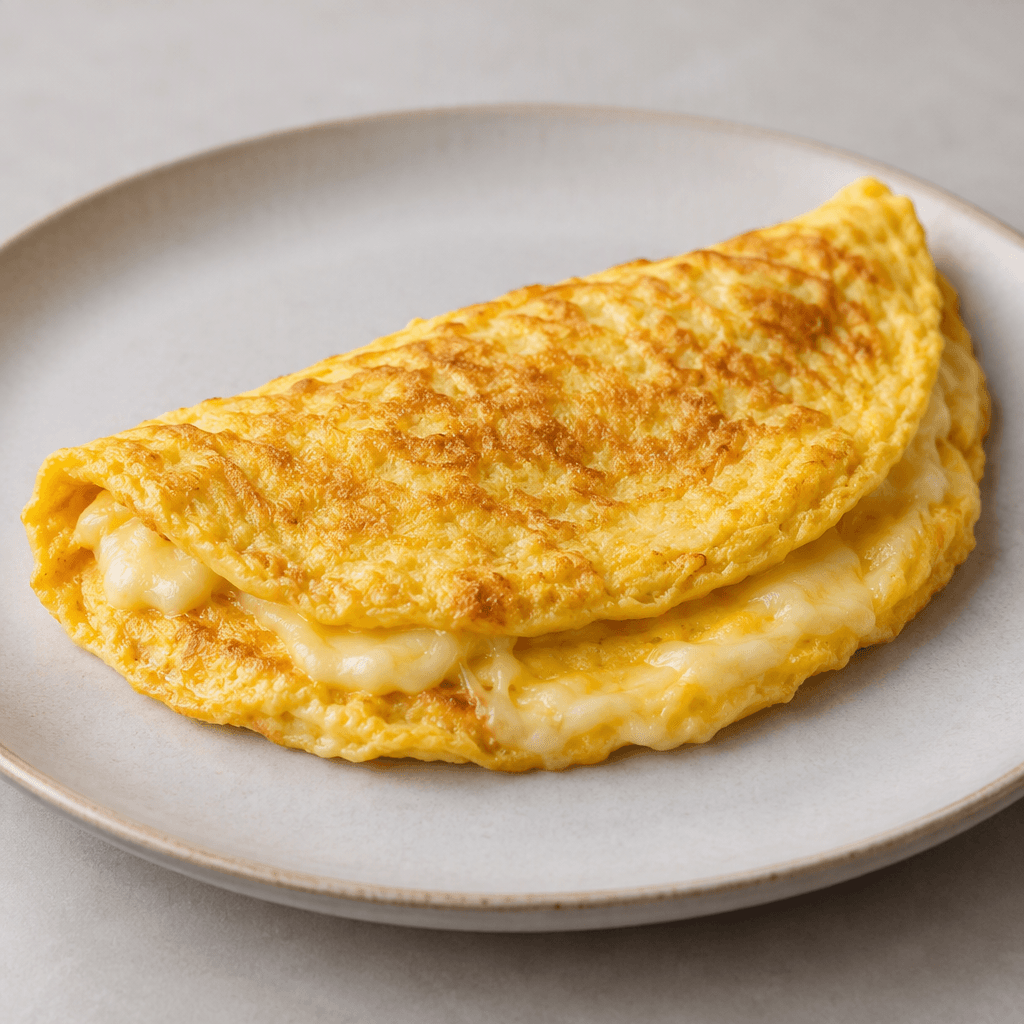
Omelette with Kaşar Cheese Calories
High in protein and calcium, filling breakfast
In season: Spring · Summer · Autumn · Winter
CALORIES
GI
POTASSIUM
FIBER
Quick answer
1 piece (medium) of Omelette with Kaşar Cheese (120 g) has 252 calories. That works out to 210 calories per 100 g. It contains 2.6 g of carbs, 17.4 g of protein, 19.4 g of fat and 0 g of fiber. Its 21.6 µg of Biotin covers 72% of the Daily Value. Its glycemic index is 35 (low), so it raises blood sugar slowly.
What is Omelette with Kaşar Cheese?
Omelette with Kaşar Cheese is made by cooking beaten eggs in a pan and folding in grated or thinly sliced kaşar, a Turkish semi-hard cheese that melts smoothly. It is a familiar home-style breakfast in Türkiye, where eggs and cheese are everyday staples.
The soft, lightly browned egg contrasts with the cheese’s mild, savoury richness. Serve it hot with bread and fresh tomatoes or cucumber; in Türkiye, it is often part of a relaxed breakfast alongside tea. It is filling and provides substantial protein, making it a satisfying start to the day. For a lighter plate, use a modest amount of cooking fat and pair the omelette with salad or other fresh vegetables.
Omelette with Kaşar Cheese Nutrition Facts
Selected: 100 g
210
KCAL / 100G
Carbs
2.2g
· 1% DV
Protein
14.5g
· 29% DV
Fat
16.2g
· 21% DV
Fiber
0g
· 0% DV
DV is the share of the daily value covered, on a 2,000 kcal reference diet.
Calories come from: Carbs 4% · Protein 27% · Fat 69%
Omelette with Kaşar Cheese Vitamins & Minerals
Vitamins
Biotin
18µg · 60% DV
B12
1.2µg · 50% DV
B2
0.38mg · 29% DV
B5
1.1mg · 22% DV
Minerals
Phosphorus
260mg · 37% DV
Selenium
18µg · 33% DV
Calcium
320mg · 32% DV
Sodium
530mg · 23% DV
How Nutritious Is Omelette with Kaşar Cheese?
Nutrient density
High
How many vitamins, minerals and how much fiber this food carries per calorie. A high score means a lot of nutrition for few calories.
Satiety score
Medium
An EatBetter score computed from fiber, protein and calorie density. A high score means staying full longer on the same calories.
Both scores are calculated per 100 g and do not change with the selected portion. The satiety score is EatBetter's own calculation, not a clinical measure.
Omelette with Kaşar Cheese Glycemic Index
GLYCEMIC INDEX
GLYCEMIC LOAD
Accounts for portion size — a more realistic measure than GI alone.
How to Burn Off Omelette with Kaşar Cheese
To burn the 210 calories in 100 g:
🚶
Walking (5 km/h)
🏃
Running (8 km/h)
🚴
Cycling
🏊
Swimming
Times are calculated with the MET equation for a 70 kg adult. Actual burn varies with your weight, age and pace.
Is Omelette with Kaşar Cheese Processed?
NOVA 2
Minimally Processed
1. Unprocessed
2. Minimally Processed
3. Processed
4. Ultra-Processed
NOVA classifies foods into 4 groups by industrial processing. NOVA 1 (unprocessed) is the healthiest.
Does Omelette with Kaşar Cheese Contain Allergens?
Contains these allergens:
Which Diets Is Omelette with Kaşar Cheese Good For?
Vegan
— Not suitable
Vegetarian
✓ Suitable
Gluten-Free
— Not suitable
Dairy-Free
— Not suitable
Mediterranean
✓ Suitable
Paleo
— Not suitable
Whole30
— Not suitable
DASH
— Not suitable
Keto
— Not suitable
Low FODMAP
— Not suitable
Omelette with Kaşar Cheese Fat Profile
SATURATED
7.8g
MONOUNSATURATED
5.2g
POLYUNSATURATED
0.7g
Omega 6:3 ratio 3.5:1
Below the ideal 4:1 — a good omega balance.
Compare Omelette with Kaşar Cheese
Foods Similar to Omelette with Kaşar Cheese
Frequently Asked Questions About Omelette with Kaşar Cheese
How do you make an omelette with Kaşar cheese?
To make an omelette with Kaşar cheese, beat the eggs and pour them into a lightly greased pan. Once the edges begin to set, add grated Kaşar, fold the omelette, and cook over low to medium heat until the cheese melts and the eggs are set.
When should you add Kaşar cheese to an omelette with Kaşar cheese?
Add the Kaşar to an omelette with Kaşar cheese after the egg has begun to set around the edges. This gives the cheese time to melt while keeping it in a distinct, gooey layer rather than mixing it completely into the eggs.
Is fresh or aged Kaşar better for an omelette with Kaşar cheese?
Fresh Kaşar is usually better for an omelette with Kaşar cheese because it melts readily and gives a mild, soft filling. Aged Kaşar works too, but its stronger flavor can dominate the eggs, so grate it finely and use a lighter hand.
Why does Kaşar cheese sometimes stay firm in an omelette with Kaşar cheese?
Kaşar may stay firm in an omelette with Kaşar cheese if it is added just before serving or in thick pieces. Grate it, add it while the eggs are still hot, and cover the pan briefly so the trapped heat helps it melt.
How do you keep an omelette with Kaşar cheese fluffy?
For a fluffy omelette with Kaşar cheese, whisk the eggs until the yolks and whites are combined, then cook gently rather than over high heat. Avoid overcooking: eggs continue to firm up after you fold the omelette and take it off the heat.
Can you add vegetables to an omelette with Kaşar cheese?
Yes, peppers, mushrooms, or tomatoes can go into an omelette with Kaşar cheese. Cook vegetables first to release excess moisture, then add the eggs; this keeps the omelette from becoming watery and lets the Kaşar melt into the filling.
What can you serve with an omelette with Kaşar cheese?
An omelette with Kaşar cheese pairs well with toast, sliced tomatoes, cucumber, or a simple green salad. These fresh sides balance the rich, melted cheese without competing with its savory flavor.
Can you make an omelette with Kaşar cheese without folding it?
Yes, you can serve an omelette with Kaşar cheese open-faced. Sprinkle the grated cheese over the eggs as they set, cover the pan until the cheese melts, and slide the omelette onto a plate instead of folding it.
How should you store leftover omelette with Kaşar cheese?
Put leftover omelette with Kaşar cheese in a covered container and refrigerate it promptly rather than leaving it at room temperature. Because it contains eggs and dairy, keep it chilled and eat it soon for the best texture and flavor.
What is the best way to reheat an omelette with Kaşar cheese?
Reheat an omelette with Kaşar cheese gently in a covered pan over low heat to keep the eggs from drying out. If you use a microwave, heat it in short bursts and check between them, since the edges can become tough quickly.
Have another question about Omelette with Kaşar Cheese?
Ask the AI nutrition coach — calories, portions, alternatives and more, answered in seconds in the app.

Scan calories with your camera
Instant AI nutrition analysis

Nutrition data compiled from USDA FoodData Central and scientific sources.