

Ready & Packaged Foods
All →Vegetables & Legumes
All →Desserts & Confectionery
All →Meat & Protein
All →Grains & Bakery
All →Beverages
All →Milk & Dairy
All →

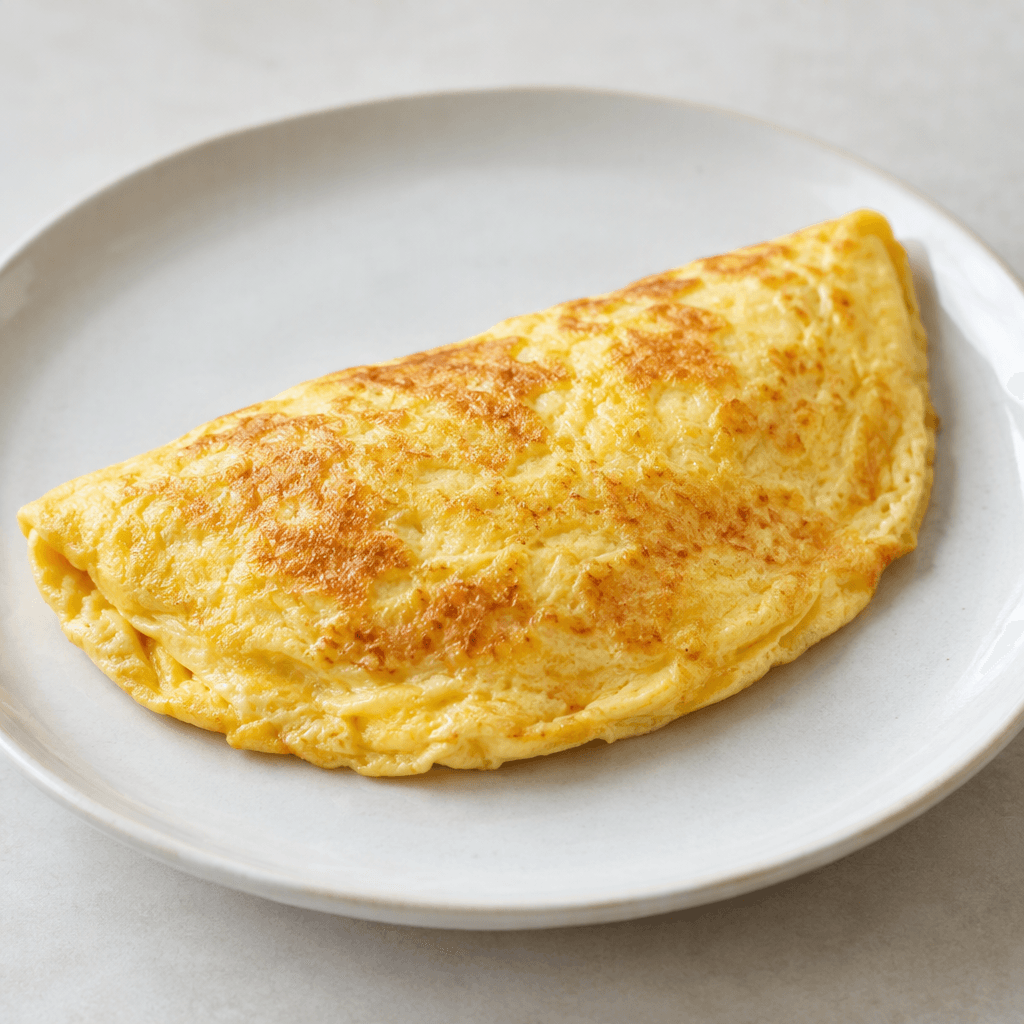
Omelette with beaten eggs Calories
High in protein and B12, popular breakfast choice
In season: Spring · Summer · Autumn · Winter
CALORIES
GI
POTASSIUM
FIBER
Quick answer
1 piece (medium) of Omelette with beaten eggs (120 g) has 185 calories. That works out to 154 calories per 100 g. It contains 1.6 g of carbs, 12.6 g of protein, 13.4 g of fat and 0 g of fiber. Its 24 µg of Biotin covers 80% of the Daily Value. Its glycemic index is 0 (low), so it raises blood sugar slowly.
What is Omelette with beaten eggs?
Omelette with beaten eggs is made by whisking eggs and cooking them in a pan, usually folded before serving. Omelettes are associated with French cooking, but versions are now made around the world; this plain style keeps the focus on the eggs rather than a filling. Its softly set middle and lightly golden surface make it a quick breakfast or light meal. Serve it warm with toast, salad or herbs, depending on the occasion. It provides protein with very little carbohydrate. For a lighter omelette, use a modest amount of cooking fat and add vegetables or fresh herbs for extra flavour.
Omelette with beaten eggs Nutrition Facts
Selected: 100 g
154
KCAL / 100G
Carbs
1.3g
· 0% DV
Protein
10.5g
· 21% DV
Fat
11.2g
· 14% DV
Fiber
0g
· 0% DV
DV is the share of the daily value covered, on a 2,000 kcal reference diet.
Calories come from: Carbs 4% · Protein 28% · Fat 68%
Omelette with beaten eggs Vitamins & Minerals
Vitamins
Biotin
20µg · 67% DV
B12
1.1µg · 46% DV
B2
0.38mg · 29% DV
B5
1.3mg · 26% DV
Minerals
Selenium
30µg · 55% DV
Phosphorus
172mg · 25% DV
Iodine
24µg · 16% DV
Zinc
1mg · 9% DV
How Nutritious Is Omelette with beaten eggs?
Nutrient density
High
How many vitamins, minerals and how much fiber this food carries per calorie. A high score means a lot of nutrition for few calories.
Satiety score
Medium
An EatBetter score computed from fiber, protein and calorie density. A high score means staying full longer on the same calories.
Both scores are calculated per 100 g and do not change with the selected portion. The satiety score is EatBetter's own calculation, not a clinical measure.
Omelette with beaten eggs Glycemic Index
GLYCEMIC INDEX
GLYCEMIC LOAD
Accounts for portion size — a more realistic measure than GI alone.
How to Burn Off Omelette with beaten eggs
To burn the 154 calories in 100 g:
🚶
Walking (5 km/h)
🏃
Running (8 km/h)
🚴
Cycling
🏊
Swimming
Times are calculated with the MET equation for a 70 kg adult. Actual burn varies with your weight, age and pace.
Is Omelette with beaten eggs Processed?
NOVA 2
Minimally Processed
1. Unprocessed
2. Minimally Processed
3. Processed
4. Ultra-Processed
NOVA classifies foods into 4 groups by industrial processing. NOVA 1 (unprocessed) is the healthiest.
Does Omelette with beaten eggs Contain Allergens?
Contains these allergens:
Which Diets Is Omelette with beaten eggs Good For?
Vegan
— Not suitable
Vegetarian
✓ Suitable
Gluten-Free
✓ Suitable
Dairy-Free
— Not suitable
Mediterranean
✓ Suitable
Paleo
— Not suitable
Whole30
— Not suitable
DASH
— Not suitable
Keto
✓ Suitable
Low FODMAP
— Not suitable
Omelette with beaten eggs Fat Profile
SATURATED
3.3g
MONOUNSATURATED
4.2g
POLYUNSATURATED
1.4g
Omega 6:3 ratio 9.2:1
Above the ideal 4:1 (9.2:1).
Compare Omelette with beaten eggs
Foods Similar to Omelette with beaten eggs
Frequently Asked Questions About Omelette with beaten eggs
How do you make an omelette with beaten eggs fluffy?
For a tender omelette with beaten eggs, whisk just until the whites and yolks are combined, then cook gently over medium-low heat. Take it off the heat while the top is still slightly moist; residual heat will finish cooking it without making it tough.
Do you add milk to an omelette with beaten eggs?
No, milk is not necessary in an omelette with beaten eggs. A small splash can make the texture softer, but too much adds liquid and can keep the omelette from setting properly. Seasoned eggs cooked gently are enough.
Why does an omelette with beaten eggs turn rubbery?
An omelette with beaten eggs turns rubbery when it is cooked too long or over high heat. Use a moderate temperature and remove it as soon as the eggs are set; carryover heat will finish the center.
How do you keep an omelette with beaten eggs from sticking?
Use a clean, nonstick skillet and coat it lightly with butter or oil before adding the eggs. Let the omelette with beaten eggs set around the edges, then gently lift them so uncooked egg can flow underneath.
What is the difference between a French omelette and an omelette with beaten eggs?
A French omelette is a particular style of omelette with beaten eggs: it is cooked gently, kept pale, and rolled into a soft cylinder with little or no browning. Other omelettes may be browned, folded in half, or filled more generously.
When should you add fillings to an omelette with beaten eggs?
Cook fillings such as mushrooms, onions, or peppers before adding them to an omelette with beaten eggs, so they release moisture and soften first. Add cheese near the end, then fold the omelette while it is still warm.
How do you fold an omelette with beaten eggs without breaking it?
Wait until the underside of the omelette with beaten eggs is set and the top is only slightly glossy. Loosen the edges with a spatula, place fillings on one side if using them, and fold gently rather than pressing down.
Can you make an omelette with beaten eggs in the microwave?
Yes, you can cook an omelette with beaten eggs in a microwave-safe bowl. Beat the eggs, cover loosely, and heat in short bursts, stirring once; stop when the eggs are just set, since microwave cooking can quickly make them rubbery.
Can you freeze an omelette with beaten eggs?
Yes, you can freeze a cooked omelette with beaten eggs, but thawing may make its texture less tender. Cool it promptly, wrap it airtight, and thaw it in the refrigerator before reheating until hot throughout.
What herbs go well in an omelette with beaten eggs?
Chives, parsley, dill, and tarragon all pair well with an omelette with beaten eggs. Chop fresh herbs finely and stir them into the eggs just before cooking, or sprinkle them over the finished omelette for a fresher flavour.
Have another question about Omelette with beaten eggs?
Ask the AI nutrition coach — calories, portions, alternatives and more, answered in seconds in the app.

Scan calories with your camera
Instant AI nutrition analysis

Nutrition data compiled from USDA FoodData Central and scientific sources.