

Ready & Packaged Foods
All →Vegetables & Legumes
All →Desserts & Confectionery
All →Meat & Protein
All →Grains & Bakery
All →Beverages
All →Milk & Dairy
All →

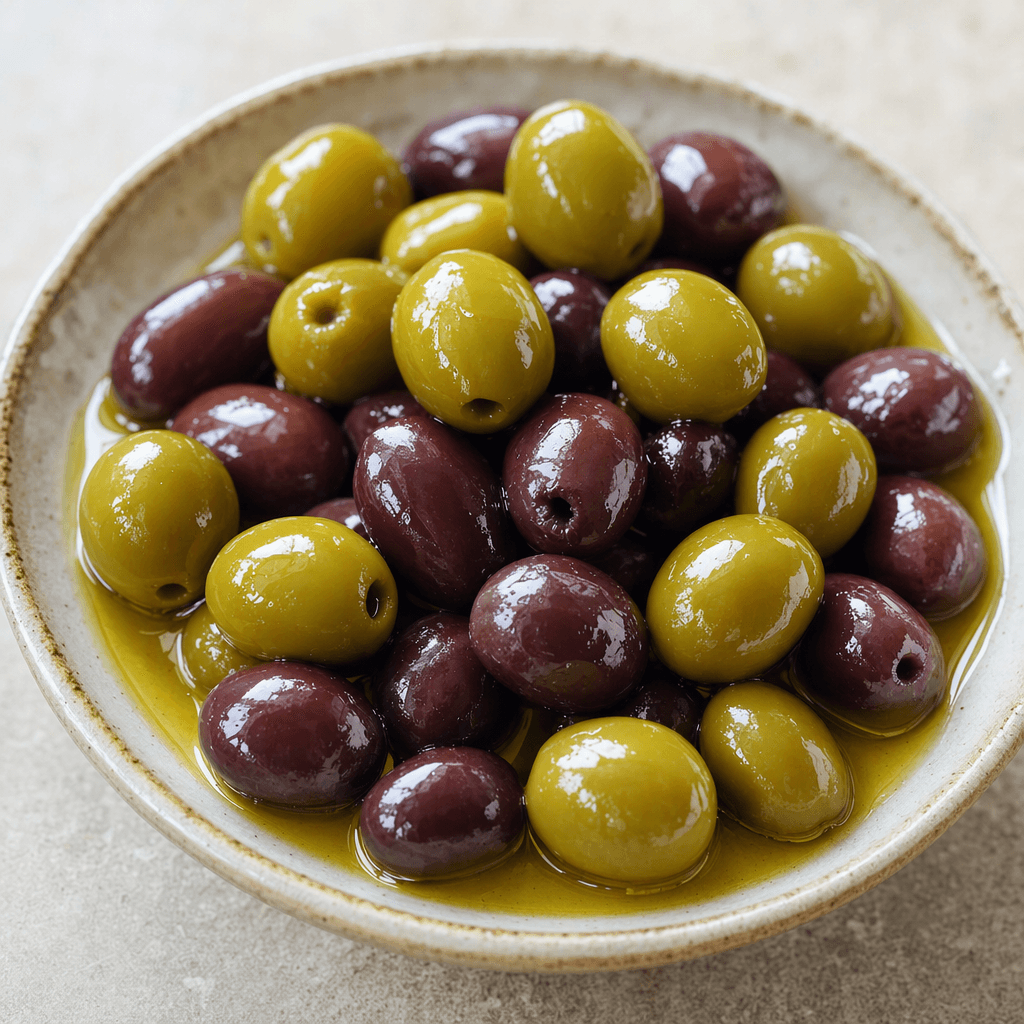
Olives with olive oil Calories
Rich in monounsaturated fat, high in sodium, low in carbs
In season: Spring · Summer · Autumn · Winter
CALORIES
GI
POTASSIUM
FIBER
Quick answer
1 serving (small) of Olives with olive oil (30 g) has 56 calories. That works out to 185 calories per 100 g. It contains 1.4 g of carbs, 0.4 g of protein, 5.4 g of fat and 1 g of fiber. Its 375 mg of Sodium covers 16% of the Daily Value. Its glycemic index is 15 (low), so it raises blood sugar slowly.
What is Olives with olive oil?
Olives with olive oil are table olives served with a drizzle or coating of olive oil. The olives may be green or dark and are commonly enjoyed across Mediterranean food traditions; the oil adds a glossy finish and a mellow, fruity note to their briny, sometimes pleasantly bitter flavour.
Serve them as part of a mezze spread, alongside bread and cheese, or add a few to salads and cooked dishes. They bring mostly unsaturated fat and some fibre, with very little carbohydrate, but can be high in sodium. A small portion works well as a savoury accompaniment; drain off excess oil and pair the olives with fresh vegetables if you want a lighter serving.
Olives with olive oil Nutrition Facts
Selected: 100 g
185
KCAL / 100G
Carbs
4.8g
· 2% DV
Protein
1.2g
· 2% DV
Fat
18.1g
· 23% DV
Fiber
3.2g
· 11% DV
DV is the share of the daily value covered, on a 2,000 kcal reference diet.
Calories come from: Carbs 10% · Protein 3% · Fat 87%
Olives with olive oil Vitamins & Minerals
Vitamins
Vitamin E
3.4mg · 23% DV
Vitamin A
20µg · 2% DV
B1
0.02mg · 2% DV
B3
0.3mg · 2% DV
Minerals
Sodium
1250mg · 54% DV
Iron
2mg · 11% DV
Calcium
52mg · 5% DV
Magnesium
11mg · 3% DV
How Nutritious Is Olives with olive oil?
Nutrient density
Medium
How many vitamins, minerals and how much fiber this food carries per calorie. A high score means a lot of nutrition for few calories.
Satiety score
Medium
An EatBetter score computed from fiber, protein and calorie density. A high score means staying full longer on the same calories.
Both scores are calculated per 100 g and do not change with the selected portion. The satiety score is EatBetter's own calculation, not a clinical measure.
Olives with olive oil Glycemic Index
GLYCEMIC INDEX
GLYCEMIC LOAD
Accounts for portion size — a more realistic measure than GI alone.
How to Burn Off Olives with olive oil
To burn the 185 calories in 100 g:
🚶
Walking (5 km/h)
🏃
Running (8 km/h)
🚴
Cycling
🏊
Swimming
Times are calculated with the MET equation for a 70 kg adult. Actual burn varies with your weight, age and pace.
Is Olives with olive oil Processed?
NOVA 2
Minimally Processed
1. Unprocessed
2. Minimally Processed
3. Processed
4. Ultra-Processed
NOVA classifies foods into 4 groups by industrial processing. NOVA 1 (unprocessed) is the healthiest.
Does Olives with olive oil Contain Allergens?
No known major allergens
Which Diets Is Olives with olive oil Good For?
Vegan
✓ Suitable
Vegetarian
✓ Suitable
Gluten-Free
✓ Suitable
Dairy-Free
— Not suitable
Mediterranean
✓ Suitable
Paleo
✓ Suitable
Whole30
— Not suitable
DASH
— Not suitable
Keto
✓ Suitable
Low FODMAP
— Not suitable
Olives with olive oil Fat Profile
SATURATED
2.5g
MONOUNSATURATED
13.1g
POLYUNSATURATED
1.6g
Omega 6:3 ratio 18.1:1
Above the ideal 4:1 (18.1:1).
Compare Olives with olive oil
Foods Similar to Olives with olive oil
Frequently Asked Questions About Olives with olive oil
Are olives with olive oil good for you?
Yes, olives with olive oil provide mostly unsaturated fats, but the olives can also be high in sodium because they are often brined. Enjoy them as part of a varied diet, and keep the serving modest if you are watching your salt intake.
Do olives with olive oil need to be refrigerated after opening?
Yes, refrigerate olives with olive oil after opening and keep them in a covered container. Use a clean utensil when serving, and follow the package directions if they specify a different storage method.
How long do olives with olive oil last after opening?
Olives with olive oil generally keep for several weeks in the refrigerator when handled cleanly and stored covered. The exact shelf life depends on the product and its packaging, so follow its use-by guidance and discard it if you notice mold or an off smell.
Can you use the oil from olives with olive oil in cooking?
Yes, you can use the flavored oil from olives with olive oil in salad dressings, dips, or other cold dishes. It may have picked up salt and seasonings from the olives, so taste it before adding more seasoning.
Should you rinse olives with olive oil before eating them?
No, rinsing is not necessary unless the olives taste too salty. A quick rinse can remove some surface brine, but it also washes away seasoning and some of the oil; eat them soon after rinsing.
What should you serve with olives with olive oil?
Olives with olive oil pair well with crusty bread, cheese, roasted vegetables, and other small bites. Their salty, savory flavor also works as a topping for salads or grain dishes; taste before adding extra salt.
Are olives with olive oil made with green or black olives?
Olives with olive oil can be made with green or dark, ripe olives, and some mixes include both. Green olives tend to taste firmer and more sharply savory, while darker olives are often softer and milder; the variety affects the result.
Can you cook with olives with olive oil?
Yes, you can add olives with olive oil to cooked dishes such as pasta, stews, or roasted vegetables. Add them near the end when you want to preserve their texture, and reduce other salt because the olives may be brined.
Are olives with olive oil a fruit?
Yes, olives with olive oil are still olives, and olives are botanically fruits. They are commonly treated as a savory food because they are cured and seasoned, while the olive oil is added for flavor and texture.
Why does the oil in olives with olive oil turn cloudy in the refrigerator?
The oil in olives with olive oil can turn cloudy or partly solid in the cold because olive oil naturally thickens at low temperatures. This change is normal; let the container sit briefly at room temperature and the oil should become clearer again.
Have another question about Olives with olive oil?
Ask the AI nutrition coach — calories, portions, alternatives and more, answered in seconds in the app.

Scan calories with your camera
Instant AI nutrition analysis

Nutrition data compiled from USDA FoodData Central and scientific sources.