

Ready & Packaged Foods
All →Vegetables & Legumes
All →Desserts & Confectionery
All →Meat & Protein
All →Grains & Bakery
All →Beverages
All →Milk & Dairy
All →

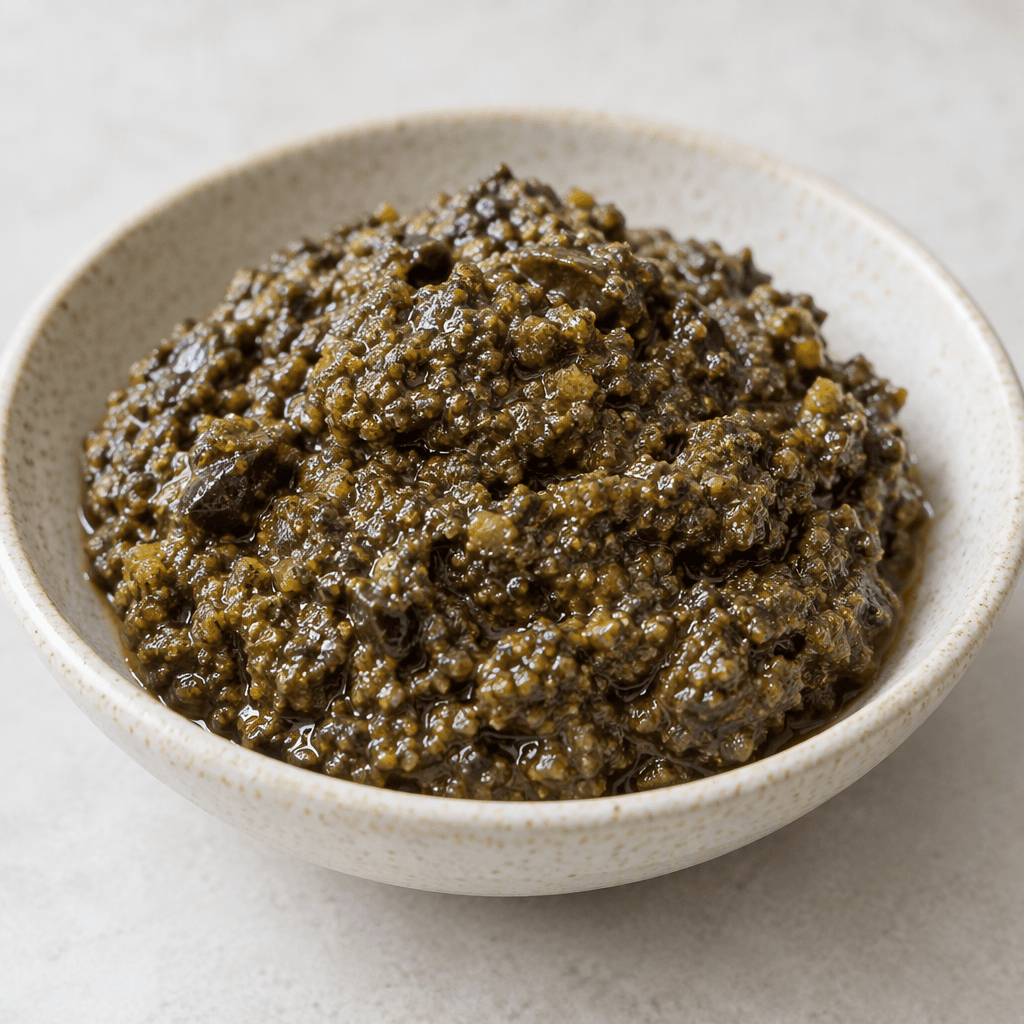
Olive Puree Calories
Healthy fats, Vitamin E, Mediterranean cuisine
In season: Summer · Autumn · Winter
CALORIES
GI
POTASSIUM
FIBER
Quick answer
2 tablespoon (medium) of Olive Puree (30 g) has 63 calories. That works out to 210 calories per 100 g. It contains 1.8 g of carbs, 0.4 g of protein, 6 g of fat and 1.1 g of fiber. Its 360 mg of Sodium covers 16% of the Daily Value. Its glycemic index is 15 (low), so it raises blood sugar slowly.
What is Olive Puree?
Olive puree is a thick spread made by crushing pitted olives. Depending on the olives used, it can be green or dark, and Mediterranean versions may include olive oil or herbs; recipes vary from place to place. Its texture can be smooth or slightly coarse, with a concentrated, savoury olive flavour.
It is commonly served with bread, alongside cheese and vegetables, or as part of a Mediterranean-style mezze spread. It also works well in sandwiches or as a simple accompaniment to grilled vegetables. Olive puree is rich in fat and provides little protein, so a small spoonful can add plenty of flavour. Pair it with fresh vegetables or lean on bread and other accompaniments rather than using it as the main part of a meal.
Olive Puree Nutrition Facts
Selected: 100 g
210
KCAL / 100G
Carbs
6g
· 2% DV
Protein
1.2g
· 2% DV
Fat
20g
· 26% DV
Fiber
3.5g
· 13% DV
DV is the share of the daily value covered, on a 2,000 kcal reference diet.
Calories come from: Carbs 11% · Protein 2% · Fat 87%
Olive Puree Vitamins & Minerals
Vitamins
Vitamin E
3.8mg · 25% DV
B5
0.2mg · 4% DV
Vitamin A
20µg · 2% DV
B1
0.02mg · 2% DV
Minerals
Sodium
1200mg · 52% DV
Iron
2mg · 11% DV
Calcium
52mg · 5% DV
Magnesium
11mg · 3% DV
How Nutritious Is Olive Puree?
Nutrient density
Medium
How many vitamins, minerals and how much fiber this food carries per calorie. A high score means a lot of nutrition for few calories.
Satiety score
Medium
An EatBetter score computed from fiber, protein and calorie density. A high score means staying full longer on the same calories.
Both scores are calculated per 100 g and do not change with the selected portion. The satiety score is EatBetter's own calculation, not a clinical measure.
Olive Puree Glycemic Index
GLYCEMIC INDEX
GLYCEMIC LOAD
Accounts for portion size — a more realistic measure than GI alone.
How to Burn Off Olive Puree
To burn the 210 calories in 100 g:
🚶
Walking (5 km/h)
🏃
Running (8 km/h)
🚴
Cycling
🏊
Swimming
Times are calculated with the MET equation for a 70 kg adult. Actual burn varies with your weight, age and pace.
Is Olive Puree Processed?
NOVA 2
Minimally Processed
1. Unprocessed
2. Minimally Processed
3. Processed
4. Ultra-Processed
NOVA classifies foods into 4 groups by industrial processing. NOVA 1 (unprocessed) is the healthiest.
Does Olive Puree Contain Allergens?
No known major allergens
Which Diets Is Olive Puree Good For?
Vegan
✓ Suitable
Vegetarian
✓ Suitable
Gluten-Free
✓ Suitable
Dairy-Free
— Not suitable
Mediterranean
✓ Suitable
Paleo
— Not suitable
Whole30
— Not suitable
DASH
— Not suitable
Keto
✓ Suitable
Low FODMAP
— Not suitable
Olive Puree Fat Profile
SATURATED
3.2g
MONOUNSATURATED
14.2g
POLYUNSATURATED
1.4g
Omega 6:3 ratio 10:1
Above the ideal 4:1 (10:1).
Compare Olive Puree
Foods Similar to Olive Puree
Frequently Asked Questions About Olive Puree
What is olive puree?
Olive puree is a spread made by crushing pitted olives until smooth or slightly chunky. It may be made from green or black olives and can be seasoned with ingredients such as garlic, herbs, or olive oil.
How do you use olive puree?
Olive puree works as a bread or cracker spread, a sandwich filling, or a finishing addition to pasta and roasted vegetables. Its briny flavour is concentrated, so start with a small amount and add more to taste.
How do you make olive puree at home?
To make olive puree, blend pitted olives in a food processor, scraping down the sides until you reach the texture you want. Add a little olive oil if needed, then season with herbs, garlic, or lemon zest.
What is the difference between olive puree and tapenade?
Olive puree can consist simply of crushed olives, while tapenade traditionally includes capers and may also contain anchovies. Recipes and commercial products vary, so check the ingredient list if you are avoiding a particular ingredient.
How should you store olive puree after opening?
Keep opened olive puree covered in the refrigerator and use a clean utensil each time. Follow the product’s storage directions and use-by date; homemade puree should also be refrigerated promptly in a clean, airtight container.
Can you freeze olive puree?
Yes, olive puree can be frozen in small, airtight portions. Its texture may become less smooth or separate after thawing, so thaw it in the refrigerator and stir it well before using; do not refreeze it.
Are green or black olives better for olive puree?
Either works, but they give olive puree different flavours. Green olives tend to taste sharper and more briny, while ripe black olives usually make a softer, deeper-tasting spread. Choose according to how you plan to serve it.
Why does olive puree taste bitter?
Olive puree can taste bitter because of the olive variety, ripeness, or curing method. A little lemon zest or fresh herbs can balance the flavour, but adding salt may make an already briny puree taste harsher.
Can you cook with olive puree?
Yes, olive puree can be stirred into warm pasta, folded into a savoury filling, or spread on vegetables before roasting. Add it near the end of cooking when possible, since prolonged heat can dull its fresh olive flavour.
Is olive puree good for you?
Olive puree provides unsaturated fats and vitamin E from olives, but it can also be salty, especially when made from brined olives. If you need to limit sodium, compare products and use a modest amount.
Have another question about Olive Puree?
Ask the AI nutrition coach — calories, portions, alternatives and more, answered in seconds in the app.

Scan calories with your camera
Instant AI nutrition analysis

Nutrition data compiled from USDA FoodData Central and scientific sources.