

Ready & Packaged Foods
All →Vegetables & Legumes
All →Desserts & Confectionery
All →Meat & Protein
All →Grains & Bakery
All →Beverages
All →Milk & Dairy
All →

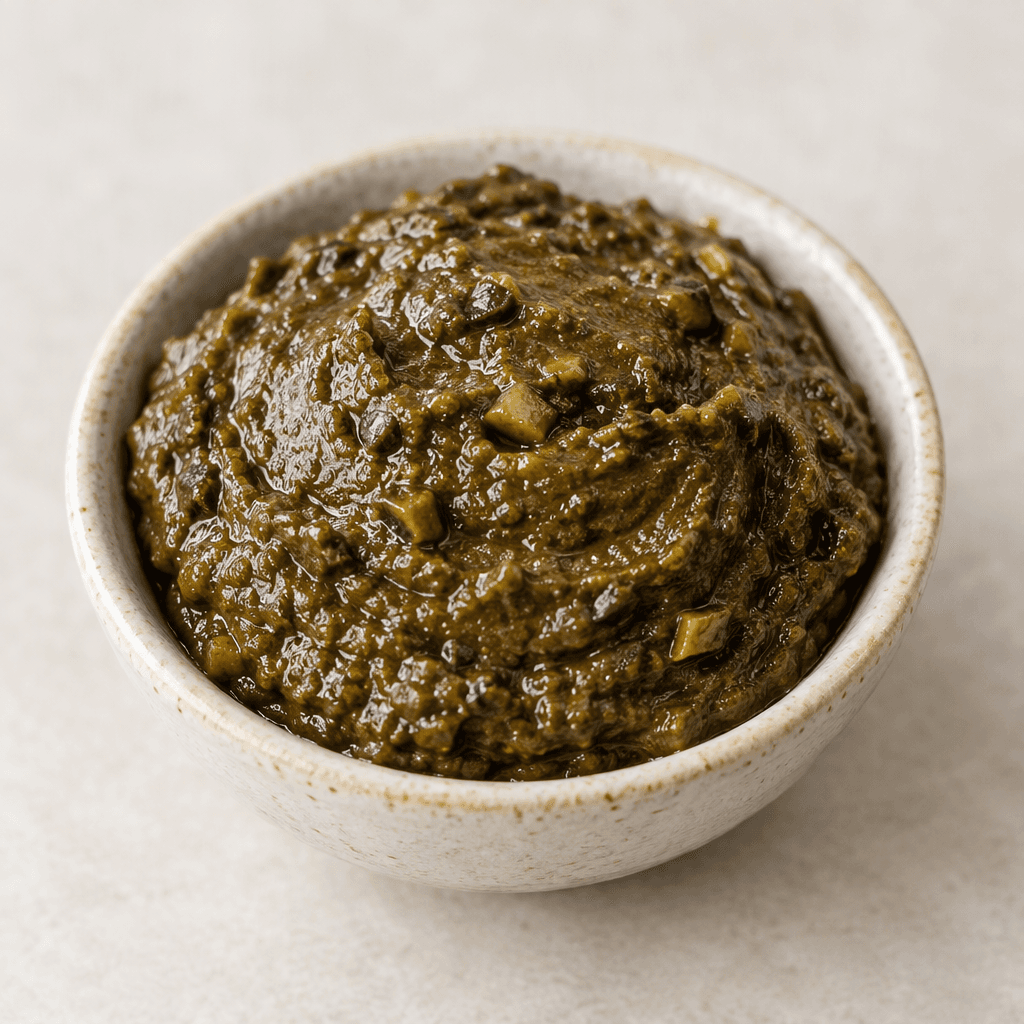
Olive Paste Calories
Olive paste is rich in healthy fats and vitamin E.
In season: Spring · Summer · Autumn · Winter
CALORIES
GI
POTASSIUM
FIBER
Quick answer
1 tablespoon (medium) of Olive Paste (15 g) has 38 calories. That works out to 250 calories per 100 g. It contains 0.9 g of carbs, 0.2 g of protein, 3.6 g of fat and 0.5 g of fiber. Its 180 mg of Sodium covers 8% of the Daily Value. Its glycemic index is 15 (low), so it raises blood sugar slowly.
What is Olive Paste?
Olive Paste is made by finely crushing or blending pitted olives into a spread, with Mediterranean versions varying from simple olive-only blends to recipes with olive oil, herbs or spices. Its flavour is savoury and distinctly briny, and the texture can be smooth or flecked with small pieces of olive.
In Turkey, it is often spread on bread at breakfast or served as part of a meze table; it also works well with cheese, tomatoes and crisp vegetables. It is rich in fats, with some fibre and vitamin E, so a little goes a long way. Spread it thinly for a lighter snack, or stir a spoonful into a sandwich or dressing for a punch of olive flavour.
Olive Paste Nutrition Facts
Selected: 100 g
250
KCAL / 100G
Carbs
6g
· 2% DV
Protein
1.2g
· 2% DV
Fat
24g
· 31% DV
Fiber
3.5g
· 13% DV
DV is the share of the daily value covered, on a 2,000 kcal reference diet.
Calories come from: Carbs 10% · Protein 2% · Fat 88%
Olive Paste Vitamins & Minerals
Vitamins
Vitamin E
3.1mg · 21% DV
Biotin
1.5µg · 5% DV
B5
0.2mg · 4% DV
B1
0.03mg · 3% DV
Minerals
Sodium
1200mg · 52% DV
Iron
1mg · 6% DV
Calcium
52mg · 5% DV
Magnesium
12mg · 3% DV
How Nutritious Is Olive Paste?
Nutrient density
Medium
How many vitamins, minerals and how much fiber this food carries per calorie. A high score means a lot of nutrition for few calories.
Satiety score
Low
An EatBetter score computed from fiber, protein and calorie density. A high score means staying full longer on the same calories.
Both scores are calculated per 100 g and do not change with the selected portion. The satiety score is EatBetter's own calculation, not a clinical measure.
Olive Paste Glycemic Index
GLYCEMIC INDEX
GLYCEMIC LOAD
Accounts for portion size — a more realistic measure than GI alone.
How to Burn Off Olive Paste
To burn the 250 calories in 100 g:
🚶
Walking (5 km/h)
🏃
Running (8 km/h)
🚴
Cycling
🏊
Swimming
Times are calculated with the MET equation for a 70 kg adult. Actual burn varies with your weight, age and pace.
Is Olive Paste Processed?
NOVA 3
Processed
1. Unprocessed
2. Minimally Processed
3. Processed
4. Ultra-Processed
NOVA classifies foods into 4 groups by industrial processing. NOVA 1 (unprocessed) is the healthiest.
Does Olive Paste Contain Allergens?
No known major allergens
Which Diets Is Olive Paste Good For?
Vegan
✓ Suitable
Vegetarian
✓ Suitable
Gluten-Free
✓ Suitable
Dairy-Free
— Not suitable
Mediterranean
✓ Suitable
Paleo
✓ Suitable
Whole30
— Not suitable
DASH
— Not suitable
Keto
✓ Suitable
Low FODMAP
— Not suitable
Olive Paste Fat Profile
SATURATED
3.2g
MONOUNSATURATED
16.5g
POLYUNSATURATED
1.6g
Omega 6:3 ratio 11.7:1
Above the ideal 4:1 (11.7:1).
Compare Olive Paste
Foods Similar to Olive Paste
Frequently Asked Questions About Olive Paste
What is olive paste?
Olive paste is a spread made by finely crushing pitted olives, often with olive oil and seasonings. Recipes vary: some include garlic or capers, while others keep the flavor focused on olives.
How do you use olive paste?
Olive paste works well spread on toast, stirred into sandwiches, or served as a dip with crackers and vegetables. Its concentrated savory flavor also makes a small spoonful useful for adding depth to sauces and dressings.
Is olive paste the same as tapenade?
Olive paste and tapenade are closely related, but they are not always identical. Tapenade traditionally includes capers and may contain anchovies, while olive paste can be made simply from olives, oil, and seasonings.
How do you make olive paste at home?
To make olive paste, blend pitted olives with a little olive oil until the mixture reaches your preferred texture. Add garlic, lemon, or herbs if you like, and taste before adding salt because olives can already be salty.
How long does olive paste last after opening?
Opened olive paste should be kept refrigerated in a tightly closed container. Use a clean utensil each time and follow the package’s storage directions; homemade olive paste should also be refrigerated and used while fresh.
Can you freeze olive paste?
Yes, olive paste can be frozen in small, airtight portions. Its texture may become slightly different after thawing, so stir it well and use it in sauces, sandwiches, or cooking if it is less smooth.
What is the difference between olive paste and pesto?
Olive paste gets its main flavor and body from olives, whereas pesto is typically made with basil, nuts, cheese, garlic, and oil. They can both be spread on bread or mixed into pasta, but taste quite different.
How can you make olive paste less salty?
You can soften very salty olive paste by mixing it with an unsalted ingredient such as cream cheese, plain yogurt, or mashed avocado. Pairing it with unsalted bread and fresh vegetables also makes the saltiness less prominent.
Can you put olive paste in pasta?
Yes, olive paste makes a quick savory pasta sauce. Loosen a small amount with olive oil or pasta water, then toss it through the noodles; taste before seasoning because the paste may already provide plenty of salt.
Is olive paste good for you?
Olive paste provides unsaturated fats and vitamin E from olives, but its salt content varies by recipe. Use it as a flavorful spread or ingredient rather than assuming every product has the same composition.
Have another question about Olive Paste?
Ask the AI nutrition coach — calories, portions, alternatives and more, answered in seconds in the app.

Scan calories with your camera
Instant AI nutrition analysis

Nutrition data compiled from USDA FoodData Central and scientific sources.