

Ready & Packaged Foods
All →Vegetables & Legumes
All →Desserts & Confectionery
All →Meat & Protein
All →Grains & Bakery
All →Beverages
All →Milk & Dairy
All →

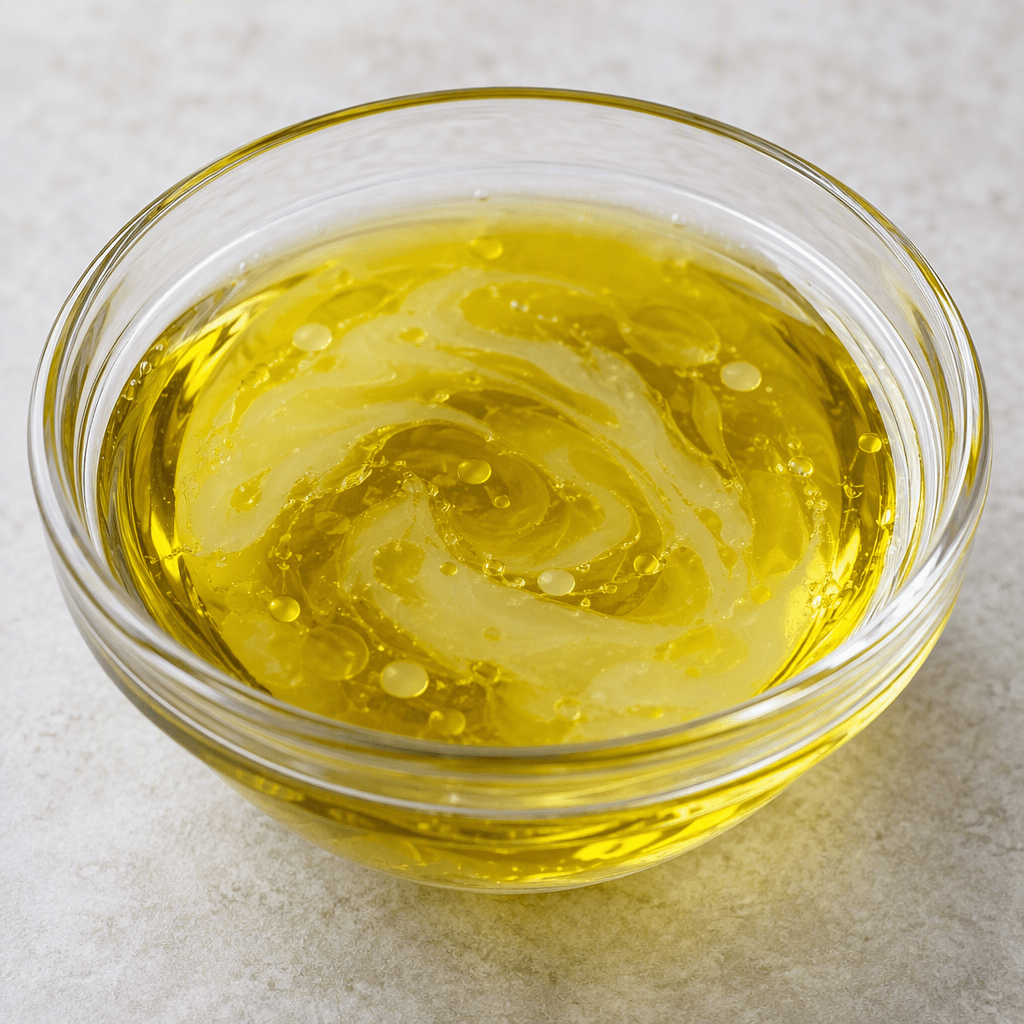
Olive Oil with Lemon Calories
Healthy fat, vitamin C, antioxidant
In season: Spring · Summer · Autumn · Winter
CALORIES
GI
POTASSIUM
FIBER
Quick answer
1 tablespoon (medium) of Olive Oil with Lemon (14 g) has 122 calories. That works out to 870 calories per 100 g. It contains 0.2 g of carbs, 0 g of protein, 13.7 g of fat and 0 g of fiber. Its 2 mg of Vitamin E covers 13% of the Daily Value. Its glycemic index is 0 (low), so it raises blood sugar slowly.
What is Olive Oil with Lemon?
Olive Oil with Lemon is a simple dressing made by combining olive oil with lemon juice or zest. The pairing is familiar across Mediterranean cooking, and it is easy to mix at home; the balance can range from gently fragrant to distinctly sharp depending on how much lemon you use.
Its fruity, smooth richness meets a bright citrus tang. Drizzle it over salads, cooked vegetables or grilled fish, or use it as a dipping oil with bread. It also works well with beans and roasted vegetables. This is a very fat-rich addition: 100 g contains 97.5 g of fat, so a little can bring plenty of flavour. For a lighter dressing, use more lemon juice and measure the oil rather than pouring freely.
Olive Oil with Lemon Nutrition Facts
Selected: 100 g
870
KCAL / 100G
Carbs
1.2g
· 0% DV
Protein
0.1g
· 0% DV
Fat
97.5g
· 125% DV
Fiber
0.1g
· 0% DV
DV is the share of the daily value covered, on a 2,000 kcal reference diet.
Calories come from: Carbs 1% · Protein 0% · Fat 99%
Olive Oil with Lemon Vitamins & Minerals
Vitamins
Vitamin E
14mg · 93% DV
Vitamin K
60µg · 50% DV
Vitamin C
2.5mg · 3% DV
B1
0.01mg · 1% DV
Minerals
Calcium
7mg · 1% DV
Iron
0mg · 0% DV
Magnesium
1mg · 0% DV
Zinc
0mg · 0% DV
How Nutritious Is Olive Oil with Lemon?
Nutrient density
Medium
How many vitamins, minerals and how much fiber this food carries per calorie. A high score means a lot of nutrition for few calories.
Satiety score
Low
An EatBetter score computed from fiber, protein and calorie density. A high score means staying full longer on the same calories.
Both scores are calculated per 100 g and do not change with the selected portion. The satiety score is EatBetter's own calculation, not a clinical measure.
Olive Oil with Lemon Glycemic Index
GLYCEMIC INDEX
GLYCEMIC LOAD
Accounts for portion size — a more realistic measure than GI alone.
How to Burn Off Olive Oil with Lemon
To burn the 870 calories in 100 g:
🚶
Walking (5 km/h)
🏃
Running (8 km/h)
🚴
Cycling
🏊
Swimming
Times are calculated with the MET equation for a 70 kg adult. Actual burn varies with your weight, age and pace.
Is Olive Oil with Lemon Processed?
NOVA 2
Minimally Processed
1. Unprocessed
2. Minimally Processed
3. Processed
4. Ultra-Processed
NOVA classifies foods into 4 groups by industrial processing. NOVA 1 (unprocessed) is the healthiest.
Does Olive Oil with Lemon Contain Allergens?
No known major allergens
Which Diets Is Olive Oil with Lemon Good For?
Vegan
✓ Suitable
Vegetarian
✓ Suitable
Gluten-Free
✓ Suitable
Dairy-Free
— Not suitable
Mediterranean
✓ Suitable
Paleo
— Not suitable
Whole30
— Not suitable
DASH
— Not suitable
Keto
✓ Suitable
Low FODMAP
— Not suitable
Olive Oil with Lemon Fat Profile
SATURATED
13.5g
MONOUNSATURATED
73g
POLYUNSATURATED
10.2g
Omega 6:3 ratio 13.6:1
Above the ideal 4:1 (13.6:1).
Compare Olive Oil with Lemon
Foods Similar to Olive Oil with Lemon
Frequently Asked Questions About Olive Oil with Lemon
How do you make olive oil with lemon?
Olive oil with lemon is made by mixing olive oil with fresh lemon juice. For a salad dressing or finishing sauce, combine them just before serving: the watery juice and oil separate as they stand, so stir or shake the mixture again before using.
What is olive oil with lemon used for?
Olive oil with lemon is commonly used as a dressing or finishing sauce for salads, vegetables, fish, and beans. Its acidity brightens rich flavours; drizzle it over food after cooking to preserve the fresh lemon aroma.
Can you drink olive oil with lemon on an empty stomach?
Yes, you can drink olive oil with lemon, but there is no established extra benefit to taking it on an empty stomach. Lemon may aggravate reflux or stomach irritation, so using the mixture as a food dressing is often more comfortable.
Does olive oil with lemon help you lose weight?
No, olive oil with lemon does not cause weight loss by itself. Adding lemon does not remove the oil’s fat, and drinking the mixture is not a proven slimming method; use it as a measured dressing if you enjoy its taste.
What are the benefits of olive oil with lemon?
Olive oil with lemon combines the unsaturated fats in olive oil with vitamin C from lemon juice. It can make vegetables and other foods more appealing, but it is not a detox, cure, or substitute for a varied diet.
Can you cook with olive oil with lemon?
Yes, olive oil with lemon can be used in cooking, but fresh lemon flavour fades with prolonged high heat. For a brighter taste, cook with plain olive oil and add the lemon mixture to fish or vegetables just before serving.
Is olive oil with lemon good as a salad dressing?
Yes, olive oil with lemon makes a simple salad dressing. Whisk or shake the two together with seasoning just before serving, since the lemon juice and oil separate; add herbs or mustard if you want a thicker, more stable dressing.
How should you store olive oil with lemon?
Store olive oil with fresh lemon juice in a covered container in the refrigerator and use it promptly. Fresh juice adds water and is not a preservative, so do not treat the mixture like a shelf-stable bottle of infused oil.
Is olive oil with lemon the same as lemon-infused olive oil?
No, olive oil with lemon juice is not the same as lemon-infused olive oil. The juice adds acidity and water, while infused oil takes its aroma from lemon peel or other flavouring; the juice-and-oil mixture separates and needs refrigeration.
Does olive oil with lemon detox your liver?
No, olive oil with lemon has not been shown to detox or cleanse the liver. The liver handles the body’s normal processing functions; this mixture is best treated as a flavourful dressing rather than a detox remedy.
Have another question about Olive Oil with Lemon?
Ask the AI nutrition coach — calories, portions, alternatives and more, answered in seconds in the app.

Scan calories with your camera
Instant AI nutrition analysis

Nutrition data compiled from USDA FoodData Central and scientific sources.