

Ready & Packaged Foods
All →Vegetables & Legumes
All →Desserts & Confectionery
All →Meat & Protein
All →Grains & Bakery
All →Beverages
All →Milk & Dairy
All →

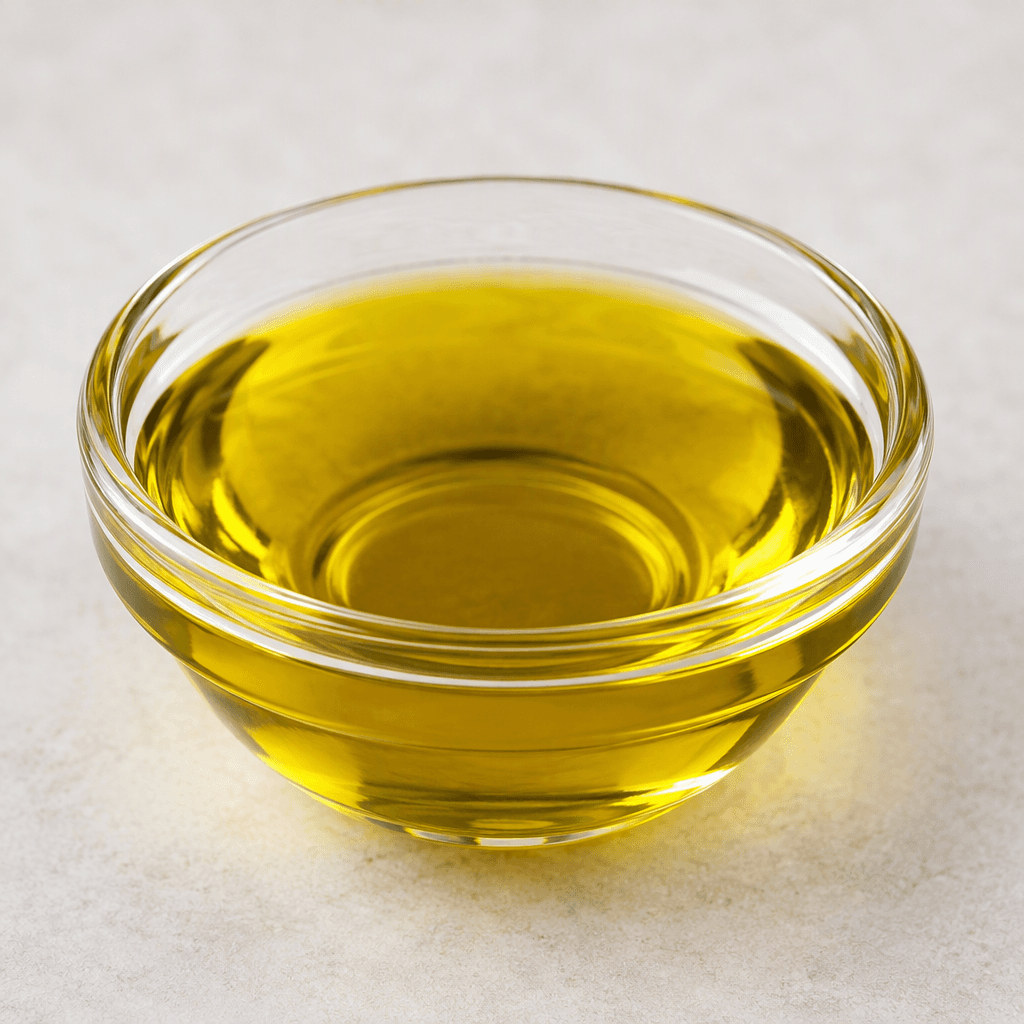
Extra Virgin Olive Oil Calories
Cold-pressed, antioxidant, healthy fats
In season: Autumn · Winter
CALORIES
GI
POTASSIUM
FIBER
Quick answer
1 tablespoon (medium) of Extra Virgin Olive Oil (14 g) has 119 calories. That works out to 884 calories per 100 g. It contains 0 g of carbs, 0 g of protein, 13.5 g of fat and 0 g of fiber. Its 1.9 mg of Vitamin E covers 13% of the Daily Value. Its glycemic index is 0 (low), so it raises blood sugar slowly.
What is Extra Virgin Olive Oil?
Extra virgin olive oil is made from olives using mechanical methods rather than refining, and is closely associated with Mediterranean cooking. Its colour can range from green-gold to deep yellow; depending on the olives and harvest, the flavour may be mellow and fruity or distinctly bitter and peppery.
In its regions of origin and kitchens around the world, it is drizzled over salads, vegetables, bread and finished dishes, as well as used for everyday cooking. It is almost entirely fat, with no carbohydrate or protein, so a little adds plenty of richness. Pair it with lemon, herbs or tomatoes, or measure it with a spoon when you want to keep a dish lighter.
Extra Virgin Olive Oil Nutrition Facts
Selected: 100 g
884
KCAL / 100G
Carbs
0g
· 0% DV
Protein
0g
· 0% DV
Fat
100g
· 128% DV
Fiber
0g
· 0% DV
DV is the share of the daily value covered, on a 2,000 kcal reference diet.
Calories come from: Carbs 0% · Protein 0% · Fat 100%
Extra Virgin Olive Oil Vitamins & Minerals
Vitamins
Vitamin E
14.35mg · 96% DV
Vitamin K
60.2µg · 50% DV
Vitamin A
0µg · 0% DV
B1
0mg · 0% DV
Minerals
Iron
1mg · 6% DV
Calcium
1mg · 0% DV
Magnesium
0mg · 0% DV
Zinc
0mg · 0% DV
How Nutritious Is Extra Virgin Olive Oil?
Nutrient density
Low
How many vitamins, minerals and how much fiber this food carries per calorie. A high score means a lot of nutrition for few calories.
Satiety score
Low
An EatBetter score computed from fiber, protein and calorie density. A high score means staying full longer on the same calories.
Both scores are calculated per 100 g and do not change with the selected portion. The satiety score is EatBetter's own calculation, not a clinical measure.
Extra Virgin Olive Oil Glycemic Index
GLYCEMIC INDEX
GLYCEMIC LOAD
Accounts for portion size — a more realistic measure than GI alone.
How to Burn Off Extra Virgin Olive Oil
To burn the 884 calories in 100 g:
🚶
Walking (5 km/h)
🏃
Running (8 km/h)
🚴
Cycling
🏊
Swimming
Times are calculated with the MET equation for a 70 kg adult. Actual burn varies with your weight, age and pace.
Is Extra Virgin Olive Oil Processed?
NOVA 2
Minimally Processed
1. Unprocessed
2. Minimally Processed
3. Processed
4. Ultra-Processed
NOVA classifies foods into 4 groups by industrial processing. NOVA 1 (unprocessed) is the healthiest.
Does Extra Virgin Olive Oil Contain Allergens?
No known major allergens
Which Diets Is Extra Virgin Olive Oil Good For?
Vegan
✓ Suitable
Vegetarian
✓ Suitable
Gluten-Free
✓ Suitable
Dairy-Free
— Not suitable
Mediterranean
✓ Suitable
Paleo
✓ Suitable
Whole30
— Not suitable
DASH
— Not suitable
Keto
✓ Suitable
Low FODMAP
— Not suitable
Extra Virgin Olive Oil Fat Profile
SATURATED
13.8g
MONOUNSATURATED
73g
POLYUNSATURATED
10.5g
Omega 6:3 ratio 12.8:1
Above the ideal 4:1 (12.8:1).
Compare Extra Virgin Olive Oil
Foods Similar to Extra Virgin Olive Oil
Frequently Asked Questions About Extra Virgin Olive Oil
Can you cook with extra virgin olive oil?
Yes, extra virgin olive oil works for everyday cooking, including sautéing and roasting. Keep the heat below the point where the oil smokes; excessive heat can damage its flavor and quality.
What does extra virgin mean in extra virgin olive oil?
“Extra virgin” means the olive oil is obtained by mechanical means rather than chemical refining and meets standards for acidity and sensory quality. It is the highest grade of olive oil.
How should you store extra virgin olive oil?
Store extra virgin olive oil tightly closed in a cool, dark place, away from the stove and direct sunlight. Exposure to heat, light, and air speeds up the loss of its fresh aroma.
Does extra virgin olive oil go bad?
Yes, extra virgin olive oil can become rancid as it oxidizes. A stale smell or taste resembling cardboard, crayons, or old nuts suggests that it has lost its fresh, fruity character.
What is the difference between extra virgin olive oil and regular olive oil?
Extra virgin olive oil is mechanically extracted and not refined, while regular olive oil is typically refined olive oil blended with some virgin olive oil. The extra virgin version generally has a more pronounced olive flavor.
Why does extra virgin olive oil taste bitter or peppery?
Bitterness and a peppery sensation can come from the olive variety, harvest timing, and naturally occurring phenolic compounds. These flavors are not, by themselves, signs that extra virgin olive oil has spoiled.
Does extra virgin olive oil solidify in the refrigerator?
Yes, extra virgin olive oil may turn cloudy or partly solid in the refrigerator, then become liquid again at room temperature. This is a normal response to cold and does not prove whether the oil is authentic.
Can you use extra virgin olive oil for baking?
Yes, extra virgin olive oil can replace other fats in many cakes, breads, and savory bakes. Its flavor may come through, so choose a milder-tasting oil when you do not want an olive note.
How can you tell if extra virgin olive oil is real?
You cannot reliably confirm that extra virgin olive oil is genuine by its color or by chilling it. Check that the label identifies it as extra virgin and buy from a producer or seller with traceable sourcing.
Is extra virgin olive oil good for heart health?
Yes, using extra virgin olive oil in place of butter or other fats high in saturated fat can support a heart-healthy eating pattern. Its unsaturated fats are the main reason it is commonly included in Mediterranean-style diets.
Have another question about Extra Virgin Olive Oil?
Ask the AI nutrition coach — calories, portions, alternatives and more, answered in seconds in the app.

Scan calories with your camera
Instant AI nutrition analysis

Nutrition data compiled from USDA FoodData Central and scientific sources.