

Ready & Packaged Foods
All →Vegetables & Legumes
All →Desserts & Confectionery
All →Meat & Protein
All →Grains & Bakery
All →Beverages
All →Milk & Dairy
All →

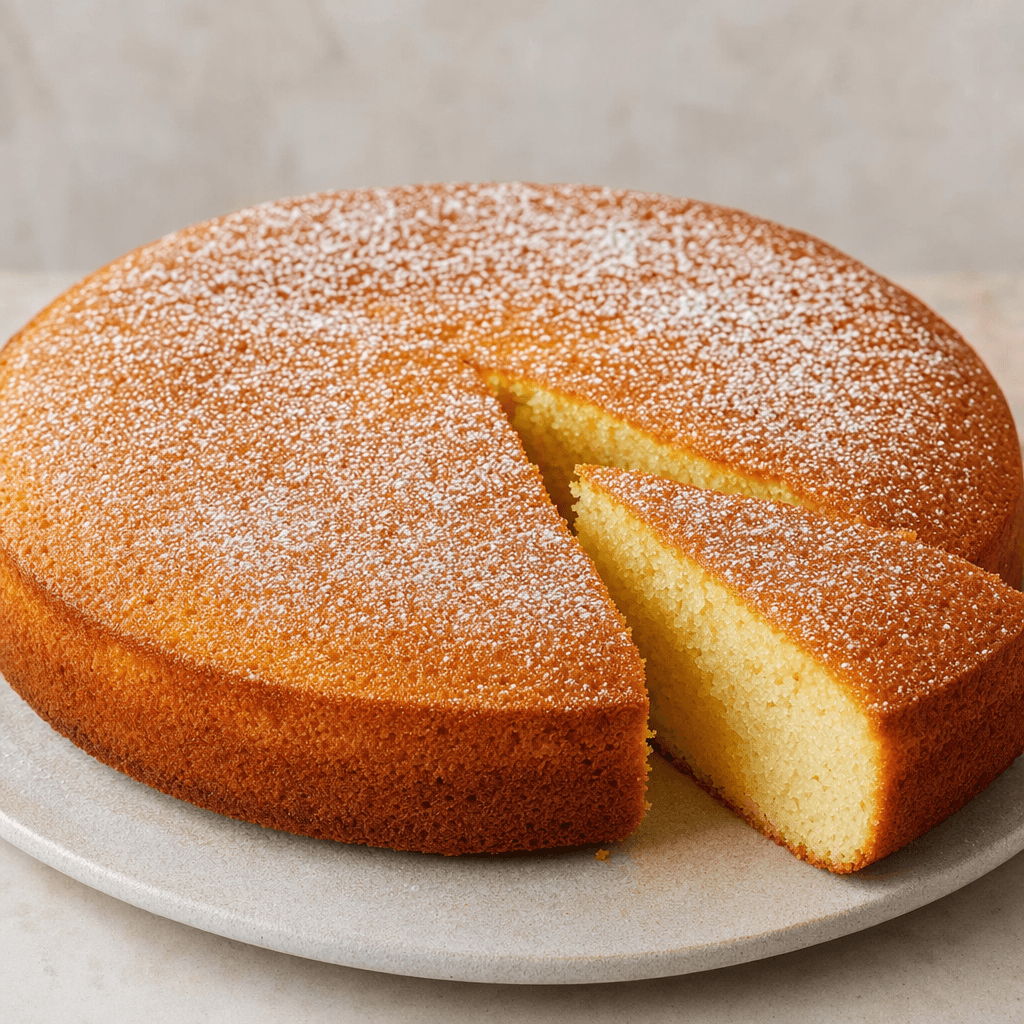
Olive Oil Cake Calories
Moist cake made with olive oil, Mediterranean specialty
In season: Spring · Summer · Autumn · Winter
CALORIES · 100 G
GI
POTASSIUM · 100 G
FIBER · 100 G
Quick answer
1 slice (medium) of Olive Oil Cake (60 g) has 222 calories. That works out to 370 calories per 100 g. It contains 28.8 g of carbs, 2.7 g of protein, 10.8 g of fat and 0.7 g of fiber. Its 0.7 mg of Vitamin E covers 5% of the Daily Value. Its glycemic index is 60 (medium), so it raises blood sugar at a moderate pace.
Olive Oil Cake Nutrition Facts
Selected: 1 slice (medium) · 60 g
222
KCAL / 60G
Carbs
28.8g
· 10% DV
Protein
2.7g
· 5% DV
Fat
10.8g
· 14% DV
Fiber
0.7g
· 3% DV
DV is the share of the daily value covered, on a 2,000 kcal reference diet.
Calories come from: Carbs 52% · Protein 5% · Fat 43%
Olive Oil Cake nutrition facts table · 1 slice (medium) (60 g)
| Nutrient | Amount | % DV |
|---|---|---|
| Calories | 222 kcal | |
| Total fat | 10.8 g | 14% |
| Saturated fat | 1.5 g | 8% |
| Trans fat | 0 g | |
| Sodium | 108 mg | 5% |
| Total carbohydrate | 28.8 g | 10% |
| Fiber | 0.7 g | 3% |
| Protein | 2.7 g | 5% |
Calories: Calories measure energy. Average daily need is 2,000 kcal. Excess calories are stored as fat, too few cause weight loss.
Carbs: Your body's primary energy source. The brain runs exclusively on carbs. Daily need: 275g.
Protein: Essential for muscle repair and cell growth. Daily need: 50g. Keeps you full and boosts metabolism.
Fat: Needed for hormone production and vitamin absorption. Daily need: 78g. Limit saturated fats, choose unsaturated.
Fiber: Critical for digestive health and satiety. Daily need: 28g. Stabilizes blood sugar, lowers cholesterol.

Log this food in EatBetter
100,000+ people use it
- Get your daily calorie target
- Snap your meal, log it in seconds
- See every vitamin and mineral

📸 Scan the code to get the app free.

How Many Calories in 1 Slice of Olive Oil Cake?
| Serving | Amount | Calories |
|---|---|---|
| 1 slice (medium) | 60 g | 222 kcal |
| 1 piece (small) | 30 g | 111 kcal |
| 1 slice (thin) | 40 g | 148 kcal |
| 1 serving (medium) | 80 g | 296 kcal |
| 1 slice (thick) | 90 g | 333 kcal |
| 100 g | 100 g | 370 kcal |
| 1 piece (large) | 120 g | 444 kcal |
| 1 serving (large) | 120 g | 444 kcal |
| 1 piece (jumbo) | 180 g | 666 kcal |
Calculated from 370 calories per 100 g.
Frequently Asked Questions About Olive Oil Cake
What is olive oil cake?
Olive oil cake is a cake made with olive oil instead of butter as its main fat. It is often moist and tender, and may be flavored with citrus, herbs, or spices.
Does olive oil cake taste like olive oil?
Olive oil cake can have a gentle fruity or peppery note, but it usually does not taste strongly of oil. The flavor depends on the olive oil; a milder one keeps the cake more neutral.
Can you use extra-virgin olive oil in olive oil cake?
Yes, extra-virgin olive oil works well in olive oil cake and gives it a more noticeable fruity flavor. Choose one whose taste you enjoy on its own, since baking will not remove its character.
Why is olive oil cake so moist?
Olive oil stays liquid at room temperature, which helps olive oil cake retain a soft, moist texture. It also keeps well compared with cakes made with solid fats, provided you store it covered.
How is olive oil cake different from regular cake?
Olive oil cake uses oil rather than butter, so it tends to have a softer, more tender crumb and a mild fruity flavor. Its texture and taste vary with the recipe and the oil used.
Can you make olive oil cake with lemon?
Yes, lemon is a common pairing for olive oil cake. Add finely grated zest to the batter for fragrant citrus flavor; a little lemon juice can brighten the taste, but too much may alter the batter.
What can you serve with olive oil cake?
Olive oil cake pairs well with fresh berries, citrus, or a spoonful of yogurt or whipped cream. Coffee and tea are also good choices, especially when the cake is served plain.
How should you store olive oil cake?
Store olive oil cake covered at room temperature for a few days so it stays moist. If the room is very warm or the cake has a perishable topping, refrigerate it in a sealed container.
Can olive oil cake be frozen?
Yes, olive oil cake freezes well when wrapped tightly or sealed in an airtight container. Freeze it whole or in slices, then thaw it at room temperature before serving.
Can you taste the difference between olive oil cake and butter cake?
Yes, olive oil cake often has a subtler, fruitier flavor and a more tender crumb than butter cake. The difference is clearest when the recipe uses an aromatic olive oil and few competing flavors.
Olive Oil Cake Vitamins & Minerals
Vitamins
Vitamin E
0.72mg · 5% DV
B2
0.05mg · 4% DV
B1
0.05mg · 4% DV
Biotin
1.2µg · 4% DV
Minerals
Phosphorus
36mg · 5% DV
Sodium
108mg · 5% DV
Copper
0.03mg · 3% DV
Selenium
1.8µg · 3% DV
Potassium ⭐
42mg · 1% DV
Olive Oil Cake Glycemic Index
GLYCEMIC INDEX
GLYCEMIC LOAD
Accounts for portion size — a more realistic measure than GI alone.
How to Burn Off Olive Oil Cake
To burn the 222 calories in 1 slice (medium) (60 g):
🚶
Walking (5 km/h)
🏃
Running (8 km/h)
🚴
Cycling
🏊
Swimming
Times are calculated with the MET equation for a 70 kg adult. Actual burn varies with your weight, age and pace.
What is Olive Oil Cake?
Olive Oil Cake is a tender, moist cake made with olive oil in place of butter, associated with Mediterranean home baking. Its simple batter commonly includes flour, eggs and sugar, and may be flavoured with citrus zest or kept plain. Olive oil gives the crumb a supple texture and a subtle fruitiness rather than making the cake taste savoury.
It is served in slices with coffee or tea, as an everyday dessert or an afternoon treat; a dusting of powdered sugar is a familiar finishing touch. The combination of flour, sugar and oil makes it an energy-dense sweet: a 100 g portion provides 370 kcal. For a lighter serving, choose a smaller slice and pair it with fresh fruit or unsweetened tea.
How Nutritious Is Olive Oil Cake?
Nutrient density
Low
How many vitamins, minerals and how much fiber this food carries per calorie. A high score means a lot of nutrition for few calories.
Satiety score
Low
An EatBetter score computed from fiber, protein and calorie density. A high score means staying full longer on the same calories.
Both scores are calculated per 100 g and do not change with the selected portion. The satiety score is EatBetter's own calculation, not a clinical measure.
Is Olive Oil Cake Processed?
NOVA 3
Processed
1. Unprocessed
2. Minimally Processed
3. Processed
4. Ultra-Processed
NOVA classifies foods into 4 groups by industrial processing. NOVA 1 (unprocessed) is the healthiest.
Does Olive Oil Cake Contain Allergens?
Contains these allergens:
Which Diets Is Olive Oil Cake Good For?
Vegan
— Not suitable
Vegetarian
— Not suitable
Gluten-Free
— Not suitable
Dairy-Free
— Not suitable
Mediterranean
✓ Suitable
Paleo
— Not suitable
Whole30
— Not suitable
DASH
— Not suitable
Keto
— Not suitable
Low FODMAP
— Not suitable
Olive Oil Cake Fat Profile
SATURATED
1.5g
MONOUNSATURATED
7.2g
POLYUNSATURATED
0.78g
Omega 6:3 ratio 24:1
Above the ideal 4:1 (24:1).
Compare Olive Oil Cake
Foods Similar to Olive Oil Cake
Have another question about Olive Oil Cake?
Ask the AI nutrition coach — calories, portions, alternatives and more, answered in seconds in the app.

Scan calories with your camera
Instant AI nutrition analysis

Nutrition data compiled from USDA FoodData Central and scientific sources.