

Ready & Packaged Foods
All →Vegetables & Legumes
All →Desserts & Confectionery
All →Meat & Protein
All →Grains & Bakery
All →Beverages
All →Milk & Dairy
All →

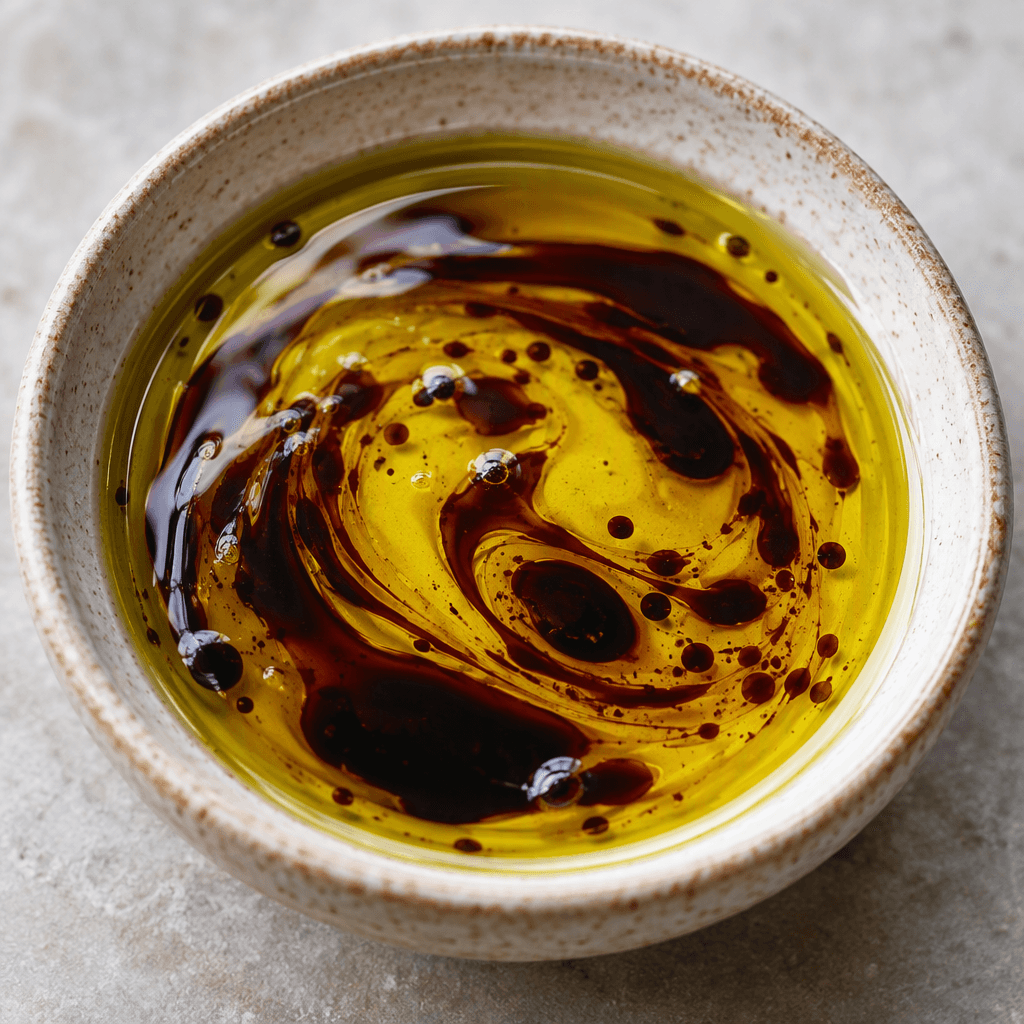
Olive Oil & Balsamic Sauce Calories
Classic sauce made with olive oil and balsamic vinegar. Contains healthy fats and antioxidants.
In season: Spring · Summer · Autumn · Winter
CALORIES
GI
POTASSIUM
FIBER
Quick answer
1 tablespoon (medium) of Olive Oil & Balsamic Sauce (15 g) has 56 calories. That works out to 370 calories per 100 g. It contains 1.1 g of carbs, 0 g of protein, 5.7 g of fat and 0 g of fiber. Its glycemic index is 15 (low), so it raises blood sugar slowly.
What is Olive Oil & Balsamic Sauce?
Olive oil and balsamic sauce brings together fruity olive oil and the sharp, gently sweet flavour of balsamic vinegar. It is a simple dressing associated with Italian cooking, though the balance and thickness vary with the vinegar used.
Toss it through leafy salads, drizzle a little over roasted vegetables, or serve it alongside bread for dipping. In Mediterranean-style meals, it also works well with tomatoes and grilled vegetables. The sauce is mostly fat from the olive oil, with 38 g of fat per 100 g; balsamic vinegar contributes much of its tang and sweetness. For a lighter-tasting salad, whisk the sauce in a small bowl and add just enough to coat the leaves.
Olive Oil & Balsamic Sauce Nutrition Facts
Selected: 100 g
370
KCAL / 100G
Carbs
7.5g
· 3% DV
Protein
0.2g
· 0% DV
Fat
38g
· 49% DV
Fiber
0.1g
· 0% DV
DV is the share of the daily value covered, on a 2,000 kcal reference diet.
Calories come from: Carbs 8% · Protein 0% · Fat 92%
Olive Oil & Balsamic Sauce Vitamins & Minerals
Vitamins
Vitamin E
3.2mg · 21% DV
Vitamin K
8µg · 7% DV
B1
0.01mg · 1% DV
B2
0.01mg · 1% DV
Minerals
Calcium
15mg · 2% DV
Phosphorus
7mg · 1% DV
Potassium ⭐
30mg · 1% DV
Iron
0mg · 0% DV
How Nutritious Is Olive Oil & Balsamic Sauce?
Nutrient density
Medium
How many vitamins, minerals and how much fiber this food carries per calorie. A high score means a lot of nutrition for few calories.
Satiety score
Low
An EatBetter score computed from fiber, protein and calorie density. A high score means staying full longer on the same calories.
Both scores are calculated per 100 g and do not change with the selected portion. The satiety score is EatBetter's own calculation, not a clinical measure.
Olive Oil & Balsamic Sauce Glycemic Index
GLYCEMIC INDEX
GLYCEMIC LOAD
Accounts for portion size — a more realistic measure than GI alone.
How to Burn Off Olive Oil & Balsamic Sauce
To burn the 370 calories in 100 g:
🚶
Walking (5 km/h)
🏃
Running (8 km/h)
🚴
Cycling
🏊
Swimming
Times are calculated with the MET equation for a 70 kg adult. Actual burn varies with your weight, age and pace.
Is Olive Oil & Balsamic Sauce Processed?
NOVA 2
Minimally Processed
1. Unprocessed
2. Minimally Processed
3. Processed
4. Ultra-Processed
NOVA classifies foods into 4 groups by industrial processing. NOVA 1 (unprocessed) is the healthiest.
Does Olive Oil & Balsamic Sauce Contain Allergens?
No known major allergens
Which Diets Is Olive Oil & Balsamic Sauce Good For?
Vegan
✓ Suitable
Vegetarian
✓ Suitable
Gluten-Free
✓ Suitable
Dairy-Free
— Not suitable
Mediterranean
✓ Suitable
Paleo
✓ Suitable
Whole30
— Not suitable
DASH
— Not suitable
Keto
✓ Suitable
Low FODMAP
— Not suitable
Olive Oil & Balsamic Sauce Fat Profile
SATURATED
5.5g
MONOUNSATURATED
28g
POLYUNSATURATED
2.5g
Omega 6:3 ratio 7:1
Above the ideal 4:1 (7:1).
Compare Olive Oil & Balsamic Sauce
Foods Similar to Olive Oil & Balsamic Sauce
Frequently Asked Questions About Olive Oil & Balsamic Sauce
What is Olive Oil & Balsamic Sauce made of?
Olive Oil & Balsamic Sauce is made from olive oil and balsamic vinegar. The two ingredients create a tangy, fruity dressing when whisked together. Some versions add mustard, herbs, or seasoning, but the classic sauce needs only the oil and vinegar.
How do you make Olive Oil & Balsamic Sauce?
Whisk olive oil and balsamic vinegar together to make Olive Oil & Balsamic Sauce. Mix them in a small bowl just before serving, or shake them in a sealed jar. Taste as you go so the vinegar does not overpower the dressing.
Can Olive Oil & Balsamic Sauce be used as a bread dip?
Yes, Olive Oil & Balsamic Sauce works well as a bread dip. Pour it onto a shallow plate and dip crusty bread just before eating. Stir or swirl the sauce again first, since the oil and vinegar naturally separate.
Why does Olive Oil & Balsamic Sauce separate?
Olive Oil & Balsamic Sauce separates because oil and vinegar do not stay mixed on their own. Separation is normal, not a sign that the sauce has gone bad. Whisk it again or shake it in a jar immediately before serving.
What salads go with Olive Oil & Balsamic Sauce?
Olive Oil & Balsamic Sauce pairs especially well with tomato, leafy greens, rocket, and mozzarella salads. Its acidity balances rich cheese and ripe vegetables. Add it shortly before serving so the greens do not wilt in the dressing.
Can you cook with Olive Oil & Balsamic Sauce?
Yes, you can cook with Olive Oil & Balsamic Sauce, but balsamic vinegar can darken and become sticky as it reduces. Add the sauce near the end of cooking or drizzle it over roasted vegetables after they come out of the oven.
How do you keep Olive Oil & Balsamic Sauce from separating?
A small amount of mustard can help Olive Oil & Balsamic Sauce stay blended longer. Whisk the mustard with the balsamic vinegar first, then gradually whisk in the olive oil. The sauce may still separate eventually, so remix it before serving.
Can Olive Oil & Balsamic Sauce be used to marinate chicken?
Yes, Olive Oil & Balsamic Sauce can flavor chicken as a marinade. Coat the chicken and keep it refrigerated while it marinates; discard any marinade that touched raw chicken, or bring it to a full boil before using it as a sauce.
What can replace Olive Oil & Balsamic Sauce in a recipe?
A simple mix of olive oil and red wine vinegar can replace Olive Oil & Balsamic Sauce in many dressings. The flavor will be less sweet and complex, so add a little sweetness if the recipe relies on balsamic vinegar’s characteristic taste.
Is Olive Oil & Balsamic Sauce the same as balsamic glaze?
No, Olive Oil & Balsamic Sauce is not the same as balsamic glaze. The sauce combines olive oil with pourable balsamic vinegar, while glaze is a thicker, often sweeter reduction that is usually drizzled over food in a smaller amount.
Have another question about Olive Oil & Balsamic Sauce?
Ask the AI nutrition coach — calories, portions, alternatives and more, answered in seconds in the app.

Scan calories with your camera
Instant AI nutrition analysis

Nutrition data compiled from USDA FoodData Central and scientific sources.