

Ready & Packaged Foods
All →Vegetables & Legumes
All →Desserts & Confectionery
All →Meat & Protein
All →Grains & Bakery
All →Beverages
All →Milk & Dairy
All →

Oleaster Calories
Rich in vitamin C and fiber, source of antioxidants
In season: Autumn
CALORIES
GI
POTASSIUM
FIBER
Quick answer
1 piece (medium) of Oleaster (25 g) has 20 calories. That works out to 81 calories per 100 g. It contains 4.6 g of carbs, 0.3 g of protein, 0.2 g of fat and 1.1 g of fiber. Its 8 mg of Vitamin C covers 9% of the Daily Value. Its glycemic index is 40 (low), so it raises blood sugar slowly.
What is Oleaster?
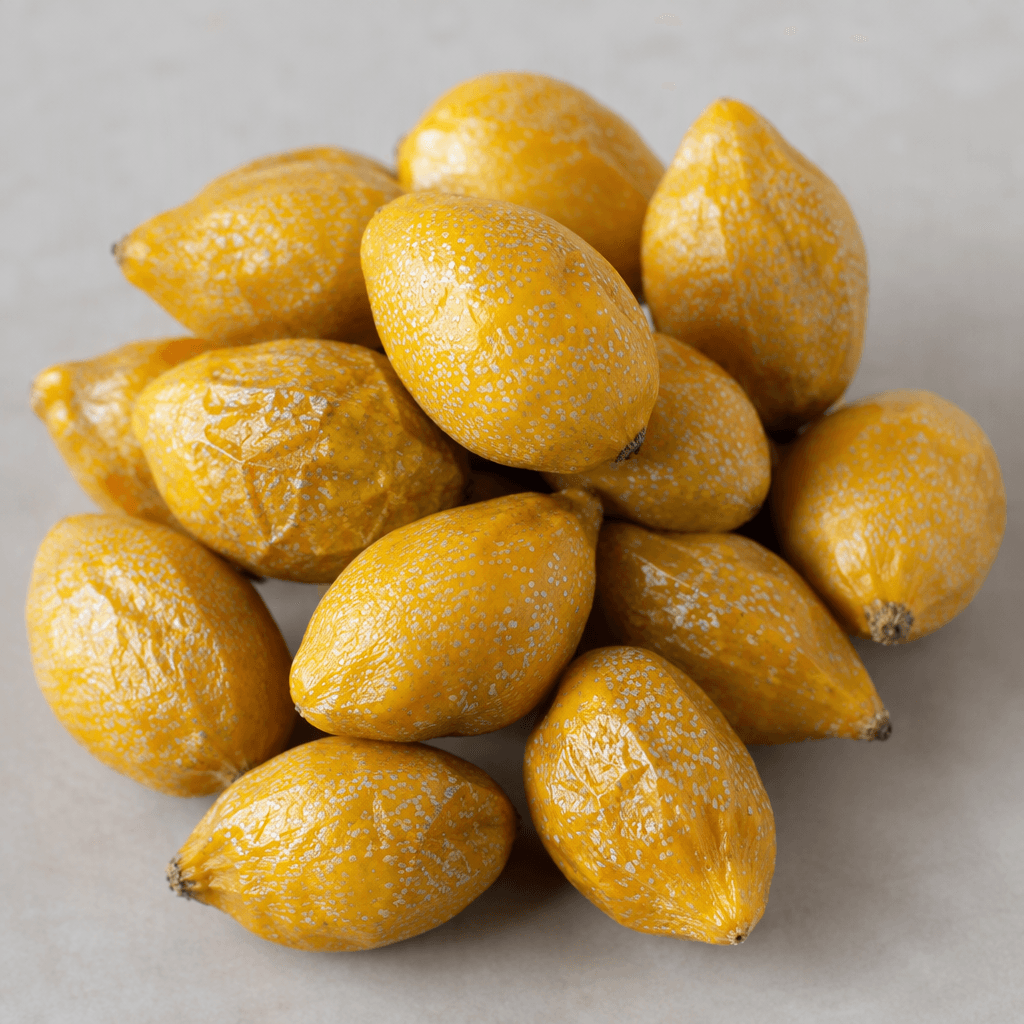
Oleaster is the small, oval fruit of the oleaster tree, also known as Russian olive, which grows across parts of western and central Asia. Its golden-yellow skin may be speckled, while the thin layer of flesh around the hard stone is mealy and a little dry. The fruit is eaten fresh when ripe or dried for later; its flavour is gently sweet, sometimes with a faint tartness.
In Turkey and nearby regions, people often snack on it as it is, including alongside tea, and dried fruit is a familiar way to keep it. Oleaster is a fibre-rich fruit with little fat, and it also provides vitamin C. Its dry, floury texture pairs well with other dried fruit and nuts; if you find it too dry to eat on its own, have water alongside.
Oleaster Nutrition Facts
Selected: 100 g
81
KCAL / 100G
Carbs
18.5g
· 7% DV
Protein
1.2g
· 2% DV
Fat
0.8g
· 1% DV
Fiber
4.5g
· 16% DV
DV is the share of the daily value covered, on a 2,000 kcal reference diet.
Calories come from: Carbs 86% · Protein 6% · Fat 8%
Oleaster Vitamins & Minerals
Vitamins
Vitamin C
32mg · 36% DV
Vitamin E
0.7mg · 5% DV
Vitamin A
25µg · 3% DV
B1
0.03mg · 3% DV
Minerals
Potassium ⭐
290mg · 9% DV
Calcium
55mg · 6% DV
Iron
1mg · 6% DV
Phosphorus
32mg · 5% DV
How Nutritious Is Oleaster?
Nutrient density
High
How many vitamins, minerals and how much fiber this food carries per calorie. A high score means a lot of nutrition for few calories.
Satiety score
Medium
An EatBetter score computed from fiber, protein and calorie density. A high score means staying full longer on the same calories.
Both scores are calculated per 100 g and do not change with the selected portion. The satiety score is EatBetter's own calculation, not a clinical measure.
Oleaster Glycemic Index
GLYCEMIC INDEX
GLYCEMIC LOAD
Accounts for portion size — a more realistic measure than GI alone.
How to Burn Off Oleaster
To burn the 81 calories in 100 g:
🚶
Walking (5 km/h)
🏃
Running (8 km/h)
🚴
Cycling
🏊
Swimming
Times are calculated with the MET equation for a 70 kg adult. Actual burn varies with your weight, age and pace.
Is Oleaster Processed?
NOVA 1
Unprocessed
1. Unprocessed
2. Minimally Processed
3. Processed
4. Ultra-Processed
NOVA classifies foods into 4 groups by industrial processing. NOVA 1 (unprocessed) is the healthiest.
Does Oleaster Contain Allergens?
No known major allergens
Which Diets Is Oleaster Good For?
Vegan
✓ Suitable
Vegetarian
✓ Suitable
Gluten-Free
✓ Suitable
Dairy-Free
— Not suitable
Mediterranean
✓ Suitable
Paleo
✓ Suitable
Whole30
— Not suitable
DASH
— Not suitable
Keto
— Not suitable
Low FODMAP
— Not suitable
Oleaster Fat Profile
SATURATED
0.2g
MONOUNSATURATED
0.3g
POLYUNSATURATED
0.3g
Omega 6:3 ratio 3:1
Below the ideal 4:1 — a good omega balance.
Compare Oleaster
Foods Similar to Oleaster
Frequently Asked Questions About Oleaster
Is oleaster fruit edible?
Yes, oleaster fruit is edible and can be eaten fresh or dried. Its flesh is eaten while the hard central seed is usually discarded; avoid biting down on the seed because it can be tough on teeth.
What does oleaster taste like?
Oleaster has a mildly sweet, sometimes astringent flavor and a dry, floury texture. Riper fruits tend to taste sweeter, while less-ripe ones can feel more puckery in the mouth.
How do you eat oleaster?
Wash fresh oleaster and eat the flesh around its hard seed, or enjoy dried fruit as a snack. You can also soak dried oleaster briefly if its texture feels too dry, then remove and discard the seed.
Is oleaster the same as sea buckthorn?
No. Oleaster is the fruit of Elaeagnus angustifolia, also known as Russian olive; sea buckthorn comes from a different plant. The names can be confused, but they are not the same fruit.
When is oleaster ripe?
Oleaster usually ripens in autumn. Ripe fruits are golden yellow and may soften or wrinkle slightly; very firm, greenish fruits are generally less ripe and can taste more astringent.
How should you store oleaster?
Keep fresh oleaster in a breathable container in a cool place, or refrigerate it to help it last longer. Store dried oleaster in a sealed container away from moisture, and discard fruit that becomes moldy or smells off.
Can you eat oleaster seeds?
The hard seed inside oleaster is generally not eaten; people eat the surrounding flesh and discard the seed. Do not try to crack it with your teeth, as its hardness can damage or strain them.
What is oleaster used for?
Oleaster is eaten fresh or dried, and dried fruit can be added to snacks or cooked dishes. Its distinctive dry, mildly sweet flesh also makes it suitable for traditional fruit preparations, though the seeds should be removed.
Is oleaster good for you?
Oleaster provides vitamin C, fiber, and antioxidant compounds, so it can be a nutritious fruit choice. It is not a cure or treatment for illness; enjoy it as one part of a varied diet.
Why does oleaster make your mouth feel dry?
Oleaster can feel dry and mealy in the mouth, especially when it is dried or not fully ripe. Its texture and astringent compounds contribute to that sensation; drinking water alongside it can help.
Have another question about Oleaster?
Ask the AI nutrition coach — calories, portions, alternatives and more, answered in seconds in the app.

Scan calories with your camera
Instant AI nutrition analysis

Nutrition data compiled from USDA FoodData Central and scientific sources.