

Ready & Packaged Foods
All →Vegetables & Legumes
All →Desserts & Confectionery
All →Meat & Protein
All →Grains & Bakery
All →Beverages
All →Milk & Dairy
All →

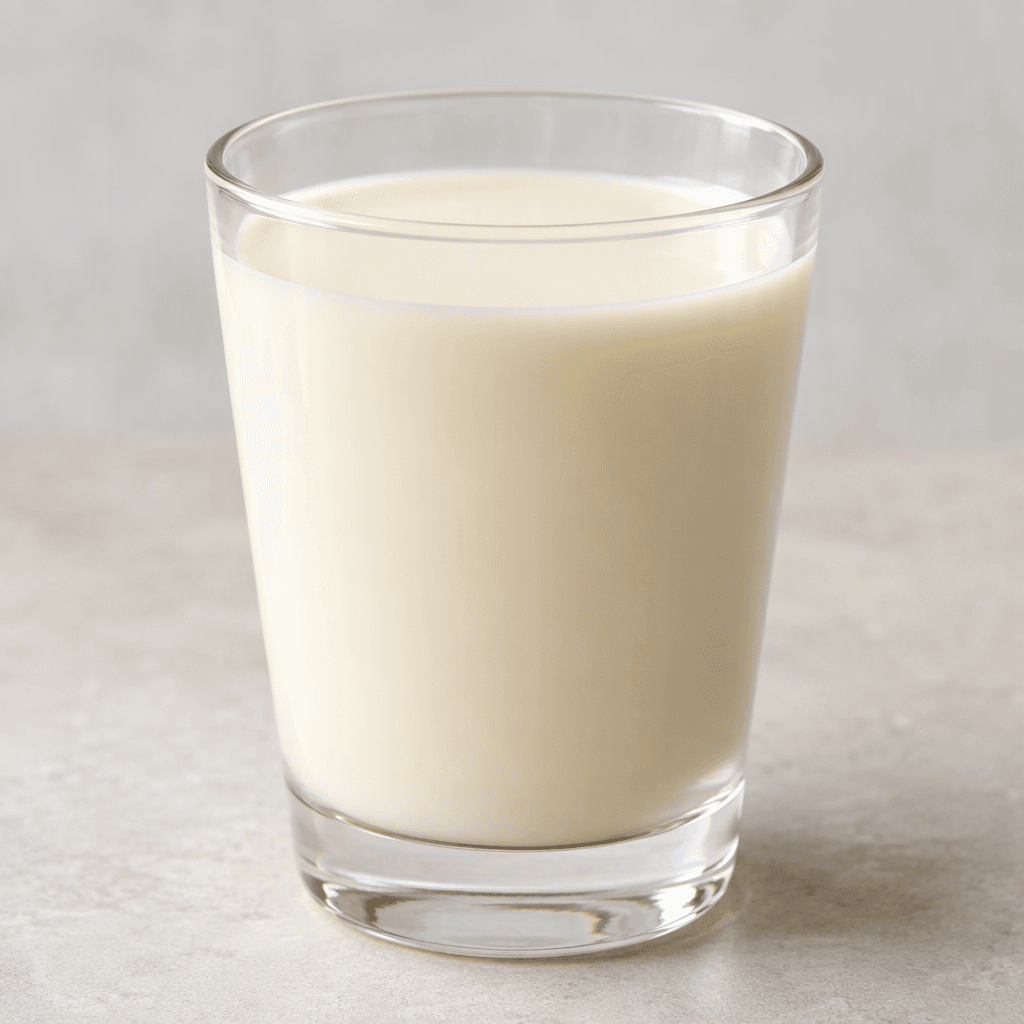
Oatly Oat Milk Calories
Plant-based milk alternative, vegan, contains fiber, low saturated fat
In season: Spring · Summer · Autumn · Winter
CALORIES · 100 G
GI
POTASSIUM · 100 G
FIBER · 100 G
Quick answer
1 cup (medium) of Oatly Oat Milk (240 g) has 106 calories. That works out to 44 calories per 100 g. It contains 15.6 g of carbs, 2.4 g of protein, 3.6 g of fat and 2.4 g of fiber. Its 0.5 mg of B2 covers 39% of the Daily Value. Its glycemic index is 60 (medium), so it raises blood sugar at a moderate pace.
Oatly Oat Milk Nutrition Facts
Selected: 1 cup (medium) · 240 g
106
KCAL / 240G
Carbs
15.6g
· 6% DV
Protein
2.4g
· 5% DV
Fat
3.6g
· 5% DV
Fiber
2.4g
· 9% DV
DV is the share of the daily value covered, on a 2,000 kcal reference diet.
Calories come from: Carbs 60% · Protein 9% · Fat 31%
Oatly Oat Milk nutrition facts table · 1 cup (medium) (240 g)
| Nutrient | Amount | % DV |
|---|---|---|
| Calories | 106 kcal | |
| Total fat | 3.6 g | 5% |
| Saturated fat | 0.48 g | 2% |
| Trans fat | 0 g | |
| Sodium | 96 mg | 4% |
| Total carbohydrate | 15.6 g | 6% |
| Fiber | 2.4 g | 9% |
| Protein | 2.4 g | 5% |
Calories: Calories measure energy. Average daily need is 2,000 kcal. Excess calories are stored as fat, too few cause weight loss.
Carbs: Your body's primary energy source. The brain runs exclusively on carbs. Daily need: 275g.
Protein: Essential for muscle repair and cell growth. Daily need: 50g. Keeps you full and boosts metabolism.
Fat: Needed for hormone production and vitamin absorption. Daily need: 78g. Limit saturated fats, choose unsaturated.
Fiber: Critical for digestive health and satiety. Daily need: 28g. Stabilizes blood sugar, lowers cholesterol.

Log this food in EatBetter
100,000+ people use it
- Get your daily calorie target
- Snap your meal, log it in seconds
- See every vitamin and mineral

📸 Scan the code to get the app free.

How Many Calories in 1 Cup of Oatly Oat Milk?
| Serving | Amount | Calories |
|---|---|---|
| 1 cup (medium) | 240 g | 106 kcal |
| 1 teaspoon (extra small) | 5 g | 2 kcal |
| 1 tablespoon (mini) | 15 g | 7 kcal |
| 100 g | 100 g | 44 kcal |
| ½ cup (small) | 120 g | 53 kcal |
| 1 cup (small) | 180 g | 79 kcal |
| 1 cup (large) | 300 g | 132 kcal |
| 1 bottle (large) | 500 g | 220 kcal |
| 1 pack (jumbo) | 1000 g | 440 kcal |
Calculated from 44 calories per 100 g.
Frequently Asked Questions About Oatly Oat Milk
Is Oatly oat milk good for you?
Oatly oat milk can be a useful plant-based alternative, and it contains fiber with little saturated fat. It provides less protein than cow’s milk, though, so if you use it as your regular replacement, include other protein-rich foods in your diet.
Does Oatly oat milk work well in coffee?
Yes, Oatly oat milk works well in coffee. Its Barista version is formulated to foam and blend into coffee more easily, while the regular version can be added too but may not produce the same stable foam.
What is Oatly oat milk made of?
Oatly oat milk is made primarily from oats and water; some varieties also contain ingredients such as vegetable oil and added vitamins or minerals. The exact recipe varies by product, so the package ingredient list is the best guide for a particular carton.
Does Oatly oat milk contain sugar?
Some Oatly oat milk varieties contain sugars formed when enzymes break down oat starch, and the amount can vary by product. This does not necessarily mean sugar was added; check the ingredients for added sugar and the nutrition panel for the variety you buy.
Why does Oatly oat milk curdle in coffee?
Oatly oat milk can curdle when it meets very hot or acidic coffee. Letting the coffee cool slightly before adding the oat milk and pouring it in gradually can help; the Barista variety is designed for coffee but may still react in some conditions.
Can you use Oatly oat milk instead of dairy milk?
Yes, Oatly oat milk can replace dairy milk in many drinks and recipes, but it is not nutritionally identical. It has less protein than cow’s milk, so make sure your meals provide protein from other sources if you switch regularly.
How long does Oatly oat milk last after opening?
Keep Oatly oat milk refrigerated after opening and use it within the period stated on the carton. Close the cap between uses and avoid leaving it out at room temperature; unopened storage instructions depend on the specific package.
Can you freeze Oatly oat milk?
You can freeze Oatly oat milk, but its texture may separate or become grainy after thawing. Thaw it in the refrigerator and shake it well; it is usually more suitable for cooking or baking afterward than for drinking plain.
Can Oatly oat milk be used in cooking and baking?
Yes, Oatly oat milk can be used in many soups, sauces, porridge, and baked goods. It often substitutes for dairy milk in similar amounts, but a sweetened variety can change the flavor of savory dishes.
Is Oatly oat milk suitable for people with diabetes?
People with diabetes can include Oatly oat milk, but its carbohydrate and sugar content can affect blood glucose and varies between varieties. Compare the carton’s nutrition information and consider how it fits your meals; a diabetes care professional can advise on your individual needs.
Oatly Oat Milk Vitamins & Minerals
Vitamins
B2
0.5mg · 38% DV
B12
0.91µg · 38% DV
Vitamin A
288µg · 32% DV
Vitamin D
2.64µg · 13% DV
Minerals
Calcium
288mg · 29% DV
Iodine
24µg · 16% DV
Copper
0.07mg · 8% DV
Manganese
0.17mg · 7% DV
Potassium ⭐
144mg · 4% DV
Sodium
96mg · 4% DV
Oatly Oat Milk Glycemic Index
GLYCEMIC INDEX
GLYCEMIC LOAD
Accounts for portion size — a more realistic measure than GI alone.
How to Burn Off Oatly Oat Milk
To burn the 106 calories in 1 cup (medium) (240 g):
🚶
Walking (5 km/h)
🏃
Running (8 km/h)
🚴
Cycling
🏊
Swimming
Times are calculated with the MET equation for a 70 kg adult. Actual burn varies with your weight, age and pace.
What is Oatly Oat Milk?
Oatly oat milk is a plant-based drink made from oats and water, designed as an alternative to dairy milk. It has a mild, slightly sweet flavour and a smooth texture that works well in coffee, tea, cereal and smoothies. In Sweden and elsewhere, people commonly pour it over breakfast cereal or use it in hot drinks; it is also easy to find in cafés and supermarkets around the world.
It is vegan, contains some fibre and is low in saturated fat, though it provides less protein than cow’s milk. Each 100 g has 44 calories and 1 g of fibre. For a lighter cup, use it in place of cream in coffee, or pair it with fruit and oats for breakfast; check the carton if you need a particular ingredient profile.
How Nutritious Is Oatly Oat Milk?
Nutrient density
Medium
How many vitamins, minerals and how much fiber this food carries per calorie. A high score means a lot of nutrition for few calories.
Satiety score
Medium
An EatBetter score computed from fiber, protein and calorie density. A high score means staying full longer on the same calories.
Both scores are calculated per 100 g and do not change with the selected portion. The satiety score is EatBetter's own calculation, not a clinical measure.
Is Oatly Oat Milk Processed?
NOVA 3
Processed
1. Unprocessed
2. Minimally Processed
3. Processed
4. Ultra-Processed
NOVA classifies foods into 4 groups by industrial processing. NOVA 1 (unprocessed) is the healthiest.
Does Oatly Oat Milk Contain Allergens?
No known major allergens
Which Diets Is Oatly Oat Milk Good For?
Vegan
✓ Suitable
Vegetarian
✓ Suitable
Gluten-Free
✓ Suitable
Dairy-Free
— Not suitable
Mediterranean
✓ Suitable
Paleo
✓ Suitable
Whole30
— Not suitable
DASH
— Not suitable
Keto
— Not suitable
Low FODMAP
— Not suitable
Oatly Oat Milk Fat Profile
SATURATED
0.48g
MONOUNSATURATED
1.2g
POLYUNSATURATED
1.68g
Omega 6:3 ratio 8.6:1
Above the ideal 4:1 (8.6:1).
Compare Oatly Oat Milk
Foods Similar to Oatly Oat Milk
Have another question about Oatly Oat Milk?
Ask the AI nutrition coach — calories, portions, alternatives and more, answered in seconds in the app.

Scan calories with your camera
Instant AI nutrition analysis

Nutrition data compiled from USDA FoodData Central and scientific sources.