

Ready & Packaged Foods
All →Vegetables & Legumes
All →Desserts & Confectionery
All →Meat & Protein
All →Grains & Bakery
All →Beverages
All →Milk & Dairy
All →

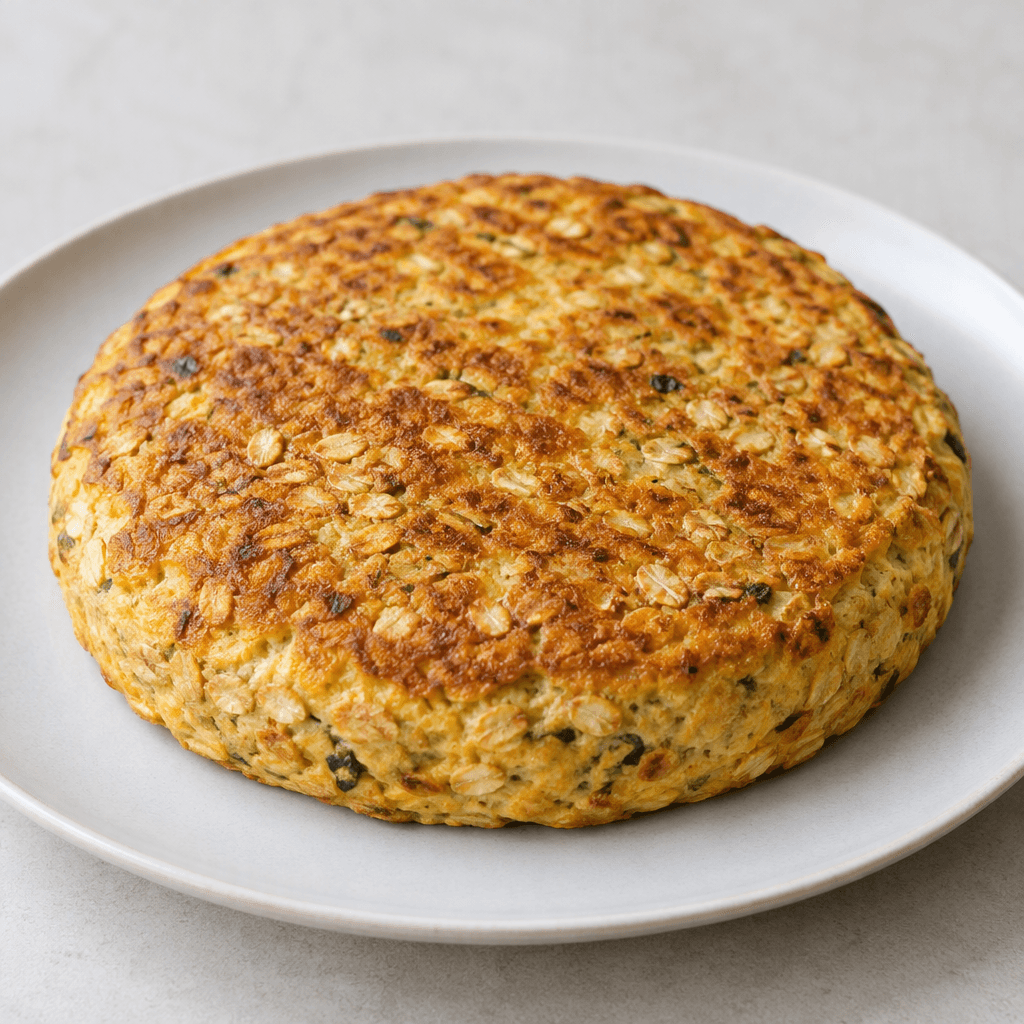
Oat Omelette Calories
High in protein and fiber, low glycemic
In season: Spring · Summer · Autumn · Winter
CALORIES
GI
POTASSIUM
FIBER
Quick answer
1 piece (medium) of Oat Omelette (120 g) has 168 calories. That works out to 140 calories per 100 g. It contains 14.4 g of carbs, 10.2 g of protein, 7.2 g of fat and 2.6 g of fiber. Its 13.2 µg of Biotin covers 44% of the Daily Value. Its glycemic index is 45 (low), so it raises blood sugar slowly.
What is Oat Omelette?
Oat Omelette is a simple home-style variation on an omelette, made by mixing oats into beaten eggs and cooking the mixture in a pan. It is not tied to one particular regional tradition; it is an easy way to make a familiar breakfast or brunch dish more substantial.
The eggs give it a soft, tender centre, while the oats add a lightly chewy texture. Serve it warm with vegetables, herbs or a little cheese, or pair it with toast for a fuller meal. Eggs contribute protein and oats add fibre; a 100 g portion provides 8.5 g of protein. For a lighter plate, cook it with little oil and serve alongside fresh tomatoes or greens.
Oat Omelette Nutrition Facts
Selected: 100 g
140
KCAL / 100G
Carbs
12g
· 4% DV
Protein
8.5g
· 17% DV
Fat
6g
· 8% DV
Fiber
2.2g
· 8% DV
DV is the share of the daily value covered, on a 2,000 kcal reference diet.
Calories come from: Carbs 35% · Protein 25% · Fat 40%
Oat Omelette Vitamins & Minerals
Vitamins
Biotin
11µg · 37% DV
B12
0.45µg · 19% DV
B2
0.22mg · 17% DV
B5
0.7mg · 14% DV
Minerals
Selenium
11µg · 20% DV
Phosphorus
140mg · 20% DV
Iron
2mg · 11% DV
Zinc
1mg · 9% DV
How Nutritious Is Oat Omelette?
Nutrient density
High
How many vitamins, minerals and how much fiber this food carries per calorie. A high score means a lot of nutrition for few calories.
Satiety score
Medium
An EatBetter score computed from fiber, protein and calorie density. A high score means staying full longer on the same calories.
Both scores are calculated per 100 g and do not change with the selected portion. The satiety score is EatBetter's own calculation, not a clinical measure.
Oat Omelette Glycemic Index
GLYCEMIC INDEX
GLYCEMIC LOAD
Accounts for portion size — a more realistic measure than GI alone.
How to Burn Off Oat Omelette
To burn the 140 calories in 100 g:
🚶
Walking (5 km/h)
🏃
Running (8 km/h)
🚴
Cycling
🏊
Swimming
Times are calculated with the MET equation for a 70 kg adult. Actual burn varies with your weight, age and pace.
Is Oat Omelette Processed?
NOVA 2
Minimally Processed
1. Unprocessed
2. Minimally Processed
3. Processed
4. Ultra-Processed
NOVA classifies foods into 4 groups by industrial processing. NOVA 1 (unprocessed) is the healthiest.
Does Oat Omelette Contain Allergens?
Contains these allergens:
Which Diets Is Oat Omelette Good For?
Vegan
— Not suitable
Vegetarian
✓ Suitable
Gluten-Free
— Not suitable
Dairy-Free
— Not suitable
Mediterranean
✓ Suitable
Paleo
— Not suitable
Whole30
— Not suitable
DASH
— Not suitable
Keto
— Not suitable
Low FODMAP
— Not suitable
Oat Omelette Fat Profile
SATURATED
1.7g
MONOUNSATURATED
2.1g
POLYUNSATURATED
1.1g
Omega 6:3 ratio 20:1
Above the ideal 4:1 (20:1).
Compare Oat Omelette
Foods Similar to Oat Omelette
Frequently Asked Questions About Oat Omelette
How do you make an oat omelette?
An oat omelette is made by mixing oats with beaten egg and cooking the mixture in a lightly oiled pan. Let the oats soften briefly in the egg, then cook over medium-low heat until the underside is set before turning it.
Can you make an oat omelette with rolled oats?
Yes, rolled oats work well in an oat omelette. They give it a more textured bite than oat flour; letting them sit in the beaten egg for a few minutes softens them and helps the mixture hold together while cooking.
Why does my oat omelette fall apart when I flip it?
An oat omelette often falls apart because it is flipped before the bottom has set or because the oats are unevenly mixed with the egg. Cook it gently, wait until the edges look firm, and use a wide spatula to turn it in one motion.
What can you add to an oat omelette?
Cheese, spinach, mushrooms, chopped peppers, and herbs all work in an oat omelette. Cook watery vegetables first so they do not make the center soggy. For a sweet variation, add banana and cinnamon, though the result is closer to a breakfast pancake.
How do you keep an oat omelette from getting rubbery?
Cook an oat omelette over medium-low heat and take it off the pan as soon as the egg is set. High heat and prolonged cooking make the egg tough; a covered pan can help the top cook without leaving the omelette on the heat too long.
Is an oat omelette better with whole oats or blended oats?
Whole rolled oats make an oat omelette noticeably chewy, while blended oats create a smoother, more uniform texture. Choose based on the texture you like; either works, but very coarse oats benefit from soaking in the egg mixture before cooking.
What should you serve with an oat omelette?
Serve an oat omelette with fresh fruit, sliced tomatoes, greens, or plain yogurt. These sides add freshness and make it a fuller breakfast or light lunch; savory toppings such as avocado or salsa also pair well.
Can you meal-prep oat omelettes?
Yes, cooked oat omelettes can be made ahead and kept covered in the refrigerator. Cool them promptly, store in an airtight container, and reheat until hot throughout. For the best texture, add fresh toppings just before serving.
Can you freeze an oat omelette?
Yes, an oat omelette can be frozen after cooking, although thawing may make it softer. Cool it completely, wrap individual portions well, and thaw them in the refrigerator before reheating; avoid freezing it with watery vegetables or fresh toppings.
Does an oat omelette keep you full?
An oat omelette may keep you satisfied because it combines egg protein with oats, which provide fiber. Pairing it with fruit or vegetables can make breakfast more substantial, but fullness varies with the portion and what else you eat.
Have another question about Oat Omelette?
Ask the AI nutrition coach — calories, portions, alternatives and more, answered in seconds in the app.

Scan calories with your camera
Instant AI nutrition analysis

Nutrition data compiled from USDA FoodData Central and scientific sources.