

Ready & Packaged Foods
All →Vegetables & Legumes
All →Desserts & Confectionery
All →Meat & Protein
All →Grains & Bakery
All →Beverages
All →Milk & Dairy
All →

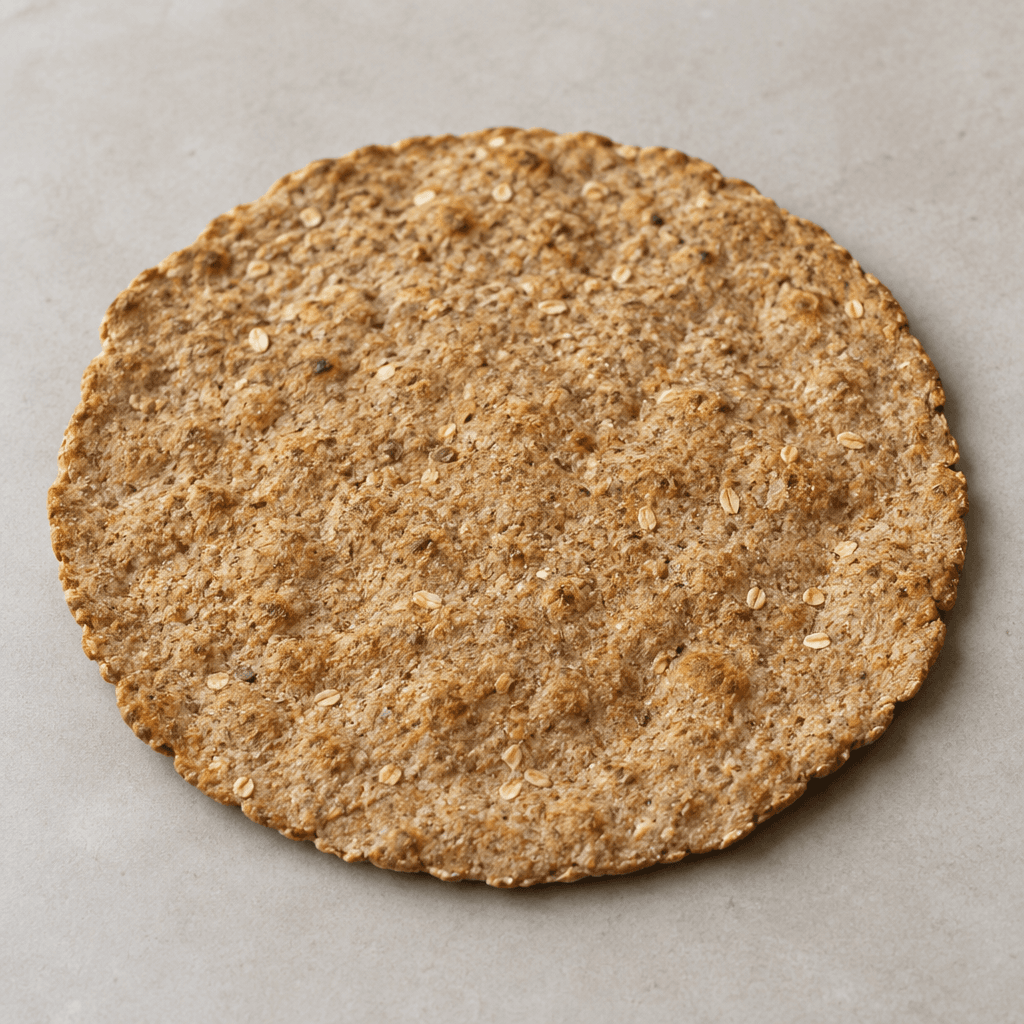
Oat Flatbread Calories
Oat-based, high fiber, low glycemic, vegan
In season: Spring · Summer · Autumn · Winter
CALORIES
GI
POTASSIUM
FIBER
Quick answer
1 piece (medium) of Oat Flatbread (60 g) has 144 calories. That works out to 240 calories per 100 g. It contains 24.6 g of carbs, 5.1 g of protein, 2.7 g of fat and 4.3 g of fiber. Its 0.7 mg of Manganese covers 31% of the Daily Value. Its glycemic index is 45 (medium), so it raises blood sugar at a moderate pace.
What is Oat Flatbread?
Oat Flatbread is a thin, pan-cooked bread made with oat flour or finely ground oats, usually mixed with water and sometimes a little salt or oil. It is a simple, adaptable flatbread rather than a dish tied to one particular regional tradition; recipes vary in how soft or crisp they turn out.
Serve it warm with eggs, cheese or vegetables, use it to wrap fillings, or pair it with soup, beans and grilled dishes. Its oat base gives it a pleasantly hearty character and more fibre than many plain flatbreads. For a softer, more flexible result, keep the rounds covered with a clean cloth after cooking; roll them thin if you plan to use them as wraps.
Oat Flatbread Nutrition Facts
Selected: 100 g
240
KCAL / 100G
Carbs
41g
· 15% DV
Protein
8.5g
· 17% DV
Fat
4.5g
· 6% DV
Fiber
7.2g
· 26% DV
DV is the share of the daily value covered, on a 2,000 kcal reference diet.
Calories come from: Carbs 69% · Protein 14% · Fat 17%
Oat Flatbread Vitamins & Minerals
Vitamins
B1
0.32mg · 27% DV
B5
0.6mg · 12% DV
Biotin
2.5µg · 8% DV
Folate
32µg · 8% DV
Minerals
Manganese
1mg · 43% DV
Phosphorus
220mg · 31% DV
Magnesium
110mg · 26% DV
Selenium
12µg · 22% DV
How Nutritious Is Oat Flatbread?
Nutrient density
Medium
How many vitamins, minerals and how much fiber this food carries per calorie. A high score means a lot of nutrition for few calories.
Satiety score
Medium
An EatBetter score computed from fiber, protein and calorie density. A high score means staying full longer on the same calories.
Both scores are calculated per 100 g and do not change with the selected portion. The satiety score is EatBetter's own calculation, not a clinical measure.
Oat Flatbread Glycemic Index
GLYCEMIC INDEX
GLYCEMIC LOAD
Accounts for portion size — a more realistic measure than GI alone.
How to Burn Off Oat Flatbread
To burn the 240 calories in 100 g:
🚶
Walking (5 km/h)
🏃
Running (8 km/h)
🚴
Cycling
🏊
Swimming
Times are calculated with the MET equation for a 70 kg adult. Actual burn varies with your weight, age and pace.
Is Oat Flatbread Processed?
NOVA 2
Minimally Processed
1. Unprocessed
2. Minimally Processed
3. Processed
4. Ultra-Processed
NOVA classifies foods into 4 groups by industrial processing. NOVA 1 (unprocessed) is the healthiest.
Does Oat Flatbread Contain Allergens?
No known major allergens
Which Diets Is Oat Flatbread Good For?
Vegan
✓ Suitable
Vegetarian
✓ Suitable
Gluten-Free
— Not suitable
Dairy-Free
— Not suitable
Mediterranean
✓ Suitable
Paleo
— Not suitable
Whole30
— Not suitable
DASH
— Not suitable
Keto
— Not suitable
Low FODMAP
— Not suitable
Oat Flatbread Fat Profile
SATURATED
0.8g
MONOUNSATURATED
1.6g
POLYUNSATURATED
1.3g
Omega 6:3 ratio 13.3:1
Above the ideal 4:1 (13.3:1).
Compare Oat Flatbread
Foods Similar to Oat Flatbread
Frequently Asked Questions About Oat Flatbread
What is oat flatbread made of?
Oat flatbread is usually made with oat flour or finely ground oats, water and salt. Some recipes add egg, yogurt or oil to help bind the dough, so check the ingredient list or recipe if you need to avoid a particular ingredient.
Can you make oat flatbread with rolled oats?
Yes. Blend rolled oats into a fine flour before mixing them into the dough; whole flakes can make the flatbread uneven and harder to roll. Add water gradually, since different oats and recipes absorb liquid differently.
Is oat flatbread gluten-free?
Oats are naturally gluten-free, but they can be contaminated with wheat during growing or processing, and some recipes add wheat flour. For someone who must avoid gluten, use oats specifically labeled gluten-free and check every other ingredient.
Can oat flatbread be used as a tortilla or wrap?
Yes, oat flatbread can work as a wrap for fillings such as vegetables, eggs, beans or chicken. Warm it briefly before filling, and avoid overstuffing it; oat-based flatbreads can be less flexible than wheat tortillas.
Why does oat flatbread crack when you fold it?
Oat flatbread often cracks when the dough is too dry, the bread is rolled too thin, or it has cooled and dried out. Add water gradually while mixing, and keep cooked pieces covered so they retain moisture.
Can you make oat flatbread without eggs?
Yes. Many oat flatbread recipes use only oats, water and salt, so eggs are not essential. If a particular recipe relies on egg for binding, the egg-free version may be more fragile and may need careful handling when rolled or flipped.
How should you store oat flatbread?
Once cool, store oat flatbread in an airtight container in the refrigerator, with parchment between pieces to prevent sticking. Warm it briefly in a pan before serving to make it more pliable.
Can you freeze oat flatbread?
Yes. Cool the oat flatbreads completely, separate them with parchment, and seal them in a freezer-safe container or bag. Thaw the pieces you need and warm them in a pan before serving.
What goes well with oat flatbread?
Oat flatbread pairs well with dips such as hummus, as well as soups, salads, eggs and grilled vegetables. For a more filling meal, serve it with beans, fish, chicken or another protein-rich topping.
Is oat flatbread good for weight loss?
Oat flatbread can fit into a weight-loss eating plan, especially when paired with vegetables and a filling protein source. Its effect depends on the portion and what else is in the meal; it does not cause weight loss on its own.
Have another question about Oat Flatbread?
Ask the AI nutrition coach — calories, portions, alternatives and more, answered in seconds in the app.

Scan calories with your camera
Instant AI nutrition analysis

Nutrition data compiled from USDA FoodData Central and scientific sources.