

Ready & Packaged Foods
All →Vegetables & Legumes
All →Desserts & Confectionery
All →Meat & Protein
All →Grains & Bakery
All →Beverages
All →Milk & Dairy
All →

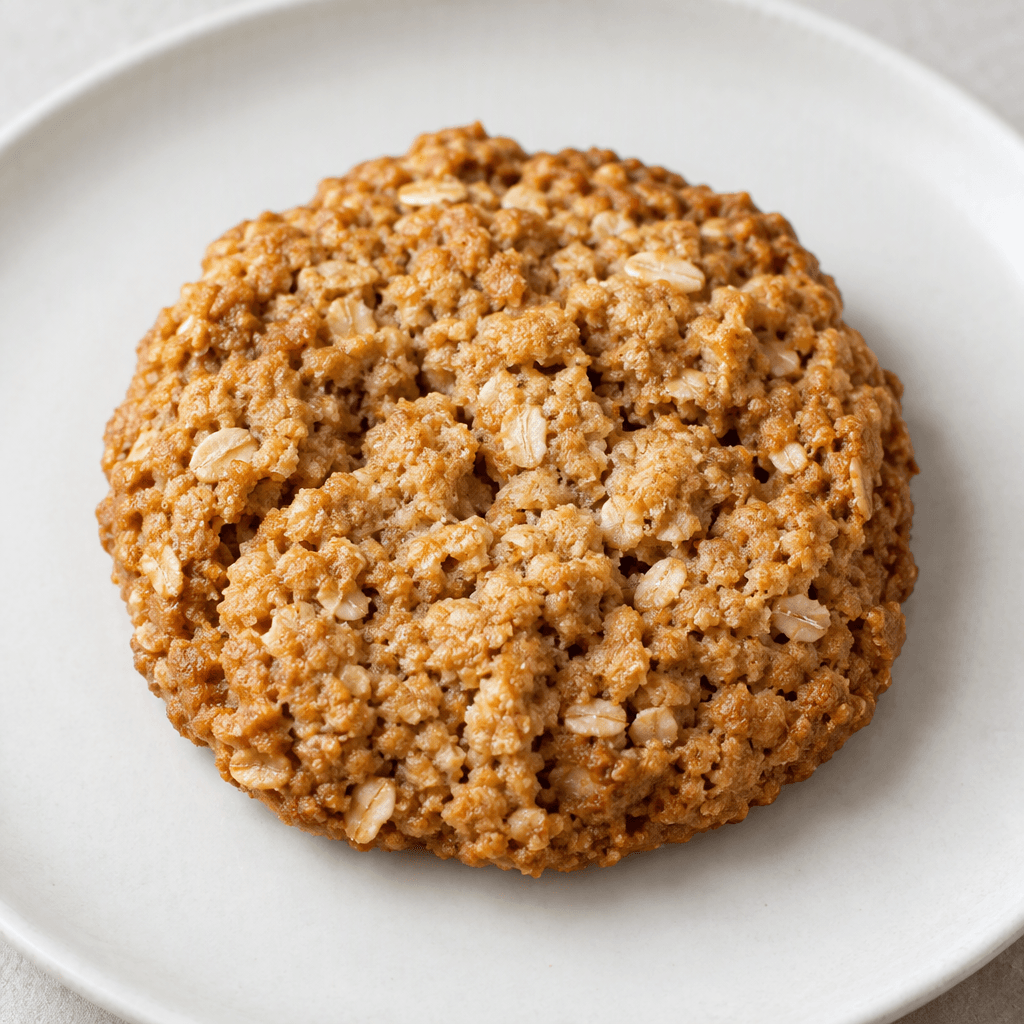
Oat Cookie Calories
Oats, fiber, moderate sugar, homemade or commercial
In season: Autumn · Winter
CALORIES
GI
POTASSIUM
FIBER
Quick answer
1 piece (medium) of Oat Cookie (30 g) has 135 calories. That works out to 450 calories per 100 g. It contains 19.5 g of carbs, 2.1 g of protein, 5.1 g of fat and 1.7 g of fiber. Its 0.2 mg of Manganese covers 9% of the Daily Value. Its glycemic index is 55 (medium), so it raises blood sugar at a moderate pace.
What is Oat Cookie?
Oat cookies are baked treats made with rolled oats, flour, sugar and butter or another fat; recipes may also use egg. They are a familiar home-baking staple in Britain and North America, with plenty of regional and family variations. The oats give them a pleasantly coarse bite, while the texture can range from soft and chewy to crisp and crumbly. They’re often enjoyed with tea or coffee as an afternoon snack, or packed for a quick bite on the go. Although sweet, an oat cookie offers some fibre from the oats: it has 5.5 g per 100 g. For a lighter snack, choose one medium cookie and pair it with fruit or an unsweetened drink.
Oat Cookie Nutrition Facts
Selected: 100 g
450
KCAL / 100G
Carbs
65g
· 24% DV
Protein
7g
· 14% DV
Fat
17g
· 22% DV
Fiber
5.5g
· 20% DV
DV is the share of the daily value covered, on a 2,000 kcal reference diet.
Calories come from: Carbs 59% · Protein 6% · Fat 35%
Oat Cookie Vitamins & Minerals
Vitamins
B1
0.18mg · 15% DV
B2
0.12mg · 9% DV
Biotin
2.5µg · 8% DV
B3
1.1mg · 7% DV
Minerals
Manganese
1mg · 43% DV
Phosphorus
110mg · 16% DV
Selenium
7µg · 13% DV
Iron
2mg · 11% DV
How Nutritious Is Oat Cookie?
Nutrient density
Medium
How many vitamins, minerals and how much fiber this food carries per calorie. A high score means a lot of nutrition for few calories.
Satiety score
Medium
An EatBetter score computed from fiber, protein and calorie density. A high score means staying full longer on the same calories.
Both scores are calculated per 100 g and do not change with the selected portion. The satiety score is EatBetter's own calculation, not a clinical measure.
Oat Cookie Glycemic Index
GLYCEMIC INDEX
GLYCEMIC LOAD
Accounts for portion size — a more realistic measure than GI alone.
How to Burn Off Oat Cookie
To burn the 450 calories in 100 g:
🚶
Walking (5 km/h)
🏃
Running (8 km/h)
🚴
Cycling
🏊
Swimming
Times are calculated with the MET equation for a 70 kg adult. Actual burn varies with your weight, age and pace.
Is Oat Cookie Processed?
NOVA 3
Processed
1. Unprocessed
2. Minimally Processed
3. Processed
4. Ultra-Processed
NOVA classifies foods into 4 groups by industrial processing. NOVA 1 (unprocessed) is the healthiest.
Does Oat Cookie Contain Allergens?
Contains these allergens:
Which Diets Is Oat Cookie Good For?
Vegan
— Not suitable
Vegetarian
✓ Suitable
Gluten-Free
— Not suitable
Dairy-Free
— Not suitable
Mediterranean
— Not suitable
Paleo
— Not suitable
Whole30
— Not suitable
DASH
— Not suitable
Keto
— Not suitable
Low FODMAP
— Not suitable
Oat Cookie Fat Profile
SATURATED
4.5g
MONOUNSATURATED
5.8g
POLYUNSATURATED
2.5g
Omega 6:3 ratio 27.5:1
Above the ideal 4:1 (27.5:1).
Compare Oat Cookie
Foods Similar to Oat Cookie
Frequently Asked Questions About Oat Cookie
Are oat cookies healthy?
Oat cookies can provide more fiber and a heartier texture than some other cookies, but they may also contain plenty of sugar and fat. Their ingredients and portion size matter more than the word “oat” on the name.
Do oat cookies help with weight loss?
Oat cookies do not cause weight loss, though their fiber may make them more filling than a low-fiber cookie. They can fit into a weight-loss eating plan in a modest portion, especially when they replace rather than add to another snack.
How do you make oat cookies?
To make oat cookies, mix rolled oats with flour, egg, fat, and sugar to form a dough. Shape spoonfuls on a baking tray and bake in a preheated oven until the edges are golden; let them cool before moving.
Why do oat cookies fall apart?
Oat cookies often crumble when the dough lacks enough binding or when the cookies are moved while hot. Measure the egg and fat accurately, and leave the baked cookies on the tray to firm up before transferring them.
Can you make oat cookies without flour?
Yes, oat cookies can be made without wheat flour, though the texture is usually more delicate. Use finely ground oats or a tested flourless recipe, and allow the cookies to cool fully so they hold together.
How do you keep oat cookies soft?
To keep oat cookies soft, take them out of the oven while the centers still look slightly underdone; they continue setting as they cool. Store them fully cooled in an airtight container to slow them from drying out.
How long do oat cookies last?
Oat cookies keep well for several days at room temperature when fully cooled and stored in an airtight container away from heat and moisture. Discard them if they develop an unusual smell or show signs of mold.
Can you freeze oat cookies?
Yes, baked oat cookies freeze well. Cool them completely, separate layers with baking paper, and seal them in a freezer-safe container. Thaw at room temperature, or warm them briefly in the oven for a freshly baked texture.
Can people with diabetes eat oat cookies?
People with diabetes may be able to include oat cookies in their meal plan, but oats do not make a cookie carbohydrate-free or sugar-free. Portion size and the rest of the meal matter; ask a doctor or dietitian for advice tailored to your treatment.
What can you add to oat cookies?
Common additions to oat cookies include raisins, chopped nuts, chocolate chips, or dried cranberries. Fold them into the dough in moderation so the cookies still hold together, and reduce other sweet ingredients if the additions are sugary.
Have another question about Oat Cookie?
Ask the AI nutrition coach — calories, portions, alternatives and more, answered in seconds in the app.

Scan calories with your camera
Instant AI nutrition analysis

Nutrition data compiled from USDA FoodData Central and scientific sources.