

Ready & Packaged Foods
All →Vegetables & Legumes
All →Desserts & Confectionery
All →Meat & Protein
All →Grains & Bakery
All →Beverages
All →Milk & Dairy
All →

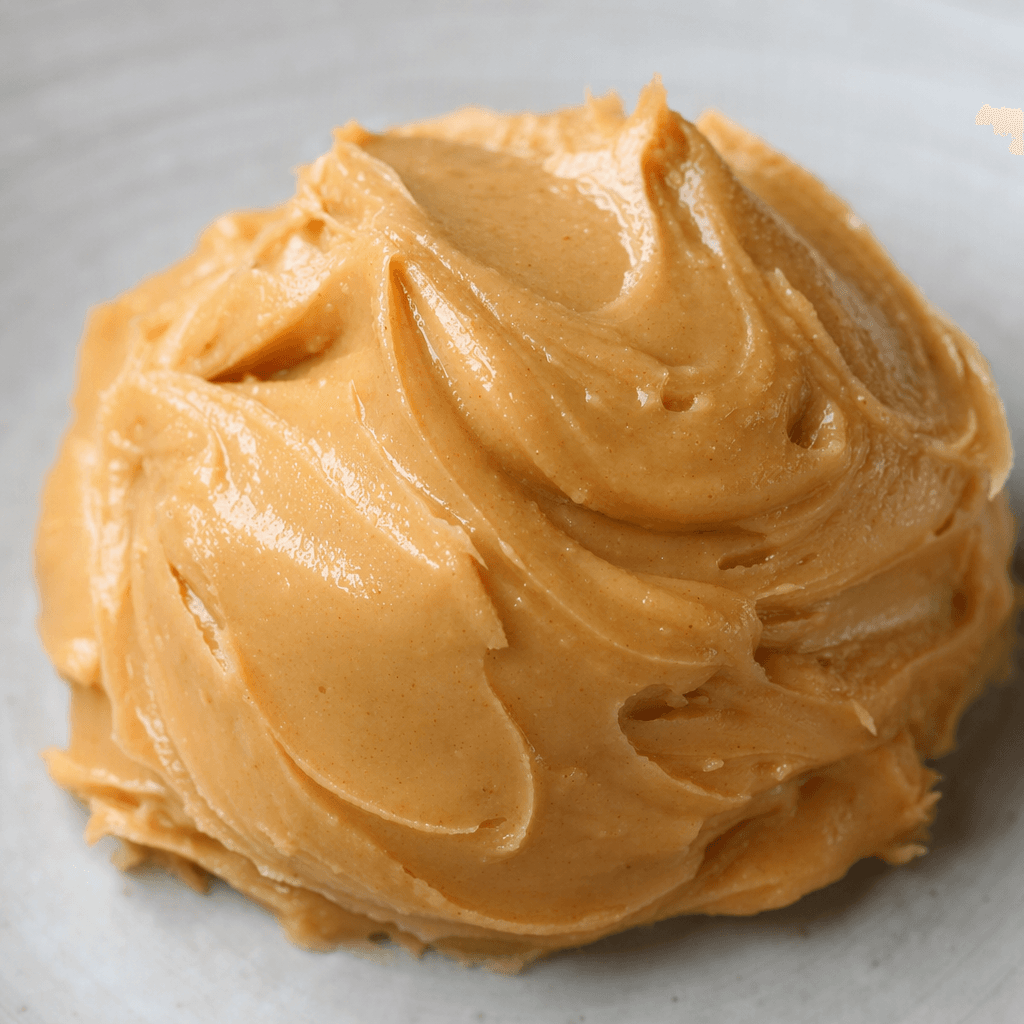
No Added Sugar Peanut Butter Calories
No added sugar; source of plant protein and healthy fats
CALORIES
GI
POTASSIUM
FIBER
Quick answer
2 tablespoon (double) of No Added Sugar Peanut Butter (32 g) has 188 calories. That works out to 588 calories per 100 g. It contains 6.4 g of carbs, 8 g of protein, 16.1 g of fat and 1.9 g of fiber. Its 8 µg of Biotin covers 27% of the Daily Value. Its glycemic index is 14 (low), so it raises blood sugar slowly.
What is No Added Sugar Peanut Butter?
No Added Sugar Peanut Butter is a thick spread made by grinding roasted peanuts, with no sugar added. It has a rich, nutty, lightly roasted flavour and may be smooth or slightly crunchy. In the United States and elsewhere, it is commonly spread on toast or sandwiches, often with fruit or jam; it also works in porridge, smoothies, sauces and baking. For readers in the UK and other regions where peanut butter is less of an everyday staple, try it on toast or with sliced banana for a simple snack.
It is energy-dense and provides plant protein, unsaturated fats and some fibre. A modest spoonful adds flavour and staying power to breakfast, while stirring it into plain yoghurt or oats keeps the rest of the meal simple.
No Added Sugar Peanut Butter Nutrition Facts
Selected: 100 g
588
KCAL / 100G
Carbs
20g
· 7% DV
Protein
25.1g
· 50% DV
Fat
50.4g
· 65% DV
Fiber
6g
· 21% DV
DV is the share of the daily value covered, on a 2,000 kcal reference diet.
Calories come from: Carbs 13% · Protein 16% · Fat 71%
No Added Sugar Peanut Butter Vitamins & Minerals
Vitamins
Biotin
25µg · 83% DV
B3
13.1mg · 82% DV
Vitamin E
9.1mg · 61% DV
B6
0.46mg · 27% DV
Minerals
Copper
1mg · 111% DV
Manganese
2mg · 87% DV
Phosphorus
358mg · 51% DV
Magnesium
154mg · 37% DV
How Nutritious Is No Added Sugar Peanut Butter?
Nutrient density
High
How many vitamins, minerals and how much fiber this food carries per calorie. A high score means a lot of nutrition for few calories.
Satiety score
High
An EatBetter score computed from fiber, protein and calorie density. A high score means staying full longer on the same calories.
Both scores are calculated per 100 g and do not change with the selected portion. The satiety score is EatBetter's own calculation, not a clinical measure.
No Added Sugar Peanut Butter Glycemic Index
GLYCEMIC INDEX
GLYCEMIC LOAD
Accounts for portion size — a more realistic measure than GI alone.
How to Burn Off No Added Sugar Peanut Butter
To burn the 588 calories in 100 g:
🚶
Walking (5 km/h)
🏃
Running (8 km/h)
🚴
Cycling
🏊
Swimming
Times are calculated with the MET equation for a 70 kg adult. Actual burn varies with your weight, age and pace.
Is No Added Sugar Peanut Butter Processed?
NOVA 2
Minimally Processed
1. Unprocessed
2. Minimally Processed
3. Processed
4. Ultra-Processed
NOVA classifies foods into 4 groups by industrial processing. NOVA 1 (unprocessed) is the healthiest.
Does No Added Sugar Peanut Butter Contain Allergens?
Contains these allergens:
Which Diets Is No Added Sugar Peanut Butter Good For?
Vegan
✓ Suitable
Vegetarian
✓ Suitable
Gluten-Free
✓ Suitable
Dairy-Free
— Not suitable
Mediterranean
✓ Suitable
Paleo
— Not suitable
Whole30
— Not suitable
DASH
— Not suitable
Keto
✓ Suitable
Low FODMAP
— Not suitable
No Added Sugar Peanut Butter Fat Profile
SATURATED
10.1g
MONOUNSATURATED
24.4g
POLYUNSATURATED
15.7g
Omega 6:3 ratio 780:1
Above the ideal 4:1 (780:1).
Compare No Added Sugar Peanut Butter
Foods Similar to No Added Sugar Peanut Butter
Frequently Asked Questions About No Added Sugar Peanut Butter
Is no added sugar peanut butter the same as natural peanut butter?
Not always. No added sugar means sugar was not added, while “natural” can refer to ingredients or processing and is not used identically by every brand. Check the ingredient list: a simple version usually contains peanuts, sometimes salt, and no sweetener.
Can you use no added sugar peanut butter instead of butter in baking?
Sometimes, but it is not a one-for-one swap: peanut butter has a strong flavor and a thicker texture than dairy butter. It works well in peanut cookies and bars; use a recipe designed for it rather than replacing all the butter in a cake.
Can no added sugar peanut butter be frozen?
Yes. Freeze it in an airtight, freezer-safe container, leaving a little room at the top, then thaw it in the refrigerator and stir well. Freezing may change the texture slightly, so it is best suited to recipes or spreading after it has softened.
How can you tell if no added sugar peanut butter has gone bad?
Discard it if it smells rancid, sour, or noticeably different from fresh peanuts, or if you see mold. Oil separating on top is normal and is not a sign of spoilage; stir it back in before judging the smell and texture.
Does no added sugar peanut butter contain naturally occurring sugar?
Yes. “No added sugar” means no sugar was added as an ingredient; peanuts naturally contain a small amount. It does not mean the spread is completely sugar-free, so distinguish the product claim from a claim of zero sugar.
Can no added sugar peanut butter replace tahini in recipes?
It can replace tahini in some sauces, smoothies, or dressings, but the result will taste distinctly more like peanuts and may be thicker. Start with a smaller amount and thin it with water or lemon juice to reach the consistency you want.
Can babies eat no added sugar peanut butter?
Yes, smooth peanut butter can be introduced once a baby is ready for solid foods, but never serve a thick spoonful, which can pose a choking risk. Thin a small amount into puree or yogurt; ask your clinician first if the baby has severe eczema or an egg allergy.
Can people with diabetes eat no added sugar peanut butter?
Many people with diabetes can include it in a meal, but “no added sugar” does not mean it has no effect on blood glucose. Pair a measured serving with foods such as whole-grain toast, and seek individualized advice if you use glucose-lowering medication.
Does no added sugar peanut butter need to be stirred every time?
Usually, you only need to stir it well after opening, when its natural oil may have separated. If oil continues to pool during storage, a quick stir restores an even texture; keeping the jar cool and tightly closed can slow separation.
Can no added sugar peanut butter be used in smoothies?
Yes. Blend a spoonful into a smoothie with banana, oats, or milk for a creamy texture and peanut flavor. Because the spread can be thick, add it to the blender with enough liquid rather than trying to stir it into a finished drink.
Have another question about No Added Sugar Peanut Butter?
Ask the AI nutrition coach — calories, portions, alternatives and more, answered in seconds in the app.

Scan calories with your camera
Instant AI nutrition analysis

Nutrition data compiled from USDA FoodData Central and scientific sources.