

Ready & Packaged Foods
All →Vegetables & Legumes
All →Desserts & Confectionery
All →Meat & Protein
All →Grains & Bakery
All →Beverages
All →Milk & Dairy
All →

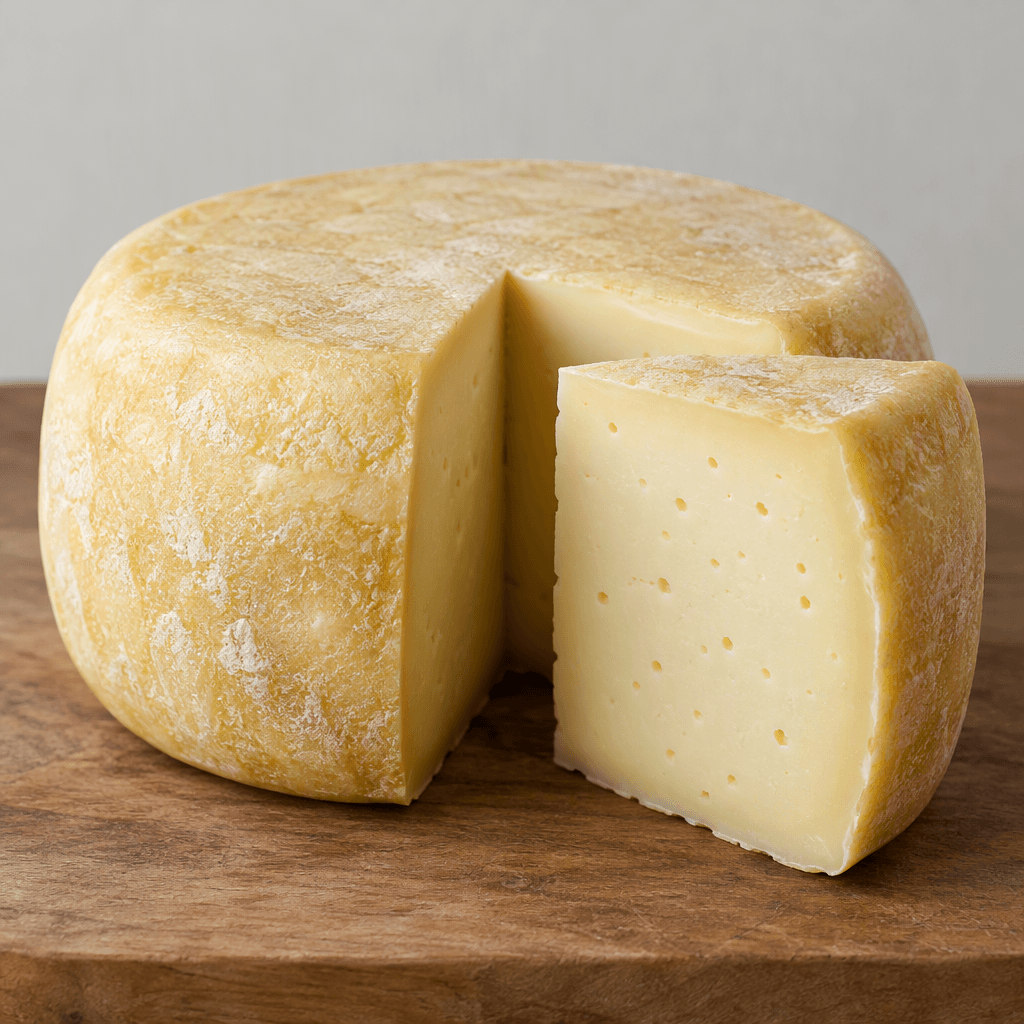
Natural cheese Calories
Cheese made from natural milk, no additives
In season: Spring · Summer · Autumn · Winter
CALORIES
GI
POTASSIUM
FIBER
Quick answer
1 slice (medium) of Natural cheese (30 g) has 105 calories. That works out to 350 calories per 100 g. It contains 0.6 g of carbs, 7.5 g of protein, 8.1 g of fat and 0 g of fiber. Its 210 mg of Calcium covers 21% of the Daily Value. Its glycemic index is 0 (low), so it raises blood sugar slowly.
What is Natural cheese?
Natural cheese is cheese made by setting milk into curds and draining or ageing them; the name generally distinguishes it from processed cheese products. Its colour, firmness and flavour vary by style, but it is often pale yellow with a smooth, dense interior.
In Turkey, it is a familiar part of breakfast, served with bread, olives and tomatoes alongside tea. Elsewhere, it may be sliced for sandwiches, eaten with crackers or melted into cooked dishes. It provides substantial protein—25 g per 100 g—but is also rich in fat. For a lighter meal, use a modest slice and pair it with fresh vegetables or fruit.
Natural cheese Nutrition Facts
Selected: 100 g
350
KCAL / 100G
Carbs
2g
· 1% DV
Protein
25g
· 50% DV
Fat
27g
· 35% DV
Fiber
0g
· 0% DV
DV is the share of the daily value covered, on a 2,000 kcal reference diet.
Calories come from: Carbs 2% · Protein 28% · Fat 70%
Natural cheese Vitamins & Minerals
Vitamins
B12
1.5µg · 63% DV
Vitamin A
280µg · 31% DV
B2
0.35mg · 27% DV
B5
0.5mg · 10% DV
Minerals
Phosphorus
500mg · 71% DV
Calcium
700mg · 70% DV
Zinc
4mg · 36% DV
Sodium
700mg · 30% DV
How Nutritious Is Natural cheese?
Nutrient density
High
How many vitamins, minerals and how much fiber this food carries per calorie. A high score means a lot of nutrition for few calories.
Satiety score
Medium
An EatBetter score computed from fiber, protein and calorie density. A high score means staying full longer on the same calories.
Both scores are calculated per 100 g and do not change with the selected portion. The satiety score is EatBetter's own calculation, not a clinical measure.
Natural cheese Glycemic Index
GLYCEMIC INDEX
GLYCEMIC LOAD
Accounts for portion size — a more realistic measure than GI alone.
How to Burn Off Natural cheese
To burn the 350 calories in 100 g:
🚶
Walking (5 km/h)
🏃
Running (8 km/h)
🚴
Cycling
🏊
Swimming
Times are calculated with the MET equation for a 70 kg adult. Actual burn varies with your weight, age and pace.
Is Natural cheese Processed?
NOVA 2
Minimally Processed
1. Unprocessed
2. Minimally Processed
3. Processed
4. Ultra-Processed
NOVA classifies foods into 4 groups by industrial processing. NOVA 1 (unprocessed) is the healthiest.
Does Natural cheese Contain Allergens?
Contains these allergens:
Which Diets Is Natural cheese Good For?
Vegan
— Not suitable
Vegetarian
✓ Suitable
Gluten-Free
✓ Suitable
Dairy-Free
— Not suitable
Mediterranean
✓ Suitable
Paleo
— Not suitable
Whole30
— Not suitable
DASH
— Not suitable
Keto
— Not suitable
Low FODMAP
— Not suitable
Natural cheese Fat Profile
SATURATED
17g
MONOUNSATURATED
7g
POLYUNSATURATED
1g
Omega 6:3 ratio 2.5:1
Below the ideal 4:1 — a good omega balance.
Compare Natural cheese
Foods Similar to Natural cheese
Frequently Asked Questions About Natural cheese
What is natural cheese?
Natural cheese is made by curdling milk, separating the curds from the whey, and sometimes aging the cheese. Unlike processed cheese, it is made as cheese itself; the information provided describes this natural cheese as made from milk without additives.
How is natural cheese different from processed cheese?
Natural cheese is made directly from milk, while processed cheese is made by heating and blending cheese with emulsifying salts and sometimes other ingredients. Natural cheese can vary in flavor and texture according to its milk, production method, and aging.
How is natural cheese made?
Natural cheese is made by adding a starter culture and a coagulant to milk, cutting the resulting curd, and draining off the whey. Depending on the type, the curds may then be pressed, salted, and aged.
How should you store natural cheese?
Keep natural cheese refrigerated in a covered container or wrapped in cheese paper to limit drying and contact with other foods. Use a clean knife when cutting it, and reseal the package promptly after each use.
Does natural cheese melt?
Yes, natural cheese can melt, but how smoothly it melts depends on its moisture, fat, and age. Some natural cheeses soften or release oil rather than becoming smooth, so test a small piece before using it in a toastie or baked dish.
Does natural cheese contain lactose?
Yes, natural cheese can contain lactose, although the amount varies with the cheese and how long it is aged. Aging reduces some lactose, but natural cheese is not automatically lactose-free; people with lactose intolerance may tolerate different cheeses differently.
Can you freeze natural cheese?
Yes, you can freeze natural cheese, but thawing may make it crumbly or dry. Cut it into portions, wrap them airtight, and reserve frozen cheese for cooking if texture matters; thaw it in the refrigerator and do not refreeze it.
Can you cut mold off natural cheese and eat the rest?
For soft or moist natural cheese, no—discard the whole piece because mold may have spread beyond what you can see. On a firm, dense cheese, cut well around and beneath the mold; discard the cheese if it smells or looks unusual.
How can you tell if natural cheese has gone bad?
Unexpected mold, a slimy surface, a strong sour or ammonia-like smell, or unusual discoloration can indicate that natural cheese has spoiled. If you notice changes that are not normal for that cheese, do not taste it; discard it.
Is natural cheese safe to eat during pregnancy?
Yes, natural cheese made with pasteurized milk is generally safe during pregnancy; cheese made with unpasteurized milk can carry a higher risk of foodborne infection. If you cannot confirm whether the milk was pasteurized, ask your healthcare professional which option is appropriate.
Have another question about Natural cheese?
Ask the AI nutrition coach — calories, portions, alternatives and more, answered in seconds in the app.

Scan calories with your camera
Instant AI nutrition analysis

Nutrition data compiled from USDA FoodData Central and scientific sources.