

Ready & Packaged Foods
All →Vegetables & Legumes
All →Desserts & Confectionery
All →Meat & Protein
All →Grains & Bakery
All →Beverages
All →Milk & Dairy
All →

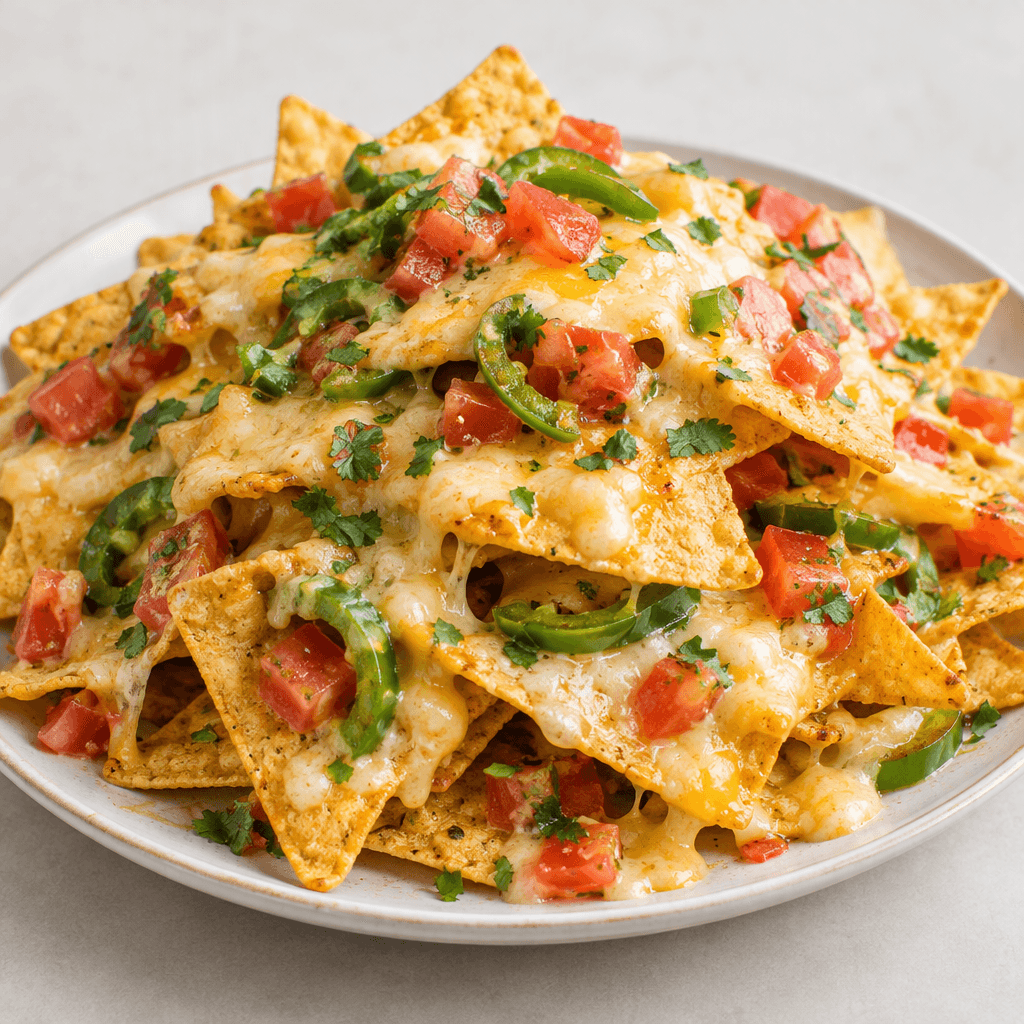
Nachos Calories
Corn chips, typically served with cheese and salsa
In season: Spring · Summer · Autumn · Winter
CALORIES
GI
POTASSIUM
FIBER
Quick answer
1 serving (medium) of Nachos (50 g) has 240 calories. That works out to 480 calories per 100 g. It contains 30 g of carbs, 3.5 g of protein, 11.5 g of fat and 2.8 g of fiber. Its 350 mg of Sodium covers 15% of the Daily Value. Its glycemic index is 72 (high), so it raises blood sugar quickly.
What is Nachos?
Nachos are a shareable dish from northern Mexico: crisp corn tortilla chips topped with melted cheese and, often, salsa, tomatoes, peppers or other toppings. They became especially popular across the United States, where versions range from a simple cheese-covered snack to a generously loaded platter.
They are usually served warm as a casual snack or appetizer, with salsa, guacamole or sour cream for dipping. The chips stay crisp around the edges while the cheese and toppings soften them underneath. Nachos are fairly energy-dense, with most of their substance coming from the chips and cheese rather than protein. For a lighter plate, keep the cheese modest and add fresh tomato, peppers and salsa; they also work well as a shared side rather than a meal on their own.
Nachos Nutrition Facts
Selected: 100 g
480
KCAL / 100G
Carbs
60g
· 22% DV
Protein
7g
· 14% DV
Fat
23g
· 29% DV
Fiber
5.5g
· 20% DV
DV is the share of the daily value covered, on a 2,000 kcal reference diet.
Calories come from: Carbs 51% · Protein 6% · Fat 43%
Nachos Vitamins & Minerals
Vitamins
B1
0.15mg · 13% DV
B5
0.5mg · 10% DV
Vitamin E
1.5mg · 10% DV
B3
1.2mg · 8% DV
Minerals
Sodium
700mg · 30% DV
Phosphorus
120mg · 17% DV
Calcium
120mg · 12% DV
Iron
2mg · 11% DV
How Nutritious Is Nachos?
Nutrient density
Low
How many vitamins, minerals and how much fiber this food carries per calorie. A high score means a lot of nutrition for few calories.
Satiety score
Medium
An EatBetter score computed from fiber, protein and calorie density. A high score means staying full longer on the same calories.
Both scores are calculated per 100 g and do not change with the selected portion. The satiety score is EatBetter's own calculation, not a clinical measure.
Nachos Glycemic Index
GLYCEMIC INDEX
GLYCEMIC LOAD
Accounts for portion size — a more realistic measure than GI alone.
How to Burn Off Nachos
To burn the 480 calories in 100 g:
🚶
Walking (5 km/h)
🏃
Running (8 km/h)
🚴
Cycling
🏊
Swimming
Times are calculated with the MET equation for a 70 kg adult. Actual burn varies with your weight, age and pace.
Is Nachos Processed?
NOVA 3
Processed
1. Unprocessed
2. Minimally Processed
3. Processed
4. Ultra-Processed
NOVA classifies foods into 4 groups by industrial processing. NOVA 1 (unprocessed) is the healthiest.
Does Nachos Contain Allergens?
Contains these allergens:
Which Diets Is Nachos Good For?
Vegan
— Not suitable
Vegetarian
✓ Suitable
Gluten-Free
— Not suitable
Dairy-Free
— Not suitable
Mediterranean
— Not suitable
Paleo
— Not suitable
Whole30
— Not suitable
DASH
— Not suitable
Keto
— Not suitable
Low FODMAP
— Not suitable
Nachos Fat Profile
SATURATED
3.8g
MONOUNSATURATED
8.5g
POLYUNSATURATED
8g
Omega 6:3 ratio 180:1
Above the ideal 4:1 (180:1).
Compare Nachos
Foods Similar to Nachos
Frequently Asked Questions About Nachos
What are nachos made of?
Nachos are made from tortilla chips topped with melted cheese and often salsa, peppers, beans, or other toppings. The toppings vary widely, but the chips and cheese form the familiar base of the dish.
Where did nachos come from?
Nachos are widely credited to Ignacio “Nacho” Anaya, who is said to have created them in Piedras Negras, Mexico, in 1943. The original version was simpler than many loaded versions served today.
What is the difference between nachos and tortilla chips?
Tortilla chips are the plain, crisp corn chips; nachos are a dish made by topping those chips, usually with melted cheese and other ingredients. The terms are sometimes used loosely, but they are not exactly the same.
How do you make nachos at home?
To make nachos at home, spread tortilla chips in an oven-safe dish, add grated cheese and toppings that can be heated, then bake until the cheese melts. Add salsa, herbs, or other wet toppings just before serving.
What cheese is best for nachos?
Cheddar is a popular choice for nachos because it melts readily and has a strong, savory flavor. Monterey Jack also melts smoothly, and combining the two gives a creamy texture with more flavor.
How do you keep nachos from getting soggy?
Keep nachos from getting soggy by adding salsa, tomatoes, and other wet toppings after baking, not before. Serve the dish right away, and offer dips on the side so the chips stay crisp longer.
Can you reheat nachos?
Yes, you can reheat nachos, and an oven or air fryer usually keeps the chips crisper than a microwave. Remove cold dips first, heat until the cheese is warm, then add the dips again before serving.
How long do leftover nachos last in the fridge?
Leftover nachos can be refrigerated in a covered container, but the chips soften as they absorb moisture from the toppings. For better texture, store the chips separately from salsa and other wet ingredients and assemble them when serving.
What do you serve with nachos?
Nachos are commonly served with salsa, guacamole, and sour cream. A fresh salad or beans can round out the meal, while serving the dips separately helps prevent the chips from becoming soggy.
How can you make nachos lighter at home?
You can make nachos lighter by using a moderate layer of cheese, adding beans and fresh vegetables, and serving rich dips on the side. Avoid piling on several creamy toppings, which can make the dish much heavier.
Have another question about Nachos?
Ask the AI nutrition coach — calories, portions, alternatives and more, answered in seconds in the app.

Scan calories with your camera
Instant AI nutrition analysis

Nutrition data compiled from USDA FoodData Central and scientific sources.