

Ready & Packaged Foods
All →Vegetables & Legumes
All →Desserts & Confectionery
All →Meat & Protein
All →Grains & Bakery
All →Beverages
All →Milk & Dairy
All →

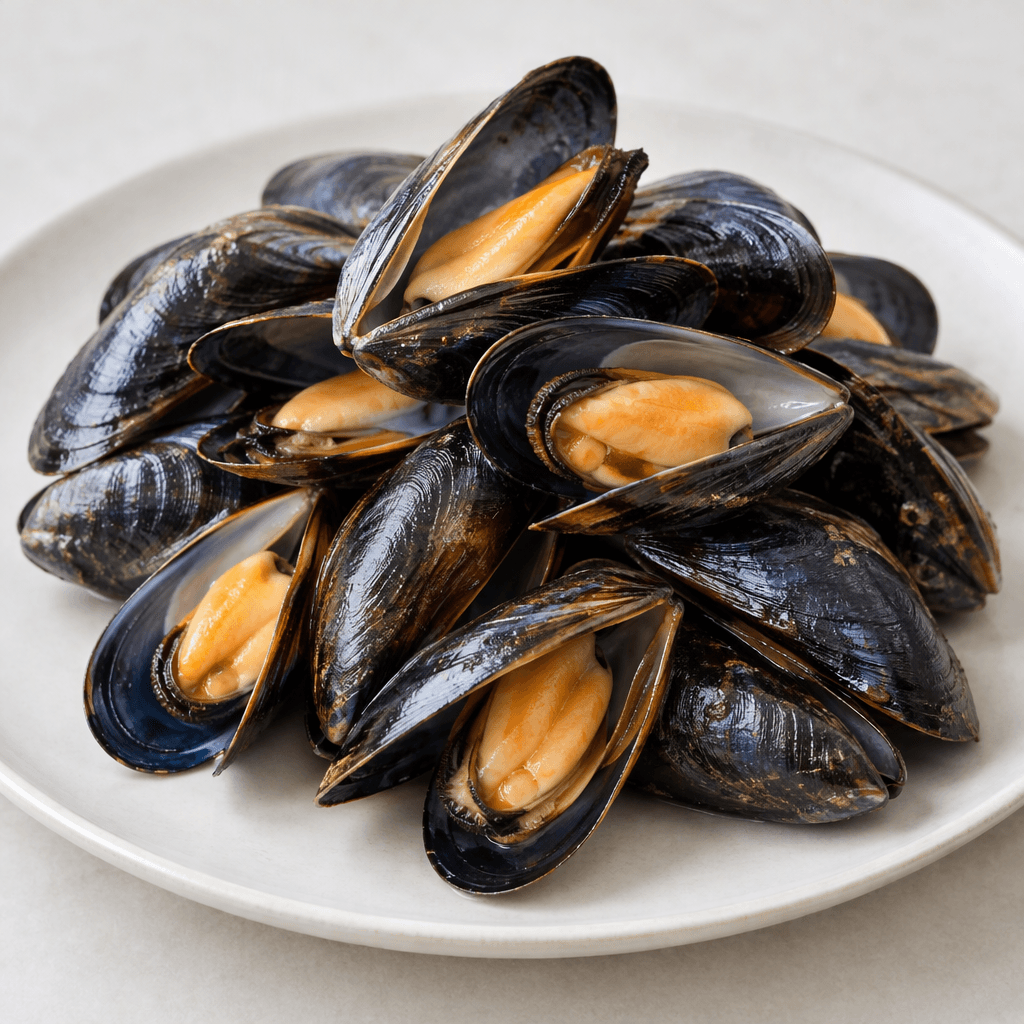
Mussels Calories
Lean seafood, high in protein and iron, low in fat
In season: Spring · Summer · Autumn
CALORIES
GI
POTASSIUM
FIBER
Quick answer
10 piece (medium) of Mussels (85 g) has 73 calories. That works out to 86 calories per 100 g. It contains 3.1 g of carbs, 10.1 g of protein, 1.9 g of fat and 0 g of fiber. Its 10.2 µg of B12 covers 425% of the Daily Value. Its glycemic index is 0 (low), so it raises blood sugar slowly.
What is Mussels?
Mussels are soft-bodied shellfish found in coastal waters, protected by dark, ridged shells. They’re eaten in coastal cuisines around the world: steaming them in a broth is a simple preparation, while they’re also added to pasta, soups and seafood dishes. In Turkey, stuffed mussels are a familiar street snack and meze, usually served with a squeeze of lemon.
Their flesh is gently briny, tender and slightly chewy when cooked. Mussels are lean seafood that provides protein and iron. For a lighter meal, steam them with herbs and serve alongside vegetables or crusty bread; they also pair well with garlic, tomato and a bright, acidic sauce.
Mussels Nutrition Facts
Selected: 100 g
86
KCAL / 100G
Carbs
3.7g
· 1% DV
Protein
11.9g
· 24% DV
Fat
2.2g
· 3% DV
Fiber
0g
· 0% DV
DV is the share of the daily value covered, on a 2,000 kcal reference diet.
Calories come from: Carbs 18% · Protein 58% · Fat 24%
Mussels Vitamins & Minerals
Vitamins
B12
12µg · 500% DV
Biotin
6µg · 20% DV
B5
0.7mg · 14% DV
B1
0.16mg · 13% DV
Minerals
Iodine
130µg · 87% DV
Selenium
44µg · 80% DV
Manganese
1mg · 43% DV
Phosphorus
197mg · 28% DV
How Nutritious Is Mussels?
Nutrient density
Very high
How many vitamins, minerals and how much fiber this food carries per calorie. A high score means a lot of nutrition for few calories.
Satiety score
Medium
An EatBetter score computed from fiber, protein and calorie density. A high score means staying full longer on the same calories.
Both scores are calculated per 100 g and do not change with the selected portion. The satiety score is EatBetter's own calculation, not a clinical measure.
Mussels Glycemic Index
GLYCEMIC INDEX
GLYCEMIC LOAD
Accounts for portion size — a more realistic measure than GI alone.
How to Burn Off Mussels
To burn the 86 calories in 100 g:
🚶
Walking (5 km/h)
🏃
Running (8 km/h)
🚴
Cycling
🏊
Swimming
Times are calculated with the MET equation for a 70 kg adult. Actual burn varies with your weight, age and pace.
Is Mussels Processed?
NOVA 1
Unprocessed
1. Unprocessed
2. Minimally Processed
3. Processed
4. Ultra-Processed
NOVA classifies foods into 4 groups by industrial processing. NOVA 1 (unprocessed) is the healthiest.
Does Mussels Contain Allergens?
No known major allergens
Which Diets Is Mussels Good For?
Vegan
— Not suitable
Vegetarian
— Not suitable
Gluten-Free
✓ Suitable
Dairy-Free
— Not suitable
Mediterranean
✓ Suitable
Paleo
— Not suitable
Whole30
— Not suitable
DASH
— Not suitable
Keto
✓ Suitable
Low FODMAP
— Not suitable
Mussels Fat Profile
SATURATED
0.4g
MONOUNSATURATED
0.3g
POLYUNSATURATED
0.6g
Omega 6:3 ratio 0.2:1
Below the ideal 4:1 — a good omega balance.
Compare Mussels
Foods Similar to Mussels
Frequently Asked Questions About Mussels
How can you tell if mussels are fresh?
Fresh live mussels should have intact shells that are closed, or close when tapped. Discard mussels with broken shells, a bad smell, or shells that stay open after tapping; keep live mussels cold until you cook them.
How do you clean mussels before cooking?
Rinse mussels under cold running water, scrub the shells, and pull off the fibrous beard attached near the hinge. Discard cracked mussels and any live ones that do not close when tapped, then cook the rest promptly.
How do you cook mussels?
Steam mussels in a covered pot with a little liquid until their shells open. Garlic, herbs, and white wine are common additions; discard any mussels that remain closed after cooking, and serve the rest promptly.
Why do some mussels stay closed after cooking?
A mussel that remains closed after cooking may have been dead or spoiled before it went into the pot. Discard it rather than prying it open, and do not taste it to decide whether it is safe.
Can you eat mussels raw?
It is safer to eat mussels thoroughly cooked rather than raw. Raw shellfish can carry harmful microbes or marine toxins, and lemon juice or another acidic marinade does not reliably make raw mussels safe.
How should you store live mussels in the fridge?
Keep live mussels cold in a breathable container, covered with a damp cloth. Do not seal them in an airtight bag or submerge them in water; cook them as soon as possible and discard any that have spoiled.
Can you freeze mussels?
Yes, cooked mussel meat can be frozen in an airtight container. Thaw it in the refrigerator and use it promptly; freezing does not make mussels that were already spoiled safe to eat, and thawed mussels should not be refrozen.
Why are some mussels orange and others cream-colored?
Mussel meat can be orange or cream-colored because of natural differences such as sex and reproductive stage. Color alone is not a reliable sign of spoilage; check for a fresh smell and discard mussels with other signs of deterioration.
What should you serve with mussels?
Mussels pair well with crusty bread, fries, or a simple green salad. Bread is especially useful with mussels cooked in broth or wine sauce, while lemon and fresh herbs brighten the dish without overpowering its seafood flavor.
Are mussels safe to eat during pregnancy?
Thoroughly cooked mussels are generally safer during pregnancy than raw or undercooked shellfish, which can carry harmful microbes. Avoid mussels that have been stored improperly, and ask your healthcare provider for advice if your pregnancy or health needs require extra precautions.
Have another question about Mussels?
Ask the AI nutrition coach — calories, portions, alternatives and more, answered in seconds in the app.

Scan calories with your camera
Instant AI nutrition analysis

Nutrition data compiled from USDA FoodData Central and scientific sources.