

Ready & Packaged Foods
All →Vegetables & Legumes
All →Desserts & Confectionery
All →Meat & Protein
All →Grains & Bakery
All →Beverages
All →Milk & Dairy
All →

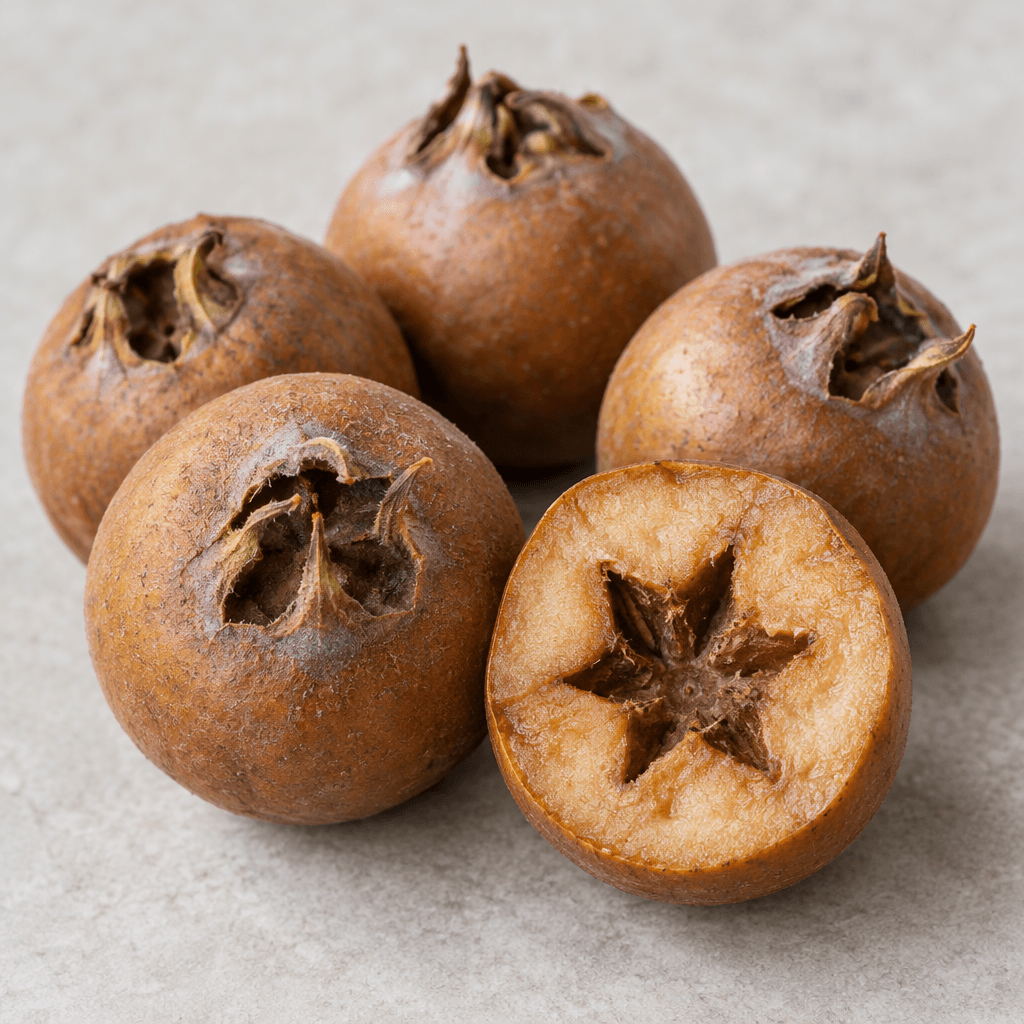
Medlar Calories
Vitamin C, fiber, low calorie, antioxidant
In season: Autumn
CALORIES
GI
POTASSIUM
FIBER
Quick answer
1 piece (medium) of Medlar (40 g) has 18 calories. That works out to 44 calories per 100 g. It contains 4.1 g of carbs, 0.2 g of protein, 0.1 g of fat and 0.8 g of fiber. Its 6.8 mg of Vitamin C covers 8% of the Daily Value. Its glycemic index is 35 (low), so it raises blood sugar slowly.
What is Medlar?
Medlar is a small autumn fruit with russet-brown skin, traditionally grown across parts of Europe and western Asia. Unlike many fruits, it is usually left to soften after picking: when firm, its flesh is sharply astringent, but once fully softened it turns tender and brown, with a sweet-tart, gently spiced flavour. Scoop out the ripe flesh or eat it by hand; it is also used in preserves and jellies.
Medlar is low in calories and provides some fibre; 100 g contains 44 calories. Enjoy it as a seasonal snack, or pair the soft pulp with plain yogurt or cheese. If yours is still hard, give it time to soften before eating.
Medlar Nutrition Facts
Selected: 100 g
44
KCAL / 100G
Carbs
10.3g
· 4% DV
Protein
0.4g
· 1% DV
Fat
0.2g
· 0% DV
Fiber
2.1g
· 8% DV
DV is the share of the daily value covered, on a 2,000 kcal reference diet.
Calories come from: Carbs 92% · Protein 4% · Fat 4%

Log this food in EatBetter
100,000+ people use it
- Get your daily calorie target
- Snap your meal, log it in seconds
- See every vitamin and mineral

📸 Scan the code to get the app free.

Medlar Vitamins & Minerals
Vitamins
Vitamin C
17mg · 19% DV
B3
0.4mg · 3% DV
B6
0.04mg · 2% DV
B2
0.03mg · 2% DV
Minerals
Potassium ⭐
193mg · 6% DV
Magnesium
13mg · 3% DV
Phosphorus
18mg · 3% DV
Copper
0mg · 0% DV
How Nutritious Is Medlar?
Nutrient density
High
How many vitamins, minerals and how much fiber this food carries per calorie. A high score means a lot of nutrition for few calories.
Satiety score
Medium
An EatBetter score computed from fiber, protein and calorie density. A high score means staying full longer on the same calories.
Both scores are calculated per 100 g and do not change with the selected portion. The satiety score is EatBetter's own calculation, not a clinical measure.
Medlar Glycemic Index
GLYCEMIC INDEX
GLYCEMIC LOAD
Accounts for portion size — a more realistic measure than GI alone.
How to Burn Off Medlar
To burn the 44 calories in 100 g:
🚶
Walking (5 km/h)
🏃
Running (8 km/h)
🚴
Cycling
🏊
Swimming
Times are calculated with the MET equation for a 70 kg adult. Actual burn varies with your weight, age and pace.
Is Medlar Processed?
NOVA 1
Unprocessed
1. Unprocessed
2. Minimally Processed
3. Processed
4. Ultra-Processed
NOVA classifies foods into 4 groups by industrial processing. NOVA 1 (unprocessed) is the healthiest.
Does Medlar Contain Allergens?
No known major allergens
Which Diets Is Medlar Good For?
Vegan
✓ Suitable
Vegetarian
✓ Suitable
Gluten-Free
✓ Suitable
Dairy-Free
— Not suitable
Mediterranean
✓ Suitable
Paleo
✓ Suitable
Whole30
— Not suitable
DASH
— Not suitable
Keto
— Not suitable
Low FODMAP
— Not suitable
Medlar Fat Profile
SATURATED
0.03g
MONOUNSATURATED
0.04g
POLYUNSATURATED
0.05g
Omega 6:3 ratio 3:1
Below the ideal 4:1 — a good omega balance.
Compare Medlar
Foods Similar to Medlar
Frequently Asked Questions About Medlar
What does medlar taste like?
A ripe medlar tastes sweet, soft and mildly tart, with a texture often compared to spiced applesauce or dates. An unripe medlar is hard and intensely astringent, so wait until it has softened before tasting it.
When is a medlar ripe enough to eat?
A medlar is ready when it has become very soft, its flesh is brown, and the skin may look slightly wrinkled. Firm, pale flesh is a sign it still needs time to soften.
Why do medlars have to be bletted?
Medlars are usually bletted because freshly picked fruit is too hard and astringent to enjoy. Bletting is the softening process that turns the flesh brown and sweet; it happens after harvest as the fruit ripens.
How do you eat a medlar?
Eat a medlar once it is soft: remove the calyx at the blossom end, then scoop out the flesh and discard the seeds. You can also press the flesh through a sieve to remove the seeds before using it in a recipe.
Is a medlar the same as a loquat?
No. A medlar is a European fruit that is eaten after it softens, while a loquat is a different, juicy orange fruit that is usually eaten fresh when ripe. The two are sometimes confused because of their names.
Can you eat medlar skin?
Yes, medlar skin is edible. Once the fruit has softened, you can eat it with the skin on or scoop out the flesh; remove the calyx and seeds either way.
Can you eat medlar seeds?
No, discard medlar seeds rather than eating or chewing them. Scoop or press the ripe flesh away from the seeds, which can be removed before serving or cooking.
How should you store medlars while they ripen?
Keep firm medlars in a cool, dry, well-ventilated place, arranged in a single layer so they do not bruise. Check them as they soften, remove any fruit that develops mold, and refrigerate ripe ones.
Can you freeze medlars?
Yes, you can freeze ripe, softened medlars. Remove the calyx and seeds first, then freeze the flesh; its texture may change after thawing, so it works especially well in purées, sauces or baking.
What can you make with medlars?
Medlars are often cooked into jelly, jam or fruit cheese, and their strained flesh can be stirred into sauces or baked goods. Because the fruit contains many seeds, pressing or sieving the flesh makes preparation easier.
Have another question about Medlar?
Ask the AI nutrition coach — calories, portions, alternatives and more, answered in seconds in the app.

Scan calories with your camera
Instant AI nutrition analysis

Nutrition data compiled from USDA FoodData Central and scientific sources.