

Ready & Packaged Foods
All →Vegetables & Legumes
All →Desserts & Confectionery
All →Meat & Protein
All →Grains & Bakery
All →Beverages
All →Milk & Dairy
All →

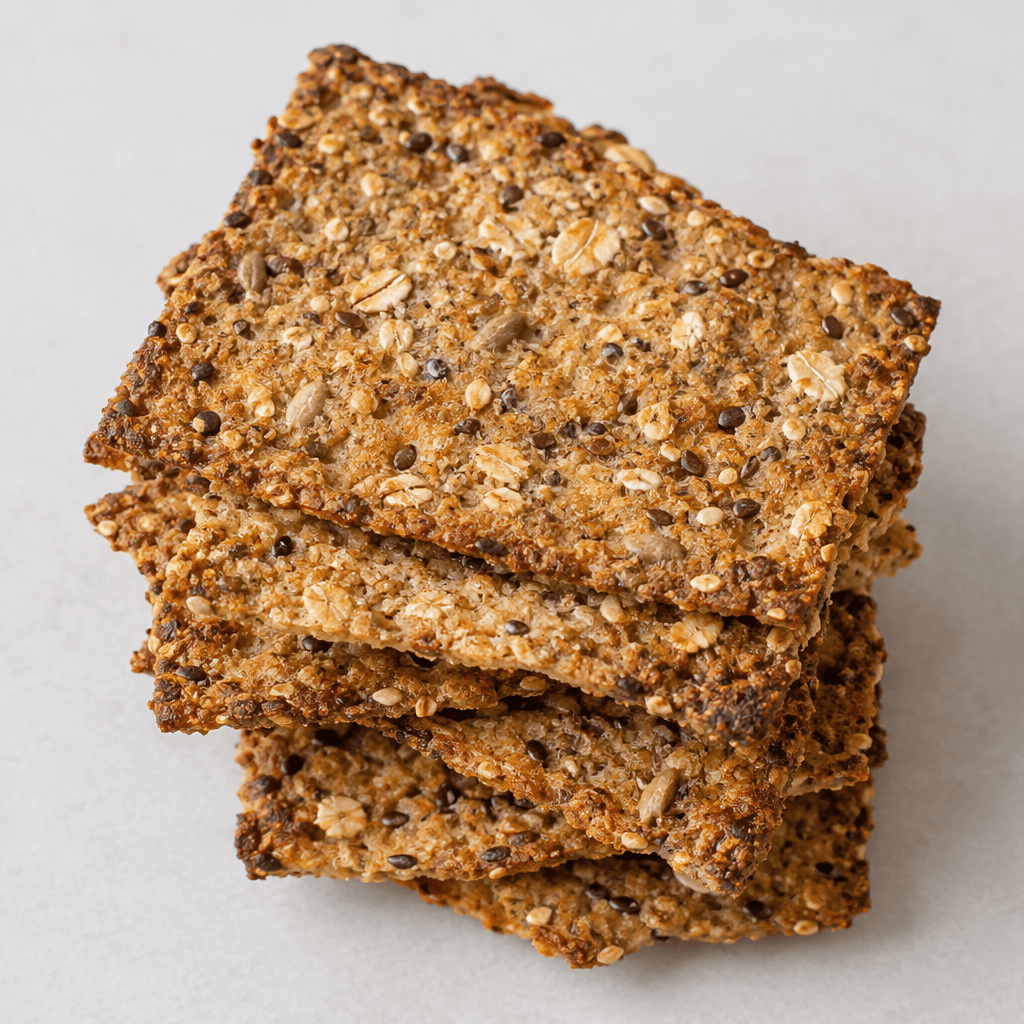
Multigrain cracker Calories
Crunchy snack made from multiple grains
In season: Spring · Summer · Autumn · Winter
CALORIES
GI
POTASSIUM
FIBER
Quick answer
5 piece (medium) of Multigrain cracker (30 g) has 129 calories. That works out to 430 calories per 100 g. It contains 21 g of carbs, 3 g of protein, 3.9 g of fat and 2.1 g of fiber. Its 0.3 mg of Manganese covers 14% of the Daily Value. Its glycemic index is 65 (medium), so it raises blood sugar at a moderate pace.
What is Multigrain cracker?
Multigrain cracker is a thin, crisp baked snack made with a mix of grains, often with visible oats or seeds in the dough. It has a dry, crunchy bite and a lightly toasted, savoury flavour, with a little extra texture from the grain pieces.
It is commonly eaten between meals, served with cheese, dips or soup, or set out as part of a snack board. In many places, it also works as a quick breakfast accompaniment; try it with soft cheese or sliced vegetables. These crackers are mainly a source of carbohydrates, with some fibre. For a more sustaining snack, pair a few with hummus, nut butter or another protein-rich topping.
Multigrain cracker Nutrition Facts
Selected: 100 g
430
KCAL / 100G
Carbs
70g
· 25% DV
Protein
10g
· 20% DV
Fat
13g
· 17% DV
Fiber
7g
· 25% DV
DV is the share of the daily value covered, on a 2,000 kcal reference diet.
Calories come from: Carbs 64% · Protein 9% · Fat 27%
Multigrain cracker Vitamins & Minerals
Vitamins
B1
0.35mg · 29% DV
B3
3.2mg · 20% DV
B2
0.18mg · 14% DV
B6
0.22mg · 13% DV
Minerals
Manganese
1mg · 43% DV
Sodium
520mg · 23% DV
Selenium
10µg · 18% DV
Iron
3mg · 17% DV
How Nutritious Is Multigrain cracker?
Nutrient density
Medium
How many vitamins, minerals and how much fiber this food carries per calorie. A high score means a lot of nutrition for few calories.
Satiety score
Medium
An EatBetter score computed from fiber, protein and calorie density. A high score means staying full longer on the same calories.
Both scores are calculated per 100 g and do not change with the selected portion. The satiety score is EatBetter's own calculation, not a clinical measure.
Multigrain cracker Glycemic Index
GLYCEMIC INDEX
GLYCEMIC LOAD
Accounts for portion size — a more realistic measure than GI alone.
How to Burn Off Multigrain cracker
To burn the 430 calories in 100 g:
🚶
Walking (5 km/h)
🏃
Running (8 km/h)
🚴
Cycling
🏊
Swimming
Times are calculated with the MET equation for a 70 kg adult. Actual burn varies with your weight, age and pace.
Is Multigrain cracker Processed?
NOVA 3
Processed
1. Unprocessed
2. Minimally Processed
3. Processed
4. Ultra-Processed
NOVA classifies foods into 4 groups by industrial processing. NOVA 1 (unprocessed) is the healthiest.
Does Multigrain cracker Contain Allergens?
Contains these allergens:
Which Diets Is Multigrain cracker Good For?
Vegan
— Not suitable
Vegetarian
✓ Suitable
Gluten-Free
— Not suitable
Dairy-Free
— Not suitable
Mediterranean
— Not suitable
Paleo
— Not suitable
Whole30
— Not suitable
DASH
— Not suitable
Keto
— Not suitable
Low FODMAP
— Not suitable
Multigrain cracker Fat Profile
SATURATED
2.2g
MONOUNSATURATED
4.5g
POLYUNSATURATED
5.2g
Omega 6:3 ratio 23.8:1
Above the ideal 4:1 (23.8:1).
Compare Multigrain cracker
Foods Similar to Multigrain cracker
Frequently Asked Questions About Multigrain cracker
Are multigrain crackers a healthy snack?
Multigrain crackers can be a useful snack because they offer grains and some fiber, but they are not automatically more nutritious than every other cracker. Pair them with hummus, cheese, or vegetables for a more filling snack.
What can you eat with multigrain crackers?
Multigrain crackers go well with hummus, nut butter, cheese, sliced vegetables, or tinned fish. Adding a protein-rich topping makes them more satisfying than eating the crackers by themselves.
Can multigrain crackers replace bread?
Multigrain crackers can replace bread for some snacks or light meals, but their small size makes portions easy to underestimate. Top them with eggs, cheese, or beans if you want a more substantial alternative to a slice of bread.
Do multigrain crackers cause weight gain?
Multigrain crackers do not cause weight gain on their own, but eating large amounts can add substantially to your overall intake. Their crisp texture can make it easy to keep reaching for more, so portion out what you plan to eat.
Are multigrain crackers suitable for people with diabetes?
People with diabetes can eat multigrain crackers, but the portion and what they are eaten with matter for blood glucose management. Pairing them with protein, such as cheese or hummus, may make the snack more balanced; follow your individual meal plan.
How should you store multigrain crackers to keep them crisp?
Store multigrain crackers in an airtight container in a cool, dry cupboard. Moisture makes them lose their crunch, so reseal the package promptly after opening; briefly warming softened crackers in the oven can help crisp them up.
How do you make multigrain crackers at home?
You can make multigrain crackers by mixing flour, oats or other grains, seeds, water, and a little oil into a dough. Roll it thin, cut it into pieces, and bake until golden and crisp; thinner dough usually gives a crunchier cracker.
Are multigrain crackers good for cheese boards?
Yes, multigrain crackers work well on a cheese board because their toasted grain flavor complements both mild and sharp cheeses. Add fruit, nuts, or sliced vegetables for contrasting textures and flavors.
Can you use multigrain crackers instead of breadcrumbs?
Yes, crushed multigrain crackers can stand in for breadcrumbs in toppings, coatings, or meatball mixtures. Crush them finely for an even coating, and remember that their toasted flavor and any seasoning will affect the finished dish.
Are multigrain crackers a good pre-workout snack?
Multigrain crackers can be a convenient source of carbohydrate before exercise, especially when topped with a little nut butter or cheese. Eat them early enough to feel comfortable during your workout, since their fiber may feel heavy for some people.
Have another question about Multigrain cracker?
Ask the AI nutrition coach — calories, portions, alternatives and more, answered in seconds in the app.

Scan calories with your camera
Instant AI nutrition analysis

Nutrition data compiled from USDA FoodData Central and scientific sources.