

Ready & Packaged Foods
All →Vegetables & Legumes
All →Desserts & Confectionery
All →Meat & Protein
All →Grains & Bakery
All →Beverages
All →Milk & Dairy
All →

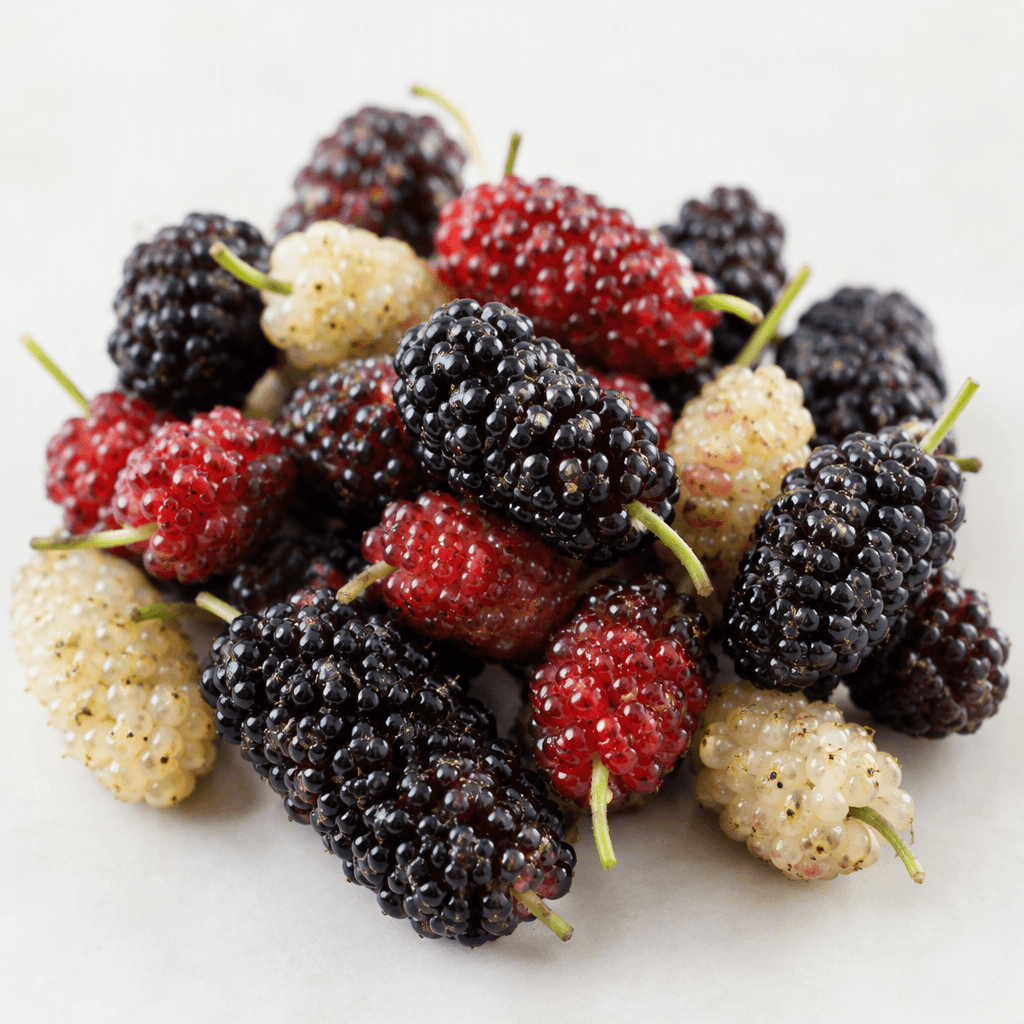
Mulberry Calories
Vitamin C, fiber, antioxidants, low calorie
In season: Spring · Summer
CALORIES
GI
POTASSIUM
FIBER
Quick answer
1 cup (medium) of Mulberry (140 g) has 60 calories. That works out to 43 calories per 100 g. It contains 13.7 g of carbs, 2 g of protein, 0.6 g of fat and 2.4 g of fiber. Its 51 mg of Vitamin C covers 57% of the Daily Value. Its glycemic index is 25 (low), so it raises blood sugar slowly.
What is Mulberry?
Mulberries grow on mulberry trees and range from pale cream and red to deep purple-black as they ripen. The berries are made up of tiny, closely packed drupelets and have a delicate, juicy texture. Their flavour is gently sweet, sometimes with a pleasantly tangy edge; darker berries tend to taste fuller. They are enjoyed fresh in places where they grow, and are also sold dried or used in preserves.
Eat them by the handful, spoon them over porridge or yoghurt, or add them to a fruit bowl. They bruise easily, so handle and rinse them gently. Mulberries are a light fruit with fibre and vitamin C; their mild sweetness makes them an easy pairing with tart yoghurt or other seasonal fruit.
Mulberry Nutrition Facts
Selected: 100 g
43
KCAL / 100G
Carbs
9.8g
· 4% DV
Protein
1.4g
· 3% DV
Fat
0.4g
· 1% DV
Fiber
1.7g
· 6% DV
DV is the share of the daily value covered, on a 2,000 kcal reference diet.
Calories come from: Carbs 81% · Protein 12% · Fat 7%
Mulberry Vitamins & Minerals
Vitamins
Vitamin C
36.4mg · 40% DV
B2
0.1mg · 8% DV
Vitamin K
7.8µg · 7% DV
Vitamin E
0.87mg · 6% DV
Minerals
Iron
2mg · 11% DV
Potassium ⭐
194mg · 6% DV
Phosphorus
38mg · 5% DV
Calcium
39mg · 4% DV
How Nutritious Is Mulberry?
Nutrient density
High
How many vitamins, minerals and how much fiber this food carries per calorie. A high score means a lot of nutrition for few calories.
Satiety score
Medium
An EatBetter score computed from fiber, protein and calorie density. A high score means staying full longer on the same calories.
Both scores are calculated per 100 g and do not change with the selected portion. The satiety score is EatBetter's own calculation, not a clinical measure.
Mulberry Glycemic Index
GLYCEMIC INDEX
GLYCEMIC LOAD
Accounts for portion size — a more realistic measure than GI alone.
How to Burn Off Mulberry
To burn the 43 calories in 100 g:
🚶
Walking (5 km/h)
🏃
Running (8 km/h)
🚴
Cycling
🏊
Swimming
Times are calculated with the MET equation for a 70 kg adult. Actual burn varies with your weight, age and pace.
Is Mulberry Processed?
NOVA 1
Unprocessed
1. Unprocessed
2. Minimally Processed
3. Processed
4. Ultra-Processed
NOVA classifies foods into 4 groups by industrial processing. NOVA 1 (unprocessed) is the healthiest.
Does Mulberry Contain Allergens?
No known major allergens
Which Diets Is Mulberry Good For?
Vegan
✓ Suitable
Vegetarian
✓ Suitable
Gluten-Free
✓ Suitable
Dairy-Free
— Not suitable
Mediterranean
✓ Suitable
Paleo
✓ Suitable
Whole30
— Not suitable
DASH
— Not suitable
Keto
— Not suitable
Low FODMAP
— Not suitable
Mulberry Fat Profile
SATURATED
0.03g
MONOUNSATURATED
0.04g
POLYUNSATURATED
0.16g
Omega 6:3 ratio 2:1
Below the ideal 4:1 — a good omega balance.
Compare Mulberry
Foods Similar to Mulberry
Frequently Asked Questions About Mulberry
What are the health benefits of mulberries?
Mulberries provide vitamin C, fiber, and antioxidants. They make a useful fruit choice in snacks or meals, but eating them does not prevent or cure disease.
What do mulberries taste like?
Ripe mulberries are usually sweet, with a mild tartness that can be more noticeable in darker varieties. Pale berries tend to taste milder; flavor also changes with variety and ripeness.
Can you eat mulberries raw?
Yes, you can eat ripe mulberries raw. Rinse them gently under cool running water just before eating, since the soft berries bruise easily and can become mushy if soaked.
What is the difference between black and white mulberries?
Black mulberries are often juicier and more tart, while white mulberries tend to be milder and sweeter. The distinction is not absolute: ripeness and variety affect both color and flavor.
How should you store fresh mulberries?
Keep fresh mulberries unwashed in the refrigerator and remove any crushed or moldy berries first. Store them in a shallow, ventilated container; wash them just before eating to limit excess moisture.
Can you freeze mulberries?
Yes, mulberries freeze well. Rinse them gently, dry them thoroughly, and freeze them in a single layer on a tray; once firm, transfer them to a sealed freezer-safe container.
When are mulberries in season?
Fresh mulberries are generally in season from late spring through summer, though timing varies by region and variety. Choose plump fruit with its characteristic ripe color and no signs of mold.
How do you use mulberries?
Use fresh mulberries in fruit salads, yogurt, oatmeal, smoothies, or baked goods. Their delicate texture means they work best when added gently, especially in recipes where you want the berries to stay whole.
Can people with diabetes eat mulberries?
Yes, people with diabetes can include mulberries if the portion fits their individual meal plan. Pairing the fruit with a protein-containing food such as plain yogurt can make a more balanced snack; ask your dietitian for personalized guidance.
Do mulberries cause weight gain?
Mulberries do not cause weight gain on their own; weight change is affected by overall food intake and habits. Sweetened mulberry products, such as syrup or desserts, can add more energy than fresh fruit.
Have another question about Mulberry?
Ask the AI nutrition coach — calories, portions, alternatives and more, answered in seconds in the app.

Scan calories with your camera
Instant AI nutrition analysis

Nutrition data compiled from USDA FoodData Central and scientific sources.