

Ready & Packaged Foods
All →Vegetables & Legumes
All →Desserts & Confectionery
All →Meat & Protein
All →Grains & Bakery
All →Beverages
All →Milk & Dairy
All →

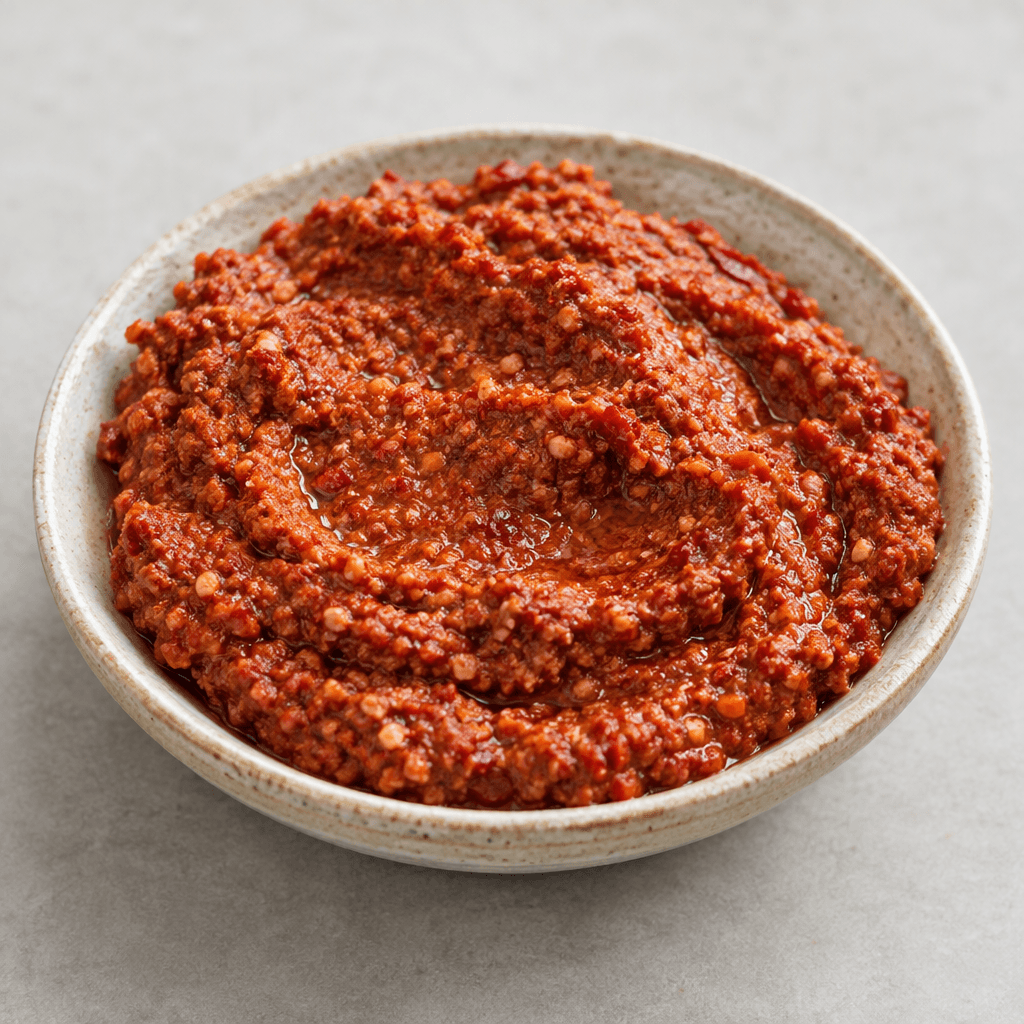
Muhammara Calories
Syrian-origin dip made with red peppers, walnuts, olive oil
In season: Spring · Summer · Autumn · Winter
CALORIES
GI
POTASSIUM
FIBER
Quick answer
2 tablespoon (medium) of Muhammara (40 g) has 100 calories. That works out to 250 calories per 100 g. It contains 7.2 g of carbs, 1.8 g of protein, 7.2 g of fat and 1.7 g of fiber. Its 380 µg of Vitamin A covers 42% of the Daily Value. Its glycemic index is 35 (low), so it raises blood sugar slowly.
What is Muhammara?
Muhammara is a Syrian-origin dip made with roasted red peppers, finely ground walnuts and olive oil. Many versions include breadcrumbs, pomegranate molasses and spices such as cumin or chilli, with proportions varying between cooks and regions.
Its flavour is gently sweet and smoky from the peppers, balanced by the walnuts’ earthy richness and a little tang; the texture can be smooth or pleasantly coarse. In the Levant it is commonly served as part of a mezze spread, scooped up with flatbread or vegetables. It also works as a sandwich spread or alongside grilled foods. Walnuts and oil make it energy-dense, while the peppers and nuts contribute fibre. For a lighter serving, use a modest spoonful with plenty of fresh vegetables.
Muhammara Nutrition Facts
Selected: 100 g
250
KCAL / 100G
Carbs
18g
· 7% DV
Protein
4.5g
· 9% DV
Fat
18g
· 23% DV
Fiber
4.2g
· 15% DV
DV is the share of the daily value covered, on a 2,000 kcal reference diet.
Calories come from: Carbs 29% · Protein 7% · Fat 64%
Muhammara Vitamins & Minerals
Vitamins
Vitamin A
950µg · 106% DV
Vitamin C
38mg · 42% DV
Vitamin E
3.8mg · 25% DV
B6
0.31mg · 18% DV
Minerals
Manganese
1mg · 43% DV
Sodium
380mg · 17% DV
Phosphorus
98mg · 14% DV
Iron
2mg · 11% DV
How Nutritious Is Muhammara?
Nutrient density
High
How many vitamins, minerals and how much fiber this food carries per calorie. A high score means a lot of nutrition for few calories.
Satiety score
Medium
An EatBetter score computed from fiber, protein and calorie density. A high score means staying full longer on the same calories.
Both scores are calculated per 100 g and do not change with the selected portion. The satiety score is EatBetter's own calculation, not a clinical measure.
Muhammara Glycemic Index
GLYCEMIC INDEX
GLYCEMIC LOAD
Accounts for portion size — a more realistic measure than GI alone.
How to Burn Off Muhammara
To burn the 250 calories in 100 g:
🚶
Walking (5 km/h)
🏃
Running (8 km/h)
🚴
Cycling
🏊
Swimming
Times are calculated with the MET equation for a 70 kg adult. Actual burn varies with your weight, age and pace.
Is Muhammara Processed?
NOVA 3
Processed
1. Unprocessed
2. Minimally Processed
3. Processed
4. Ultra-Processed
NOVA classifies foods into 4 groups by industrial processing. NOVA 1 (unprocessed) is the healthiest.
Does Muhammara Contain Allergens?
Contains these allergens:
Which Diets Is Muhammara Good For?
Vegan
— Not suitable
Vegetarian
✓ Suitable
Gluten-Free
— Not suitable
Dairy-Free
— Not suitable
Mediterranean
✓ Suitable
Paleo
— Not suitable
Whole30
— Not suitable
DASH
— Not suitable
Keto
— Not suitable
Low FODMAP
— Not suitable
Muhammara Fat Profile
SATURATED
2.2g
MONOUNSATURATED
8.1g
POLYUNSATURATED
9.8g
Omega 6:3 ratio 7.2:1
Above the ideal 4:1 (7.2:1).
Compare Muhammara
Foods Similar to Muhammara
Frequently Asked Questions About Muhammara
What is muhammara?
Muhammara is a thick Syrian dip, especially associated with Aleppo, made mainly from red peppers and walnuts. Recipes commonly add olive oil, breadcrumbs, pomegranate molasses and spices, giving it a sweet-tangy, savory flavor.
What is muhammara made of?
Muhammara is usually made with roasted red peppers, walnuts, olive oil, breadcrumbs, pomegranate molasses and seasonings such as cumin or chili. Ingredient proportions vary, so some versions taste tangier, nuttier or hotter than others.
How do you make muhammara?
To make muhammara, blend roasted red peppers with walnuts, breadcrumbs, olive oil, pomegranate molasses and spices until combined but still slightly textured. Add the oil gradually and taste as you go to balance the pepper, nut and tangy flavors.
How do you serve muhammara?
Muhammara is usually served as a dip or mezze, at room temperature or chilled. Spoon it into a shallow dish, finish with olive oil and chopped walnuts, and serve with pita, flatbread or crunchy vegetables.
Where does muhammara come from?
Muhammara comes from Syrian cuisine and is particularly associated with Aleppo. It has spread across the Levant and beyond, with local recipes adjusting the heat, bread and balance of pepper, walnut and pomegranate molasses.
Is muhammara the same as harissa?
No, muhammara is a pepper-and-walnut dip, while harissa is a North African chili paste typically centered on hot peppers and spices. Muhammara is generally thicker and nuttier, and often gets a tangy sweetness from pomegranate molasses.
What can I use instead of pomegranate molasses in muhammara?
Lemon juice can provide some of the tartness if you do not have pomegranate molasses, though it will not add the same fruity sweetness. Add it a little at a time; a small amount of honey can help round out the flavor.
How long does homemade muhammara last in the fridge?
Homemade muhammara generally keeps for about 3–4 days in a covered container in the refrigerator. Use a clean utensil when serving, and avoid returning dip that has sat out for a long time to the storage container.
Can you freeze muhammara?
Yes, muhammara can be frozen in an airtight container, but thawing may make the dip watery or separate the oil from the pepper mixture. Thaw it in the refrigerator and stir thoroughly before serving.
Why is my muhammara watery?
Muhammara can turn watery when roasted peppers retain excess liquid or the mixture is blended too smoothly. Drain the peppers well, add breadcrumbs gradually to thicken the dip, and let it rest briefly so the crumbs absorb moisture.
Have another question about Muhammara?
Ask the AI nutrition coach — calories, portions, alternatives and more, answered in seconds in the app.

Scan calories with your camera
Instant AI nutrition analysis

Nutrition data compiled from USDA FoodData Central and scientific sources.