

Ready & Packaged Foods
All →Vegetables & Legumes
All →Desserts & Confectionery
All →Meat & Protein
All →Grains & Bakery
All →Beverages
All →Milk & Dairy
All →

Muffin Calories
Sweet, soft cake, breakfast or snack
In season: Spring · Summer · Autumn · Winter
CALORIES
GI
POTASSIUM
FIBER
Quick answer
1 piece (medium) of Muffin (60 g) has 204 calories. That works out to 340 calories per 100 g. It contains 31.8 g of carbs, 3.3 g of protein, 6.6 g of fat and 0.7 g of fiber. Its 66 mg of Phosphorus covers 9% of the Daily Value. Its glycemic index is 70 (high), so it raises blood sugar quickly.
What is Muffin?
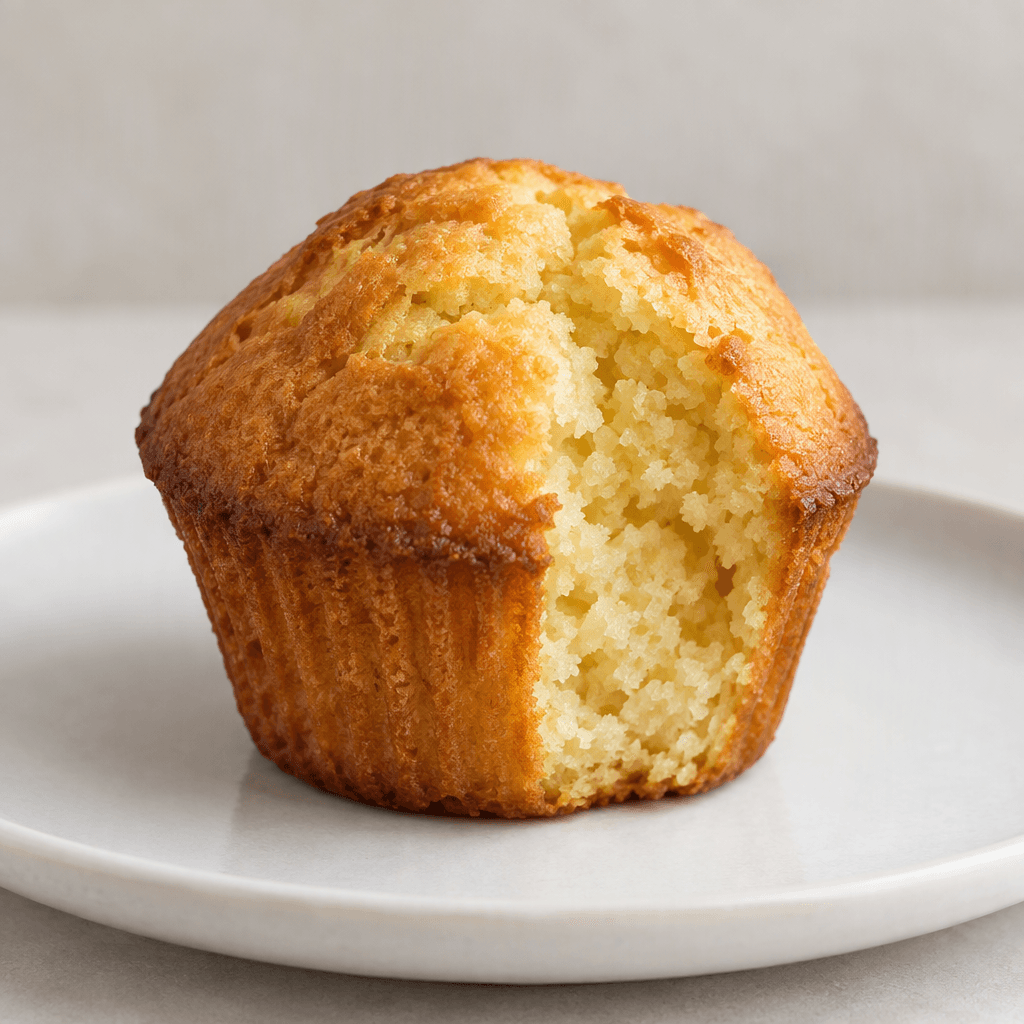
A muffin is a small, individually baked cake, commonly made with flour, sugar, eggs and milk. The gently domed, golden-topped kind shown here is a sweet muffin, familiar from American-style baking; British English also uses the word for a different, often yeasted bread roll.
Sweet muffins are eaten at breakfast or as a snack, often with coffee or tea, and are easy to find in bakeries and cafés across many English-speaking countries. Their soft crumb makes them pleasant on their own, though fruit or yoghurt can round out a snack. They are mainly a source of carbohydrates, with 340 calories per 100 g. If you want a lighter pairing, try a smaller portion with fresh fruit rather than adding frosting or a rich spread.
Muffin Nutrition Facts
Selected: 100 g
340
KCAL / 100G
Carbs
53g
· 19% DV
Protein
5.5g
· 11% DV
Fat
11g
· 14% DV
Fiber
1.2g
· 4% DV
DV is the share of the daily value covered, on a 2,000 kcal reference diet.
Calories come from: Carbs 64% · Protein 7% · Fat 29%
Muffin Vitamins & Minerals
Vitamins
B2
0.18mg · 14% DV
B1
0.12mg · 10% DV
B3
1.1mg · 7% DV
Biotin
2.2µg · 7% DV
Minerals
Phosphorus
110mg · 16% DV
Sodium
320mg · 14% DV
Selenium
7.5µg · 14% DV
Iron
1mg · 6% DV
How Nutritious Is Muffin?
Nutrient density
Low
How many vitamins, minerals and how much fiber this food carries per calorie. A high score means a lot of nutrition for few calories.
Satiety score
Low
An EatBetter score computed from fiber, protein and calorie density. A high score means staying full longer on the same calories.
Both scores are calculated per 100 g and do not change with the selected portion. The satiety score is EatBetter's own calculation, not a clinical measure.
Muffin Glycemic Index
GLYCEMIC INDEX
GLYCEMIC LOAD
Accounts for portion size — a more realistic measure than GI alone.
How to Burn Off Muffin
To burn the 340 calories in 100 g:
🚶
Walking (5 km/h)
🏃
Running (8 km/h)
🚴
Cycling
🏊
Swimming
Times are calculated with the MET equation for a 70 kg adult. Actual burn varies with your weight, age and pace.
Is Muffin Processed?
NOVA 3
Processed
1. Unprocessed
2. Minimally Processed
3. Processed
4. Ultra-Processed
NOVA classifies foods into 4 groups by industrial processing. NOVA 1 (unprocessed) is the healthiest.
Does Muffin Contain Allergens?
Contains these allergens:
Which Diets Is Muffin Good For?
Vegan
— Not suitable
Vegetarian
— Not suitable
Gluten-Free
— Not suitable
Dairy-Free
— Not suitable
Mediterranean
— Not suitable
Paleo
— Not suitable
Whole30
— Not suitable
DASH
— Not suitable
Keto
— Not suitable
Low FODMAP
— Not suitable
Muffin Fat Profile
SATURATED
2.8g
MONOUNSATURATED
4.2g
POLYUNSATURATED
2.1g
Omega 6:3 ratio 40:1
Above the ideal 4:1 (40:1).
Compare Muffin
Foods Similar to Muffin
Frequently Asked Questions About Muffin
What is the difference between a muffin and a cupcake?
A muffin is usually less sweet, has a sturdier crumb, and is served without frosting. A cupcake is typically a lighter small cake topped with frosting. Muffins can include fruit, nuts, or chocolate mixed into the batter.
Why do muffins sink in the middle?
Muffins often sink when the oven door is opened too early, the batter is overmixed, or the centers are still underbaked. Keep the oven closed until the tops look set, and test the center with a toothpick before removing the pan.
How do you get tall, domed muffin tops?
For domed muffin tops, fill the cups generously without letting batter spill over, and make sure the oven is fully preheated. Avoid overmixing, which can make muffins tough rather than lofty. Follow the recipe’s oven temperature because changing it can affect the rise.
Can you make muffin batter the night before?
Yes, you can refrigerate muffin batter overnight in a covered bowl, though the texture and rise may differ from freshly mixed batter. For a more reliable result, mix the wet and dry ingredients separately ahead of time and combine them just before baking.
How do you keep muffins from becoming dry?
To keep muffins moist, mix the batter only until the dry ingredients are incorporated and avoid baking them longer than needed. Let them cool, then store them in an airtight container. Overbaking and excess mixing are common reasons muffins turn dry or tough.
How long do muffins last at room temperature?
Plain muffins usually keep well for a few days at room temperature when fully cooled and stored in an airtight container. Muffins with fresh fruit toppings, cream, or other perishable fillings should be refrigerated instead.
Can you freeze muffins?
Yes, muffins freeze well. Cool them completely, wrap them individually or place them in a sealed freezer bag, and thaw at room temperature when needed. Warming a thawed muffin briefly can restore a fresh-baked feel.
Can you make muffins without a muffin tin?
Yes, use sturdy, oven-safe ramekins or nest two paper liners together to help them hold their shape on a baking sheet. Fill each container carefully, since unsupported paper liners can spread as the muffin batter rises.
Why are homemade muffins dense or tough?
Homemade muffins are often dense or tough because the batter was mixed too much after the wet and dry ingredients met. Stir just until no large pockets of dry flour remain; a few small lumps are normal and help preserve a tender crumb.
Can you eat a muffin for breakfast?
Yes, a muffin can be part of breakfast, although it is a sweet baked treat rather than a complete meal by itself. Pairing it with something filling, such as yogurt or eggs, makes for a more substantial breakfast.
Have another question about Muffin?
Ask the AI nutrition coach — calories, portions, alternatives and more, answered in seconds in the app.

Scan calories with your camera
Instant AI nutrition analysis

Nutrition data compiled from USDA FoodData Central and scientific sources.