

Ready & Packaged Foods
All →Vegetables & Legumes
All →Desserts & Confectionery
All →Meat & Protein
All →Grains & Bakery
All →Beverages
All →Milk & Dairy
All →

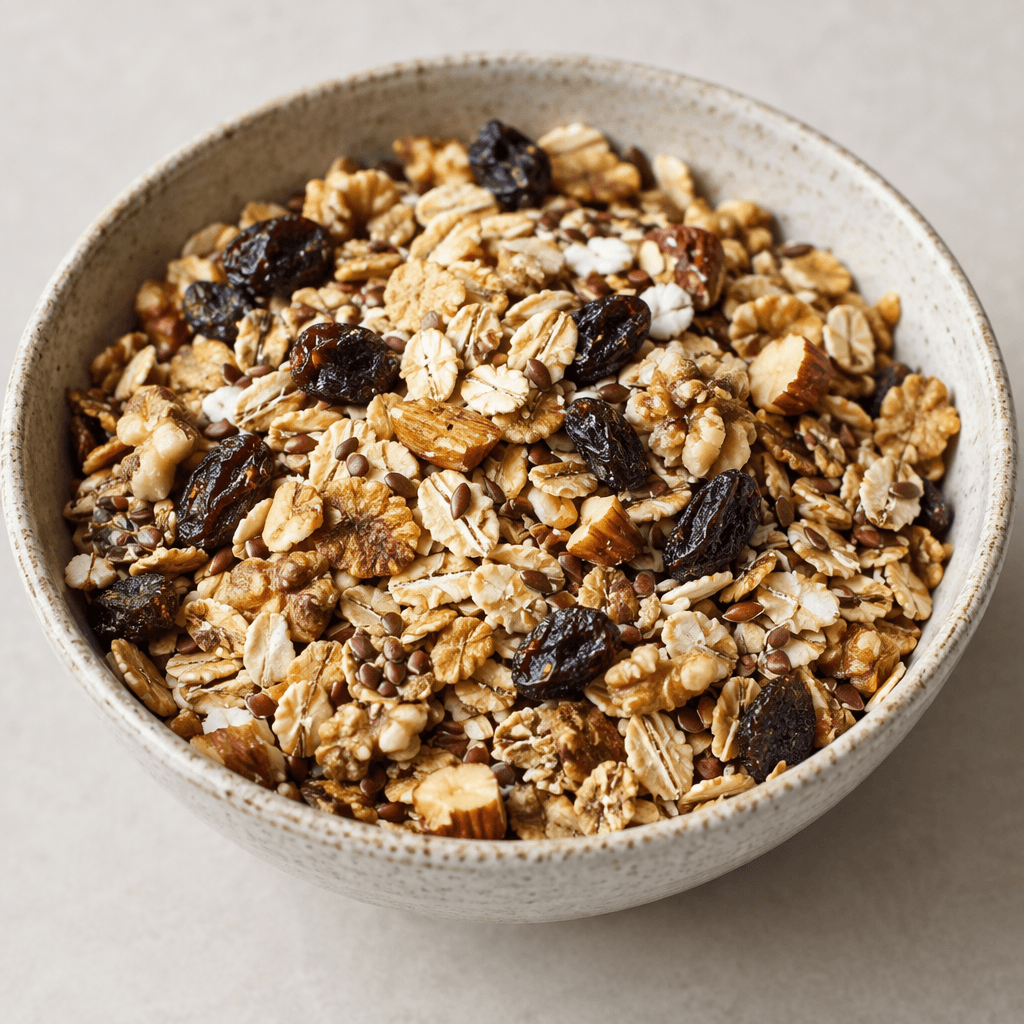
Muesli Calories
Whole grain, dried fruit, high fiber, low sugar
In season: Spring · Summer · Autumn · Winter
CALORIES
GI
POTASSIUM
FIBER
Quick answer
1 cup (medium) of Muesli (60 g) has 222 calories. That works out to 370 calories per 100 g. It contains 40.8 g of carbs, 6.3 g of protein, 3.9 g of fat and 4.8 g of fiber. Its 1.1 mg of Manganese covers 47% of the Daily Value. Its glycemic index is 55 (medium), so it raises blood sugar at a moderate pace.
What is Muesli?
Muesli is a Swiss-origin breakfast mixture, commonly made with rolled oats, other grain flakes, nuts or seeds, and dried fruit. Unlike a baked granola, it is generally served as a loose mix, though ingredients vary between blends.
It is often eaten with milk or yoghurt, and can be soaked overnight for a softer texture or topped with fresh fruit. A fibre-rich choice with whole grains, it can make a sustaining breakfast; dried fruit adds sweetness, so the sugar content varies by mix. For a lighter bowl, choose an unsweetened blend and pair it with plain yoghurt and fresh fruit.
Muesli Nutrition Facts
Selected: 100 g
370
KCAL / 100G
Carbs
68g
· 25% DV
Protein
10.5g
· 21% DV
Fat
6.5g
· 8% DV
Fiber
8g
· 29% DV
DV is the share of the daily value covered, on a 2,000 kcal reference diet.
Calories come from: Carbs 73% · Protein 11% · Fat 16%
Muesli Vitamins & Minerals
Vitamins
B1
0.35mg · 29% DV
B2
0.22mg · 17% DV
B3
2.1mg · 13% DV
B5
0.6mg · 12% DV
Minerals
Manganese
2mg · 87% DV
Phosphorus
220mg · 31% DV
Magnesium
90mg · 21% DV
Zinc
2mg · 18% DV
How Nutritious Is Muesli?
Nutrient density
High
How many vitamins, minerals and how much fiber this food carries per calorie. A high score means a lot of nutrition for few calories.
Satiety score
Medium
An EatBetter score computed from fiber, protein and calorie density. A high score means staying full longer on the same calories.
Both scores are calculated per 100 g and do not change with the selected portion. The satiety score is EatBetter's own calculation, not a clinical measure.
Muesli Glycemic Index
GLYCEMIC INDEX
GLYCEMIC LOAD
Accounts for portion size — a more realistic measure than GI alone.
How to Burn Off Muesli
To burn the 370 calories in 100 g:
🚶
Walking (5 km/h)
🏃
Running (8 km/h)
🚴
Cycling
🏊
Swimming
Times are calculated with the MET equation for a 70 kg adult. Actual burn varies with your weight, age and pace.
Is Muesli Processed?
NOVA 2
Minimally Processed
1. Unprocessed
2. Minimally Processed
3. Processed
4. Ultra-Processed
NOVA classifies foods into 4 groups by industrial processing. NOVA 1 (unprocessed) is the healthiest.
Does Muesli Contain Allergens?
Contains these allergens:
Which Diets Is Muesli Good For?
Vegan
✓ Suitable
Vegetarian
✓ Suitable
Gluten-Free
— Not suitable
Dairy-Free
— Not suitable
Mediterranean
✓ Suitable
Paleo
— Not suitable
Whole30
— Not suitable
DASH
— Not suitable
Keto
— Not suitable
Low FODMAP
— Not suitable
Muesli Fat Profile
SATURATED
1.1g
MONOUNSATURATED
2.2g
POLYUNSATURATED
2.7g
Omega 6:3 ratio 11.7:1
Above the ideal 4:1 (11.7:1).
Compare Muesli
Foods Similar to Muesli
Frequently Asked Questions About Muesli
What is muesli made of?
Muesli is usually a mix of rolled grains, such as oats, with ingredients like dried fruit, seeds and nuts. The exact blend varies: some mixes include toasted flakes, while others use mostly plain, untoasted oats.
Is muesli the same as granola?
No. Muesli is generally a loose mixture of grains, dried fruit, seeds and nuts, while granola is commonly baked with oil or a sweetener until crisp and clumpy. Some products blur the distinction, so the texture and preparation can vary.
How do you eat muesli?
Eat muesli with milk, yogurt or a plant-based drink, or sprinkle it over yogurt or fruit. You can also mix it into porridge or enjoy it dry as a crunchy topping; add fresh fruit just before serving for a fresher texture.
Can you eat muesli without milk?
Yes, you can eat muesli without milk. Have it dry, stir it into yogurt, or soften it with water, juice or a plant-based drink. If you eat it dry, have a drink alongside it, since the flakes and dried fruit can be chewy.
Should you soak muesli overnight?
Soaking muesli overnight is optional, but it softens the flakes and dried fruit. Stir it with milk, yogurt or another liquid, cover it and refrigerate; add crunchy toppings shortly before eating if you want to keep their texture.
Is muesli a healthy breakfast?
Muesli can be a nourishing breakfast because it often combines whole grains, dried fruit, seeds and nuts. The mix matters: some versions contain added sugar, so pair a less-sweet blend with yogurt or milk and fresh fruit for a more balanced meal.
Does muesli help with weight loss?
Muesli does not cause weight loss on its own, but its whole grains and fiber can make breakfast more filling. Large servings or lots of sweetened dried fruit, honey and nuts can make the meal more substantial, so additions and portions matter.
How do you make muesli at home?
Mix rolled oats with toasted or plain grain flakes, chopped nuts, seeds and dried fruit to make muesli at home. Keep it unbaked for a loose, classic mixture; baking it with oil or sweetener gives it a granola-like crunch.
Can you cook muesli?
Yes, you can cook muesli like porridge by simmering it with milk or water until the flakes soften. Because dried fruit and seeds are already mixed in, they will soften too; add fresh fruit or crunchy toppings after cooking.
How long does muesli last after opening?
Opened muesli keeps best in an airtight container in a cool, dry cupboard. Moisture can make the flakes and dried fruit lose their texture, while heat and air can make nuts taste stale. Discard it if you notice mold or an unusual smell.
Have another question about Muesli?
Ask the AI nutrition coach — calories, portions, alternatives and more, answered in seconds in the app.

Scan calories with your camera
Instant AI nutrition analysis

Nutrition data compiled from USDA FoodData Central and scientific sources.