

Ready & Packaged Foods
All →Vegetables & Legumes
All →Desserts & Confectionery
All →Meat & Protein
All →Grains & Bakery
All →Beverages
All →Milk & Dairy
All →

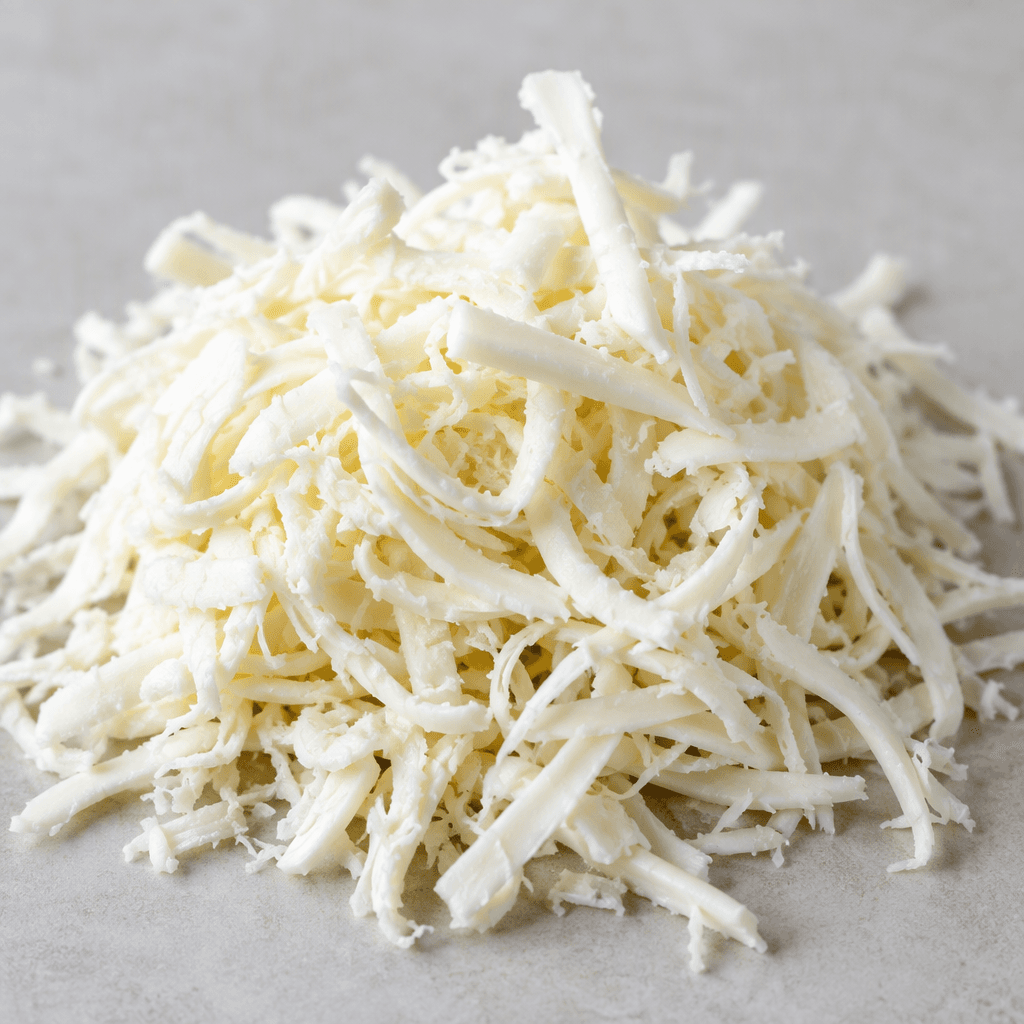
Mozzarella Cheese (Grated) Calories
High calcium, good protein source, meltable cheese
In season: Spring · Summer · Autumn · Winter
CALORIES
GI
POTASSIUM
FIBER
Quick answer
1 cup (medium) of Mozzarella Cheese (Grated) (110 g) has 330 calories. That works out to 300 calories per 100 g. It contains 2.4 g of carbs, 24.2 g of protein, 24.2 g of fat and 0 g of fiber. Its 1.7 µg of B12 covers 69% of the Daily Value. Its glycemic index is 27 (low), so it raises blood sugar slowly.
What is Mozzarella Cheese (Grated)?
Grated mozzarella cheese is mozzarella, the Italian cheese, cut into fine shreds for easy sprinkling and melting. It has a mild, milky flavour and a soft, slightly stringy texture when warm. Unlike a fresh ball served in slices, this form is usually added during cooking.
In Italy and in kitchens around the world, it is a familiar topping for pizza and baked pasta; it also melts well into toasted sandwiches and casseroles. It contributes protein and calcium, while also bringing fat, so a modest handful is often enough to give a dish its characteristic stretchy finish. Pair it with tomato, vegetables or herbs, or use it alongside a sharper cheese for more flavour with less mozzarella.
Mozzarella Cheese (Grated) Nutrition Facts
Selected: 100 g
300
KCAL / 100G
Carbs
2.2g
· 1% DV
Protein
22g
· 44% DV
Fat
22g
· 28% DV
Fiber
0g
· 0% DV
DV is the share of the daily value covered, on a 2,000 kcal reference diet.
Calories come from: Carbs 3% · Protein 30% · Fat 67%
Mozzarella Cheese (Grated) Vitamins & Minerals
Vitamins
B12
1.5µg · 63% DV
B2
0.35mg · 27% DV
Vitamin A
220µg · 24% DV
B5
0.5mg · 10% DV
Minerals
Calcium
505mg · 51% DV
Phosphorus
350mg · 50% DV
Zinc
3mg · 27% DV
Sodium
620mg · 27% DV
How Nutritious Is Mozzarella Cheese (Grated)?
Nutrient density
High
How many vitamins, minerals and how much fiber this food carries per calorie. A high score means a lot of nutrition for few calories.
Satiety score
Medium
An EatBetter score computed from fiber, protein and calorie density. A high score means staying full longer on the same calories.
Both scores are calculated per 100 g and do not change with the selected portion. The satiety score is EatBetter's own calculation, not a clinical measure.
Mozzarella Cheese (Grated) Glycemic Index
GLYCEMIC INDEX
GLYCEMIC LOAD
Accounts for portion size — a more realistic measure than GI alone.
How to Burn Off Mozzarella Cheese (Grated)
To burn the 300 calories in 100 g:
🚶
Walking (5 km/h)
🏃
Running (8 km/h)
🚴
Cycling
🏊
Swimming
Times are calculated with the MET equation for a 70 kg adult. Actual burn varies with your weight, age and pace.
Is Mozzarella Cheese (Grated) Processed?
NOVA 3
Processed
1. Unprocessed
2. Minimally Processed
3. Processed
4. Ultra-Processed
NOVA classifies foods into 4 groups by industrial processing. NOVA 1 (unprocessed) is the healthiest.
Does Mozzarella Cheese (Grated) Contain Allergens?
Contains these allergens:
Which Diets Is Mozzarella Cheese (Grated) Good For?
Vegan
— Not suitable
Vegetarian
✓ Suitable
Gluten-Free
✓ Suitable
Dairy-Free
— Not suitable
Mediterranean
✓ Suitable
Paleo
— Not suitable
Whole30
— Not suitable
DASH
— Not suitable
Keto
✓ Suitable
Low FODMAP
— Not suitable
Mozzarella Cheese (Grated) Fat Profile
SATURATED
13.5g
MONOUNSATURATED
6.2g
POLYUNSATURATED
0.6g
Omega 6:3 ratio 7.1:1
Above the ideal 4:1 (7.1:1).
Compare Mozzarella Cheese (Grated)
Foods Similar to Mozzarella Cheese (Grated)
Frequently Asked Questions About Mozzarella Cheese (Grated)
Does grated mozzarella cheese melt well on pizza?
Yes, grated mozzarella cheese melts well on pizza and gives it a stretchy topping. Spread it in an even layer rather than piling it on thickly, and drain watery toppings first so excess moisture does not make the crust soggy.
Can you freeze grated mozzarella cheese?
Yes, grated mozzarella cheese can be frozen in an airtight freezer-safe container. Its texture may become slightly crumbly after thawing, so use it in cooked dishes such as pizza, pasta bakes, or casseroles rather than as a fresh topping.
How should you store grated mozzarella cheese after opening?
Store grated mozzarella cheese tightly sealed in the refrigerator after opening. Use a clean, dry utensil, and avoid leaving the package out while cooking; trapped moisture and warmth can encourage clumping and spoilage. Follow the storage directions on the package.
Why is my grated mozzarella cheese not melting properly?
Grated mozzarella cheese may not melt smoothly if it is very cold, packed into a thick layer, or dried out. Spread it evenly over the dish and cook it in a properly heated oven; anti-clumping coatings on some pre-shredded cheeses can also affect the texture.
Can grated mozzarella cheese replace fresh mozzarella on pizza?
Yes, grated mozzarella cheese can replace fresh mozzarella on pizza, and it is usually easier to spread. It has less moisture, while fresh mozzarella can release liquid as it bakes, so drain fresh slices well if you use them instead.
What is the difference between grated and fresh mozzarella cheese?
Grated mozzarella cheese is ready to sprinkle and generally has less moisture than fresh mozzarella, which is soft and stored in liquid. Grated mozzarella suits baked dishes and pizza; fresh mozzarella works well sliced, but should be drained before baking.
Can you eat grated mozzarella cheese without cooking it?
Yes, you can eat grated mozzarella cheese without cooking it. Add it to salads, sandwiches, or cold wraps, and refrigerate the opened package promptly. Discard it if you notice mold, an unusual smell, or an unexpected change in color.
Why does grated mozzarella cheese clump together in the package?
Grated mozzarella cheese can clump when moisture builds up or its temperature changes. Keep the package sealed and refrigerated, and use a dry utensil to remove portions. A few clumps alone do not prove that the cheese has spoiled.
Can you use grated mozzarella cheese in mac and cheese?
Yes, grated mozzarella cheese works in mac and cheese, especially when you want a stretchy, mild cheese texture. It is less flavorful than many traditional cheddar-based sauces, so combine it with a stronger-tasting cheese if you want a richer flavor.
How can you tell if grated mozzarella cheese has gone bad?
Grated mozzarella cheese may be spoiled if it has visible mold, a sour or otherwise unusual smell, or a slimy texture. Do not taste it to check, and discard the package if you notice these signs rather than removing only the affected shreds.
Have another question about Mozzarella Cheese (Grated)?
Ask the AI nutrition coach — calories, portions, alternatives and more, answered in seconds in the app.

Scan calories with your camera
Instant AI nutrition analysis

Nutrition data compiled from USDA FoodData Central and scientific sources.