

Ready & Packaged Foods
All →Vegetables & Legumes
All →Desserts & Confectionery
All →Meat & Protein
All →Grains & Bakery
All →Beverages
All →Milk & Dairy
All →

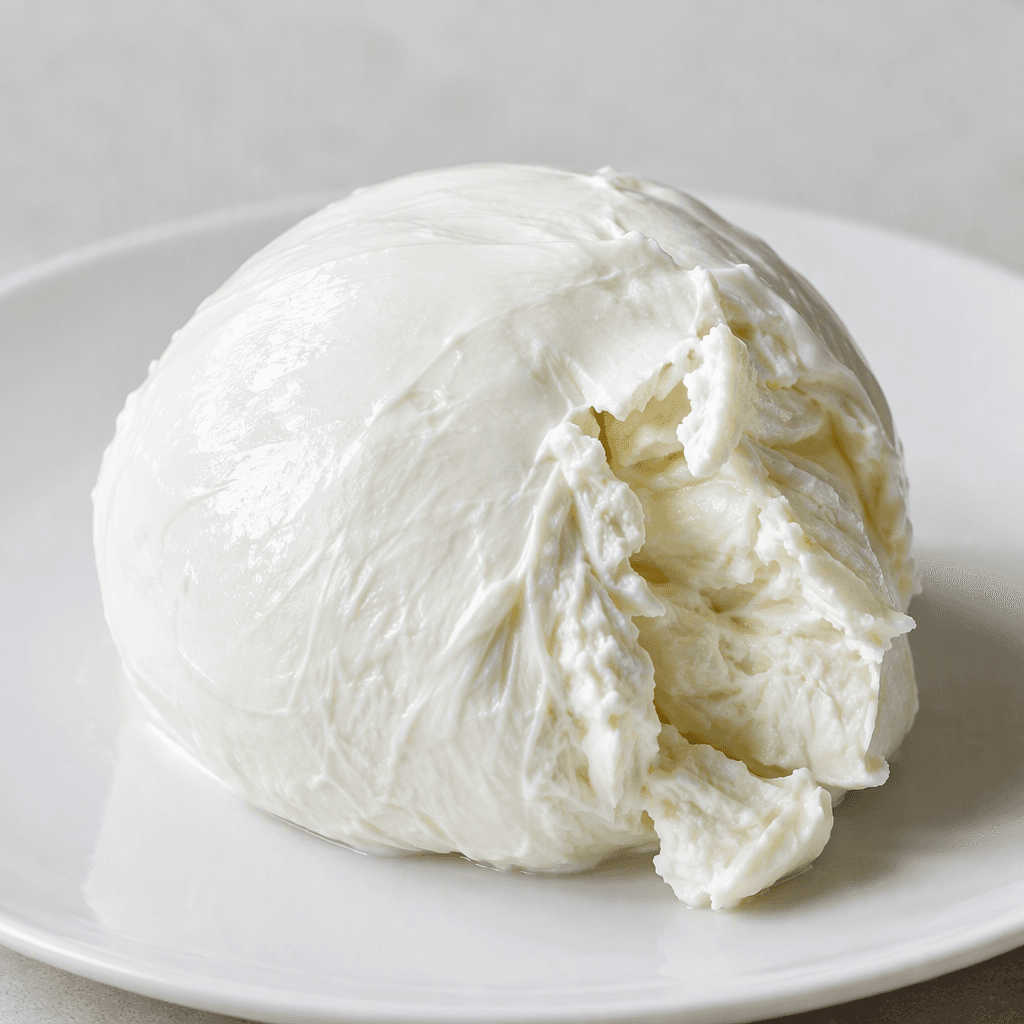
Mozzarella Calories
Soft, fresh Italian cheese, popular in pizza and salads
In season: Spring · Summer · Autumn · Winter
CALORIES
GI
POTASSIUM
FIBER
Quick answer
1 slice (medium) of Mozzarella (28 g) has 78 calories. That works out to 280 calories per 100 g. It contains 0.7 g of carbs, 5 g of protein, 5.6 g of fat and 0 g of fiber. Its 0.6 µg of B12 covers 27% of the Daily Value. Its glycemic index is 27 (low), so it raises blood sugar slowly.
What is Mozzarella?
Mozzarella is a fresh Italian cheese, traditionally made from water buffalo’s milk, though cow’s-milk versions are now widely available. Its white, moist curd has a mild, milky flavour and a soft, springy texture that pulls into strands when torn or melted.
In Italy it is served simply with ripe tomatoes, basil and olive oil, or used on pizza, where it melts into a stretchy topping. It is just as at home in salads, sandwiches and baked dishes elsewhere. Mozzarella provides protein as well as fat, so a modest portion can add substance to a meal. Pair it with vegetables and fruit, or use it in place of a heavier cheese topping.
Mozzarella Nutrition Facts
Selected: 100 g
280
KCAL / 100G
Carbs
2.5g
· 1% DV
Protein
18g
· 36% DV
Fat
20g
· 26% DV
Fiber
0g
· 0% DV
DV is the share of the daily value covered, on a 2,000 kcal reference diet.
Calories come from: Carbs 4% · Protein 27% · Fat 69%
Mozzarella Vitamins & Minerals
Vitamins
B12
2.3µg · 96% DV
B2
0.33mg · 25% DV
Vitamin A
210µg · 23% DV
Biotin
2.5µg · 8% DV
Minerals
Calcium
505mg · 51% DV
Phosphorus
350mg · 50% DV
Sodium
620mg · 27% DV
Selenium
14µg · 25% DV
How Nutritious Is Mozzarella?
Nutrient density
High
How many vitamins, minerals and how much fiber this food carries per calorie. A high score means a lot of nutrition for few calories.
Satiety score
Medium
An EatBetter score computed from fiber, protein and calorie density. A high score means staying full longer on the same calories.
Both scores are calculated per 100 g and do not change with the selected portion. The satiety score is EatBetter's own calculation, not a clinical measure.
Mozzarella Glycemic Index
GLYCEMIC INDEX
GLYCEMIC LOAD
Accounts for portion size — a more realistic measure than GI alone.
How to Burn Off Mozzarella
To burn the 280 calories in 100 g:
🚶
Walking (5 km/h)
🏃
Running (8 km/h)
🚴
Cycling
🏊
Swimming
Times are calculated with the MET equation for a 70 kg adult. Actual burn varies with your weight, age and pace.
Is Mozzarella Processed?
NOVA 2
Minimally Processed
1. Unprocessed
2. Minimally Processed
3. Processed
4. Ultra-Processed
NOVA classifies foods into 4 groups by industrial processing. NOVA 1 (unprocessed) is the healthiest.
Does Mozzarella Contain Allergens?
Contains these allergens:
Which Diets Is Mozzarella Good For?
Vegan
— Not suitable
Vegetarian
✓ Suitable
Gluten-Free
✓ Suitable
Dairy-Free
— Not suitable
Mediterranean
✓ Suitable
Paleo
— Not suitable
Whole30
— Not suitable
DASH
— Not suitable
Keto
✓ Suitable
Low FODMAP
— Not suitable
Mozzarella Fat Profile
SATURATED
13g
MONOUNSATURATED
5.5g
POLYUNSATURATED
0.4g
Omega 6:3 ratio 7.5:1
Above the ideal 4:1 (7.5:1).
Compare Mozzarella
Foods Similar to Mozzarella
Frequently Asked Questions About Mozzarella
Is mozzarella healthy?
Yes, mozzarella provides protein and calcium, but it also contains saturated fat and sodium. It can fit into a balanced meal; pair a moderate portion with vegetables rather than treating it as the main source of nutrition.
What is the difference between fresh mozzarella and low-moisture mozzarella?
Fresh mozzarella is soft, moist, and mildly milky, while low-moisture mozzarella is firmer and easier to grate. Fresh mozzarella suits salads and sandwiches; low-moisture mozzarella is usually more practical for pizza because it releases less water.
Why does mozzarella make pizza watery?
Fresh mozzarella contains substantial moisture, which can seep out as it heats and leave the pizza wet. Drain and pat it dry before topping, or choose low-moisture mozzarella when you want a drier, more evenly browned pizza.
How should you store mozzarella after opening?
Keep opened mozzarella refrigerated in its original liquid or brine, inside a covered container. If it came without liquid, seal it in a clean container and follow the package directions; use it promptly for the best texture and quality.
Can you freeze mozzarella?
Yes, mozzarella can be frozen, but thawing may make it crumbly or watery. Frozen mozzarella works best in cooked dishes such as pizza, pasta, and casseroles rather than salads. Seal it well and thaw it in the refrigerator.
What is the difference between buffalo mozzarella and regular mozzarella?
Buffalo mozzarella is made from water buffalo milk and often has a richer, creamier taste and softer texture. Cow’s-milk mozzarella is milder and more widely available. Both work in salads and cooked dishes, though their textures differ.
Does mozzarella melt well?
Yes, mozzarella melts readily and becomes stretchy, which makes it popular on pizza and baked pasta. Low-moisture mozzarella usually melts more evenly; drain fresh mozzarella first if you want to limit excess liquid in the dish.
Is mozzarella lactose-free?
No, mozzarella is not reliably lactose-free. It may contain less lactose than some fresh dairy products, but the amount varies by type and product. People with lactose intolerance should use their own tolerance and the product’s information to guide portions.
Can you eat mozzarella without cooking it?
Yes, mozzarella is ready to eat and does not need cooking. Fresh mozzarella is commonly served cold with tomatoes and basil or added to sandwiches. Keep it refrigerated and handle it according to the package’s storage instructions.
What is mozzarella traditionally served with?
Mozzarella is often served with ripe tomatoes, basil, and olive oil in a Caprese salad. It also pairs well with roasted vegetables, bread, and pasta; fresh mozzarella suits cold dishes, while firmer low-moisture mozzarella is handy for baking.
Have another question about Mozzarella?
Ask the AI nutrition coach — calories, portions, alternatives and more, answered in seconds in the app.

Scan calories with your camera
Instant AI nutrition analysis

Nutrition data compiled from USDA FoodData Central and scientific sources.