

Ready & Packaged Foods
All →Vegetables & Legumes
All →Desserts & Confectionery
All →Meat & Protein
All →Grains & Bakery
All →Beverages
All →Milk & Dairy
All →

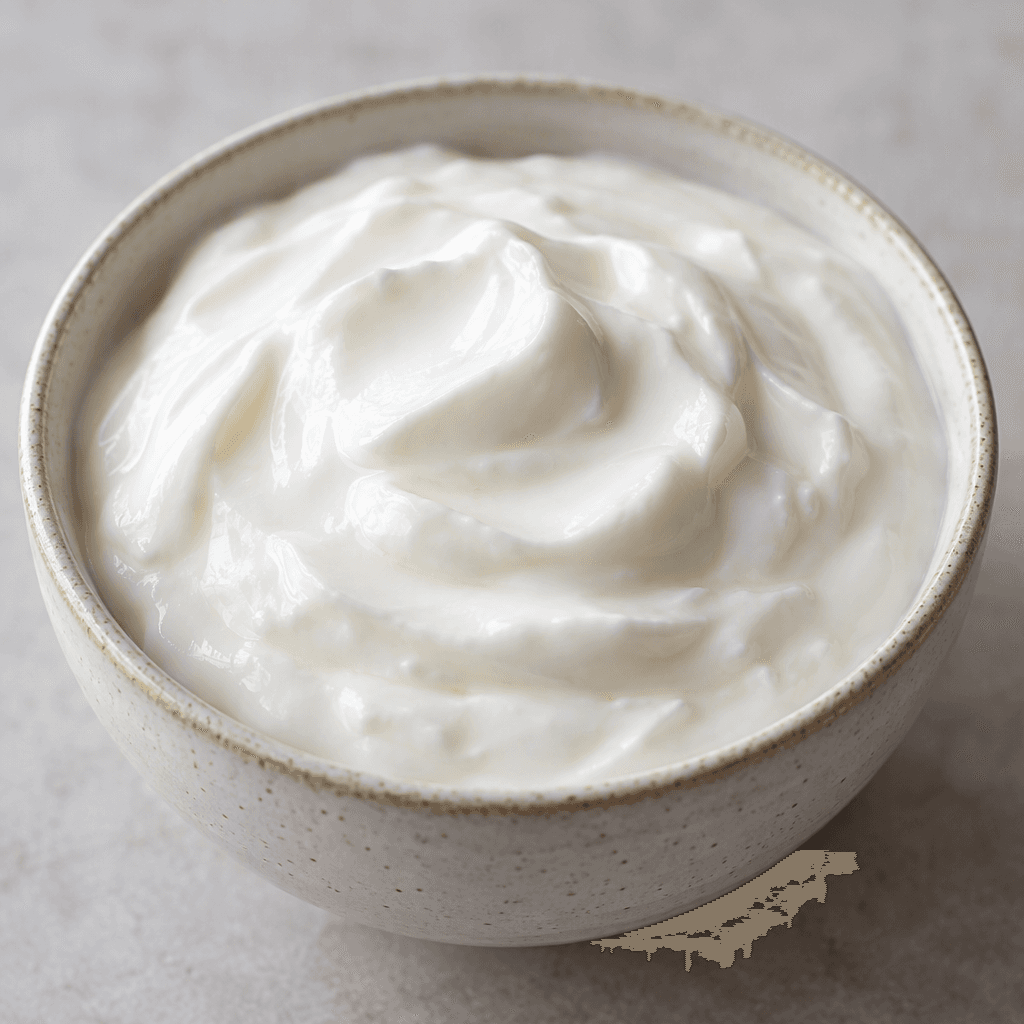
Mövenpick Greek Style Yogurt Calories
Source of protein and calcium
CALORIES · 100 G
GI
POTASSIUM · 100 G
FIBER · 100 G
Quick answer
1 serving (medium) of Mövenpick Greek Style Yogurt (150 g) has 200 calories. That works out to 133 calories per 100 g. It contains 6.1 g of carbs, 8.4 g of protein, 15 g of fat and 0 g of fiber. Its 0.8 µg of B12 covers 31% of the Daily Value. Its glycemic index is 11 (low), so it raises blood sugar slowly.
Mövenpick Greek Style Yogurt Nutrition Facts
Selected: 1 serving (medium) · 150 g
200
KCAL / 150G
Carbs
6.1g
· 2% DV
Protein
8.4g
· 17% DV
Fat
15g
· 19% DV
Fiber
0g
· 0% DV
DV is the share of the daily value covered, on a 2,000 kcal reference diet.
Calories come from: Carbs 13% · Protein 17% · Fat 70%
Mövenpick Greek Style Yogurt nutrition facts table · 1 serving (medium) (150 g)
| Nutrient | Amount | % DV |
|---|---|---|
| Calories | 200 kcal | |
| Total fat | 15 g | 19% |
| Saturated fat | 9.45 g | 47% |
| Trans fat | 0.52 g | |
| Sodium | 68 mg | 3% |
| Total carbohydrate | 6.1 g | 2% |
| Fiber | 0 g | 0% |
| Protein | 8.4 g | 17% |
Calories: Calories measure energy. Average daily need is 2,000 kcal. Excess calories are stored as fat, too few cause weight loss.
Carbs: Your body's primary energy source. The brain runs exclusively on carbs. Daily need: 275g.
Protein: Essential for muscle repair and cell growth. Daily need: 50g. Keeps you full and boosts metabolism.
Fat: Needed for hormone production and vitamin absorption. Daily need: 78g. Limit saturated fats, choose unsaturated.
Fiber: Critical for digestive health and satiety. Daily need: 28g. Stabilizes blood sugar, lowers cholesterol.

Log this food in EatBetter
100,000+ people use it
- Get your daily calorie target
- Snap your meal, log it in seconds
- See every vitamin and mineral

📸 Scan the code to get the app free.

How Many Calories in 1 Serving of Mövenpick Greek Style Yogurt?
| Serving | Amount | Calories |
|---|---|---|
| 1 serving (medium) | 150 g | 200 kcal |
| 1 tablespoon (medium) | 15 g | 20 kcal |
| 1 ounce (medium) | 28 g | 37 kcal |
| 100 g | 100 g | 133 kcal |
| 1 serving (small) | 100 g | 133 kcal |
| 1 pack (medium) | 150 g | 200 kcal |
| 1 cup (medium) | 200 g | 266 kcal |
| 1 pack (large) | 400 g | 532 kcal |
Calculated from 133 calories per 100 g.
Frequently Asked Questions About Mövenpick Greek Style Yogurt
Is Mövenpick Greek Style Yogurt the same as Greek yogurt?
No. Mövenpick Greek Style Yogurt is made in a Greek-style manner, but “Greek style” does not mean it was made in Greece or by one fixed traditional method. The term usually refers to its thick, creamy texture.
Can Mövenpick Greek Style Yogurt replace sour cream in recipes?
Yes, Mövenpick Greek Style Yogurt can replace sour cream in many dips, dressings, and toppings. Its thick texture works well, though its tang and richness may differ; add it off the heat to avoid curdling in hot dishes.
Is Mövenpick Greek Style Yogurt sweetened?
The ingredient list on the specific Mövenpick Greek Style Yogurt pack is the reliable way to tell. Look for sugar, syrup, or sweetener in the ingredients; plain yogurt also contains naturally occurring milk sugar, called lactose.
Can Mövenpick Greek Style Yogurt be used in a smoothie?
Yes, Mövenpick Greek Style Yogurt blends well into smoothies and gives them a thick, creamy body. Combine it with fruit and a little milk or water, adding liquid gradually until you reach the consistency you want.
Does Mövenpick Greek Style Yogurt work as a marinade?
Yes, Mövenpick Greek Style Yogurt works as a marinade for chicken or vegetables. Mix it with herbs, spices, and lemon, coat the food, and refrigerate while marinating; discard any marinade that has touched raw meat.
Can you cook with Mövenpick Greek Style Yogurt without it curdling?
Yes, but Mövenpick Greek Style Yogurt is less likely to curdle if you stir it in gently at low heat or after cooking. Avoid boiling it, and temper it first by mixing in a little warm sauce.
How long does Mövenpick Greek Style Yogurt last after opening?
Keep Mövenpick Greek Style Yogurt refrigerated with the lid closed and follow the pack’s instructions for use after opening. Use a clean spoon each time, and discard it if you notice mold, an unusual smell, or a changed appearance.
Can Mövenpick Greek Style Yogurt be frozen?
Yes, Mövenpick Greek Style Yogurt can be frozen, but thawing may leave it separated or grainy. Freeze it in an airtight container and stir it after thawing; the changed texture is usually better suited to smoothies or cooking than eating plain.
Does Mövenpick Greek Style Yogurt contain live cultures?
Mövenpick Greek Style Yogurt is fermented, but fermentation alone does not confirm that live cultures remain in the finished product. Heating after fermentation can reduce or eliminate them, so look for live-culture information on the package.
Is Mövenpick Greek Style Yogurt suitable for people with lactose intolerance?
Mövenpick Greek Style Yogurt may contain lactose because it is made from dairy. Fermentation can reduce lactose but does not remove it all; people with lactose intolerance may prefer a product specifically labeled lactose-free.
Mövenpick Greek Style Yogurt Vitamins & Minerals
Vitamins
B12
0.75µg · 31% DV
B2
0.38mg · 29% DV
Biotin
5.25µg · 18% DV
B5
0.83mg · 17% DV
Minerals
Iodine
38µg · 25% DV
Phosphorus
150mg · 21% DV
Calcium
180mg · 18% DV
Selenium
5.25µg · 10% DV
Potassium ⭐
225mg · 7% DV
Sodium
68mg · 3% DV
Mövenpick Greek Style Yogurt Glycemic Index
GLYCEMIC INDEX
GLYCEMIC LOAD
Accounts for portion size — a more realistic measure than GI alone.
How to Burn Off Mövenpick Greek Style Yogurt
To burn the 200 calories in 1 serving (medium) (150 g):
🚶
Walking (5 km/h)
🏃
Running (8 km/h)
🚴
Cycling
🏊
Swimming
Times are calculated with the MET equation for a 70 kg adult. Actual burn varies with your weight, age and pace.
What is Mövenpick Greek Style Yogurt?
Mövenpick Greek Style Yogurt is a packaged cultured-milk yogurt made in the thick, creamy style associated with Greek yogurt. “Greek style” describes the texture and approach, rather than necessarily indicating that it is made in Greece. It has a gentle tang and a richer, denser feel than many regular yogurts.
Enjoy it at breakfast with fruit, oats or granola, or use it as a base for dips and sauces. It provides protein and calcium, and its relatively rich fat content gives it a satisfying, creamy character. For a lighter bowl, pair a modest serving with fresh fruit; for savoury dishes, herbs and cucumber make a simple companion.
How Nutritious Is Mövenpick Greek Style Yogurt?
Nutrient density
Medium
How many vitamins, minerals and how much fiber this food carries per calorie. A high score means a lot of nutrition for few calories.
Satiety score
Medium
An EatBetter score computed from fiber, protein and calorie density. A high score means staying full longer on the same calories.
Both scores are calculated per 100 g and do not change with the selected portion. The satiety score is EatBetter's own calculation, not a clinical measure.
Is Mövenpick Greek Style Yogurt Processed?
NOVA 3
Processed
1. Unprocessed
2. Minimally Processed
3. Processed
4. Ultra-Processed
NOVA classifies foods into 4 groups by industrial processing. NOVA 1 (unprocessed) is the healthiest.
Does Mövenpick Greek Style Yogurt Contain Allergens?
Contains these allergens:
Which Diets Is Mövenpick Greek Style Yogurt Good For?
Vegan
— Not suitable
Vegetarian
✓ Suitable
Gluten-Free
✓ Suitable
Dairy-Free
— Not suitable
Mediterranean
✓ Suitable
Paleo
— Not suitable
Whole30
— Not suitable
DASH
— Not suitable
Keto
— Not suitable
Low FODMAP
— Not suitable
Mövenpick Greek Style Yogurt Fat Profile
SATURATED
9.45g
MONOUNSATURATED
4.05g
POLYUNSATURATED
0.41g
Omega 6:3 ratio 4.1:1
Above the ideal 4:1 (4.1:1).
Compare Mövenpick Greek Style Yogurt
Foods Similar to Mövenpick Greek Style Yogurt
Have another question about Mövenpick Greek Style Yogurt?
Ask the AI nutrition coach — calories, portions, alternatives and more, answered in seconds in the app.

Scan calories with your camera
Instant AI nutrition analysis

Nutrition data compiled from USDA FoodData Central and scientific sources.