

Ready & Packaged Foods
All →Vegetables & Legumes
All →Desserts & Confectionery
All →Meat & Protein
All →Grains & Bakery
All →Beverages
All →Milk & Dairy
All →

Molasses Calories
Rich in iron and calcium, natural sweetener
In season: Autumn · Winter
CALORIES
GI
POTASSIUM
FIBER
Quick answer
1 tablespoon (medium) of Molasses (20 g) has 58 calories. That works out to 290 calories per 100 g. It contains 14.8 g of carbs, 0.1 g of protein, 0 g of fat and 0 g of fiber. Its 0.2 mg of Manganese covers 10% of the Daily Value. Its glycemic index is 55 (medium), so it raises blood sugar at a moderate pace.
What is Molasses?
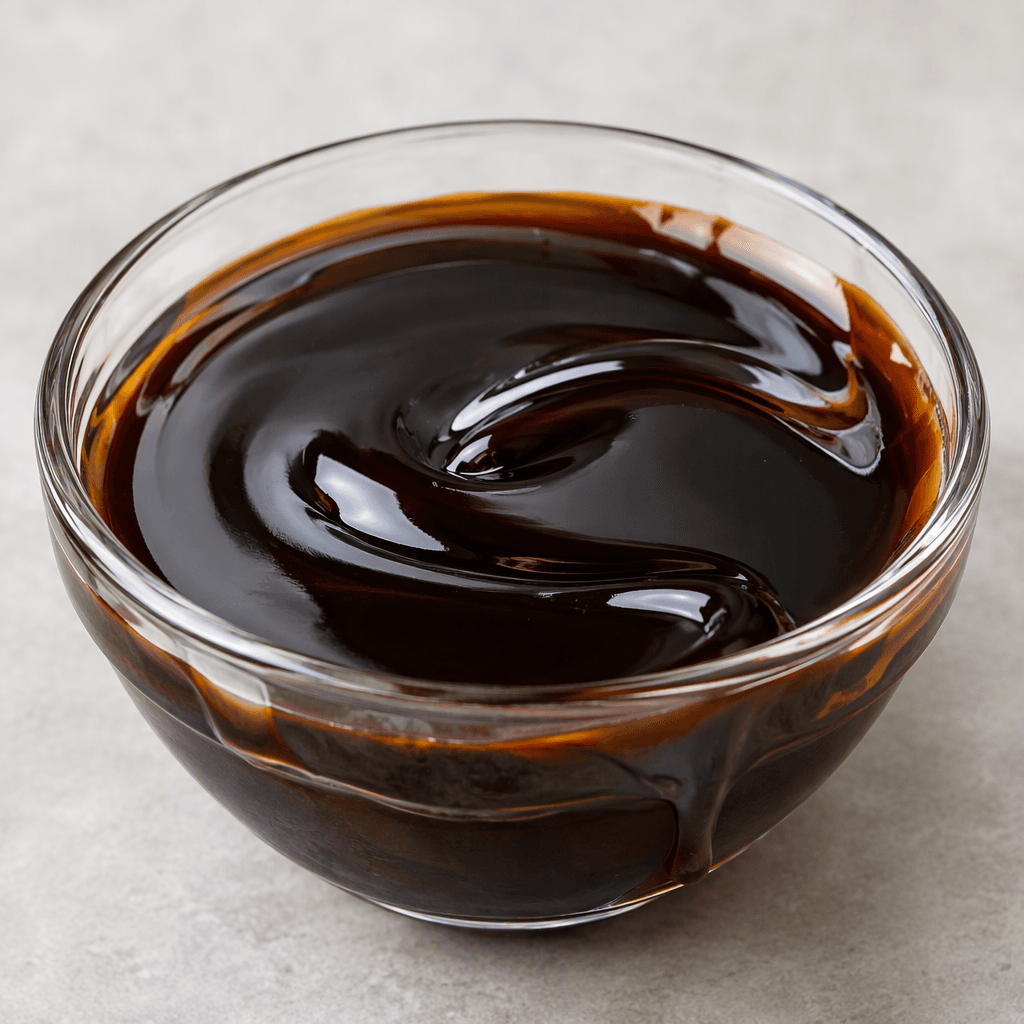
Pekmez is a traditional Turkish fruit syrup made by simmering grape juice—though mulberries, carob and other fruits are also used—until it becomes thick and concentrated. It is not quite the same as cane molasses: its flavour depends on the fruit, and it is usually dark, glossy and richly sweet.
In Turkey, it is often stirred together with tahini for breakfast, spread on bread or drizzled over yoghurt and porridge. Elsewhere, it works as a sweetener in baking, sauces or breakfast bowls. Pekmez is mostly carbohydrate, with iron and calcium among the minerals it provides. Pair it with tahini or plain yoghurt for a less one-note sweetness, or use a little in place of some added sugar.
Molasses Nutrition Facts
Selected: 100 g
290
KCAL / 100G
Carbs
74g
· 27% DV
Protein
0.5g
· 1% DV
Fat
0.1g
· 0% DV
Fiber
0g
· 0% DV
DV is the share of the daily value covered, on a 2,000 kcal reference diet.
Calories come from: Carbs 99% · Protein 1% · Fat 0%
Molasses Vitamins & Minerals
Vitamins
B6
0.67mg · 39% DV
B2
0.11mg · 8% DV
B3
0.93mg · 6% DV
B5
0.15mg · 3% DV
Minerals
Manganese
1mg · 43% DV
Potassium ⭐
1464mg · 43% DV
Iron
5mg · 28% DV
Calcium
205mg · 21% DV
How Nutritious Is Molasses?
Nutrient density
Medium
How many vitamins, minerals and how much fiber this food carries per calorie. A high score means a lot of nutrition for few calories.
Satiety score
Low
An EatBetter score computed from fiber, protein and calorie density. A high score means staying full longer on the same calories.
Both scores are calculated per 100 g and do not change with the selected portion. The satiety score is EatBetter's own calculation, not a clinical measure.
Molasses Glycemic Index
GLYCEMIC INDEX
GLYCEMIC LOAD
Accounts for portion size — a more realistic measure than GI alone.
How to Burn Off Molasses
To burn the 290 calories in 100 g:
🚶
Walking (5 km/h)
🏃
Running (8 km/h)
🚴
Cycling
🏊
Swimming
Times are calculated with the MET equation for a 70 kg adult. Actual burn varies with your weight, age and pace.
Is Molasses Processed?
NOVA 3
Processed
1. Unprocessed
2. Minimally Processed
3. Processed
4. Ultra-Processed
NOVA classifies foods into 4 groups by industrial processing. NOVA 1 (unprocessed) is the healthiest.
Does Molasses Contain Allergens?
No known major allergens
Which Diets Is Molasses Good For?
Vegan
✓ Suitable
Vegetarian
✓ Suitable
Gluten-Free
✓ Suitable
Dairy-Free
— Not suitable
Mediterranean
✓ Suitable
Paleo
— Not suitable
Whole30
— Not suitable
DASH
— Not suitable
Keto
— Not suitable
Low FODMAP
— Not suitable
Molasses Fat Profile
SATURATED
0.01g
MONOUNSATURATED
0.01g
POLYUNSATURATED
0.01g
Compare Molasses
Foods Similar to Molasses
Frequently Asked Questions About Molasses
What is molasses made from?
Molasses here means pekmez, a Turkish fruit syrup, rather than the usual sugar-cane by-product. It is made by concentrating fruit juice, most often grape juice; mulberry, carob, and other fruit versions are also sold.
How do you use molasses?
Molasses can be eaten as a spread, stirred into yogurt or oatmeal, or used to sweeten sauces and baked goods. In Turkish cooking, it is often paired with tahini and served with bread.
What does molasses taste like?
Molasses has a concentrated, sweet fruit flavor, often with a tangy or gently caramel-like note. The taste changes with the fruit: grape molasses is typically rich, while mulberry molasses can taste lighter.
Is molasses the same as honey?
No. Molasses is concentrated fruit juice, while honey is made by bees from flower nectar. Both are sweet syrups, but they differ in flavor, source, and how they are traditionally used.
Does molasses contain iron?
Yes, molasses contains iron, and it can also provide calcium, but levels vary by fruit and product. It should not be relied on to treat iron deficiency; a diagnosed deficiency needs appropriate medical care.
Can molasses replace honey or maple syrup in baking?
Usually, molasses can replace honey or maple syrup in some recipes, but its deeper fruit flavor may change the result. Start with a recipe designed for a similar thick syrup, and adjust the sweetness to taste.
How should molasses be stored?
Keep molasses tightly sealed in a cool, dark place, and use a clean, dry spoon each time. Refrigeration is usually unnecessary, but follow the storage directions on the container if they differ.
Does molasses go bad?
Yes, molasses can spoil, especially if contaminated or stored poorly. Discard it if you see mold or notice an unusual fermented smell or flavor; do not skim off mold and use the rest.
Can people with diabetes eat molasses?
Molasses is a concentrated sweetener and can raise blood glucose, even though it comes from fruit. If you have diabetes, ask your diabetes care team how a small serving fits your individual meal plan.
Do you need to cook molasses before eating it?
No, molasses is ready to eat and does not need cooking. You can add it directly to bread, yogurt, or other foods; when using it in a recipe, prolonged high heat may alter its flavor.
Have another question about Molasses?
Ask the AI nutrition coach — calories, portions, alternatives and more, answered in seconds in the app.

Scan calories with your camera
Instant AI nutrition analysis

Nutrition data compiled from USDA FoodData Central and scientific sources.