

Ready & Packaged Foods
All →Vegetables & Legumes
All →Desserts & Confectionery
All →Meat & Protein
All →Grains & Bakery
All →Beverages
All →Milk & Dairy
All →

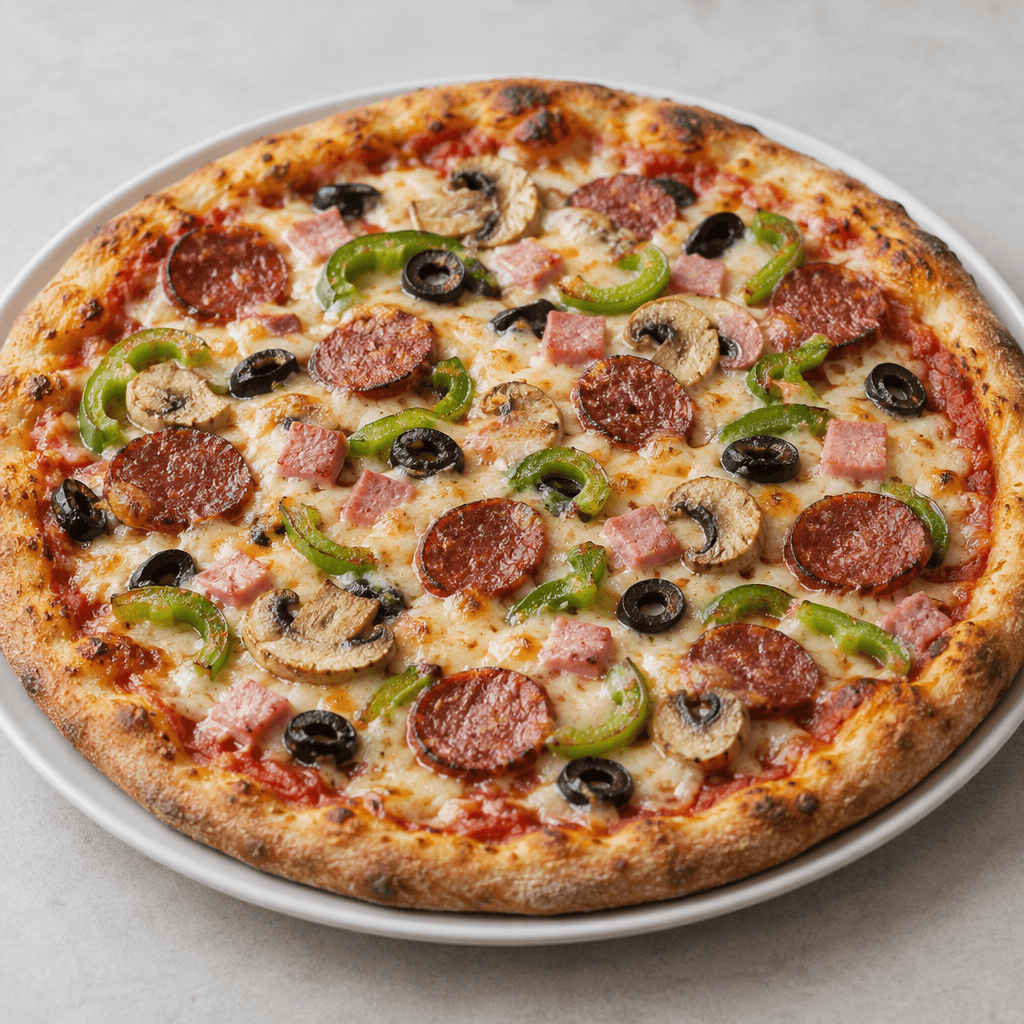
Mixed Pizza Calories
Classic mixed pizza with cheese, tomato sauce, assorted meats and vegetables.
In season: Spring · Summer · Autumn · Winter
CALORIES
GI
POTASSIUM
FIBER
Quick answer
1 slice (medium) of Mixed Pizza (80 g) has 188 calories. That works out to 235 calories per 100 g. It contains 22 g of carbs, 8.2 g of protein, 7.3 g of fat and 1.8 g of fiber. Its 416 mg of Sodium covers 18% of the Daily Value. Its glycemic index is 60 (medium), so it raises blood sugar at a moderate pace.
What is Mixed Pizza?
Mixed Pizza brings together the familiar tomato sauce and melted cheese of Italian-style pizza with a variety of toppings. Versions vary, but they often include meats such as sucuk or other cured meat alongside mushrooms, green pepper and olives. The combination reflects the adaptable pizza-shop style found in many places, rather than one fixed traditional recipe.
The crust is browned and lightly raised at the edge, with a soft centre and savoury, salty toppings. It is commonly served hot as a casual lunch or dinner, by the slice or to share, and pairs well with a simple salad. The base makes it mainly a source of carbohydrates, while cheese and meat add protein and fat. For a lighter meal, choose a thinner crust and balance a slice with vegetables.
Mixed Pizza Nutrition Facts
Selected: 100 g
235
KCAL / 100G
Carbs
27.5g
· 10% DV
Protein
10.2g
· 20% DV
Fat
9.1g
· 12% DV
Fiber
2.2g
· 8% DV
DV is the share of the daily value covered, on a 2,000 kcal reference diet.
Calories come from: Carbs 47% · Protein 18% · Fat 35%
Mixed Pizza Vitamins & Minerals
Vitamins
B12
0.38µg · 16% DV
B2
0.18mg · 14% DV
B3
2.1mg · 13% DV
Vitamin A
110µg · 12% DV
Minerals
Sodium
520mg · 23% DV
Selenium
9.2µg · 17% DV
Phosphorus
120mg · 17% DV
Calcium
160mg · 16% DV
How Nutritious Is Mixed Pizza?
Nutrient density
Medium
How many vitamins, minerals and how much fiber this food carries per calorie. A high score means a lot of nutrition for few calories.
Satiety score
Medium
An EatBetter score computed from fiber, protein and calorie density. A high score means staying full longer on the same calories.
Both scores are calculated per 100 g and do not change with the selected portion. The satiety score is EatBetter's own calculation, not a clinical measure.
Mixed Pizza Glycemic Index
GLYCEMIC INDEX
GLYCEMIC LOAD
Accounts for portion size — a more realistic measure than GI alone.
How to Burn Off Mixed Pizza
To burn the 235 calories in 100 g:
🚶
Walking (5 km/h)
🏃
Running (8 km/h)
🚴
Cycling
🏊
Swimming
Times are calculated with the MET equation for a 70 kg adult. Actual burn varies with your weight, age and pace.
Is Mixed Pizza Processed?
NOVA 3
Processed
1. Unprocessed
2. Minimally Processed
3. Processed
4. Ultra-Processed
NOVA classifies foods into 4 groups by industrial processing. NOVA 1 (unprocessed) is the healthiest.
Does Mixed Pizza Contain Allergens?
Contains these allergens:
Which Diets Is Mixed Pizza Good For?
Vegan
— Not suitable
Vegetarian
— Not suitable
Gluten-Free
— Not suitable
Dairy-Free
— Not suitable
Mediterranean
✓ Suitable
Paleo
— Not suitable
Whole30
— Not suitable
DASH
— Not suitable
Keto
— Not suitable
Low FODMAP
— Not suitable
Mixed Pizza Fat Profile
SATURATED
3.3g
MONOUNSATURATED
2.7g
POLYUNSATURATED
1.1g
Omega 6:3 ratio 6.5:1
Above the ideal 4:1 (6.5:1).
Compare Mixed Pizza
Foods Similar to Mixed Pizza
Frequently Asked Questions About Mixed Pizza
What is on a mixed pizza?
A mixed pizza usually has tomato sauce, cheese, and a combination of meat and vegetable toppings. Common choices include sausage or other cured meats, mushrooms, peppers, and olives, though the exact mix varies by pizzeria.
How is mixed pizza different from supreme pizza?
Mixed pizza is a broad name for a pizza with assorted toppings, while “supreme” usually refers to a particular combination set by a restaurant or regional style. The toppings are not standardized, so check the menu description if you want to know exactly what is included.
How do you make mixed pizza at home?
To make mixed pizza, spread tomato sauce over pizza dough, add cheese, then arrange your chosen meats and vegetables across the top. Avoid piling on too many wet toppings, such as mushrooms, because they can release moisture and leave the crust soggy.
What meat goes on a mixed pizza?
Mixed pizza commonly includes sausage, pepperoni, ham, or other cured meats, depending on the recipe and region. Some versions combine several meats with vegetables; there is no single traditional topping list shared by every pizzeria.
What vegetables go well on mixed pizza?
Mushrooms, bell peppers, and olives are classic mixed-pizza toppings because they pair well with tomato sauce, cheese, and savory meats. Add vegetables in moderate amounts so they cook through without making the crust wet.
What should you serve with mixed pizza?
A crisp green salad is an easy side for mixed pizza, adding freshness alongside its rich cheese and meat toppings. You can also serve it with roasted vegetables; a heavy side is usually unnecessary for a filling pizza meal.
How long does mixed pizza last in the fridge?
Mixed pizza keeps for about 3–4 days in the refrigerator when stored covered or in an airtight container. Refrigerate leftovers within two hours of serving, and discard them if they develop an unusual smell or appearance.
What is the best way to reheat mixed pizza?
Reheat mixed pizza in a covered skillet over medium-low heat until the base crisps and the toppings are hot. A few drops of water in the pan can help melt the cheese; an oven also works well, while a microwave may soften the crust.
Can you freeze mixed pizza?
Yes, mixed pizza can be frozen. Wrap individual slices well or place them in a freezer-safe container, then thaw them in the refrigerator and reheat until hot. Freezing may slightly change the texture of vegetables such as mushrooms.
Is mixed pizza a healthy meal?
Mixed pizza can fit into a balanced meal, but its cheese and cured-meat toppings can make it rich in salt and saturated fat. Pairing a moderate portion with vegetables or salad makes for a more balanced plate.
Have another question about Mixed Pizza?
Ask the AI nutrition coach — calories, portions, alternatives and more, answered in seconds in the app.

Scan calories with your camera
Instant AI nutrition analysis

Nutrition data compiled from USDA FoodData Central and scientific sources.