

Ready & Packaged Foods
All →Vegetables & Legumes
All →Desserts & Confectionery
All →Meat & Protein
All →Grains & Bakery
All →Beverages
All →Milk & Dairy
All →

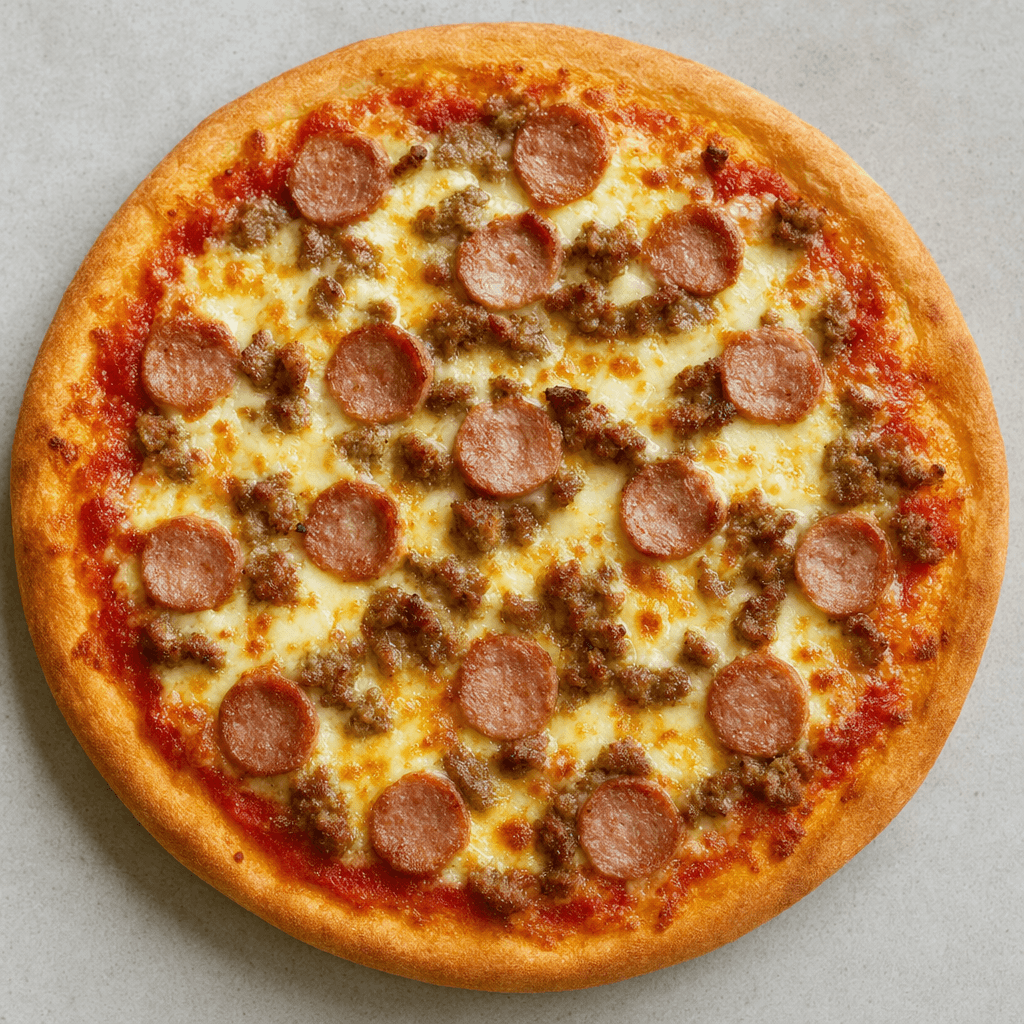
Mixed meat pizza Calories
High-protein pizza with processed meats and high sodium
CALORIES
GI
POTASSIUM
FIBER
Quick answer
1 slice (medium) of Mixed meat pizza (125 g) has 356 calories. That works out to 285 calories per 100 g. It contains 35.5 g of carbs, 16.5 g of protein, 16.4 g of fat and 2.6 g of fiber. Its 306.3 mg of Phosphorus covers 44% of the Daily Value. Its glycemic index is 58 (medium), so it raises blood sugar at a moderate pace.
What is Mixed meat pizza?
Mixed meat pizza pairs a baked dough base with tomato sauce, melted cheese, slices of sausage and small pieces of meat. It draws on Italian-style pizza, though this hearty combination of toppings is now familiar in pizzerias around the world. The crust is crisp at the edge and soft beneath the toppings, with savoury meat balancing the tangy sauce and creamy cheese.
It is commonly served in slices as a casual lunch or dinner, often with a salad or a cold drink. The meat and cheese make it a relatively protein-rich pizza—13.2 g per 100 g—while processed meats and cheese can also make it salty. For a lighter meal, pair a slice with vegetables rather than adding more rich sides.
Mixed meat pizza Nutrition Facts
Selected: 100 g
285
KCAL / 100G
Carbs
28.4g
· 10% DV
Protein
13.2g
· 26% DV
Fat
13.1g
· 17% DV
Fiber
2.1g
· 8% DV
DV is the share of the daily value covered, on a 2,000 kcal reference diet.
Calories come from: Carbs 40% · Protein 19% · Fat 41%
Mixed meat pizza Vitamins & Minerals
Vitamins
B12
0.7µg · 29% DV
B3
2.8mg · 18% DV
B2
0.19mg · 15% DV
Biotin
4µg · 13% DV
Minerals
Phosphorus
245mg · 35% DV
Selenium
18µg · 33% DV
Sodium
690mg · 30% DV
Calcium
210mg · 21% DV
How Nutritious Is Mixed meat pizza?
Nutrient density
Low
How many vitamins, minerals and how much fiber this food carries per calorie. A high score means a lot of nutrition for few calories.
Satiety score
Medium
An EatBetter score computed from fiber, protein and calorie density. A high score means staying full longer on the same calories.
Both scores are calculated per 100 g and do not change with the selected portion. The satiety score is EatBetter's own calculation, not a clinical measure.
Mixed meat pizza Glycemic Index
GLYCEMIC INDEX
GLYCEMIC LOAD
Accounts for portion size — a more realistic measure than GI alone.
How to Burn Off Mixed meat pizza
To burn the 285 calories in 100 g:
🚶
Walking (5 km/h)
🏃
Running (8 km/h)
🚴
Cycling
🏊
Swimming
Times are calculated with the MET equation for a 70 kg adult. Actual burn varies with your weight, age and pace.
Is Mixed meat pizza Processed?
NOVA 3
Processed
1. Unprocessed
2. Minimally Processed
3. Processed
4. Ultra-Processed
NOVA classifies foods into 4 groups by industrial processing. NOVA 1 (unprocessed) is the healthiest.
Does Mixed meat pizza Contain Allergens?
Contains these allergens:
Which Diets Is Mixed meat pizza Good For?
Vegan
— Not suitable
Vegetarian
— Not suitable
Gluten-Free
— Not suitable
Dairy-Free
— Not suitable
Mediterranean
— Not suitable
Paleo
— Not suitable
Whole30
— Not suitable
DASH
— Not suitable
Keto
— Not suitable
Low FODMAP
— Not suitable
Mixed meat pizza Fat Profile
SATURATED
5.1g
MONOUNSATURATED
4.3g
POLYUNSATURATED
2g
Omega 6:3 ratio 23.8:1
Above the ideal 4:1 (23.8:1).
Compare Mixed meat pizza
Foods Similar to Mixed meat pizza
Frequently Asked Questions About Mixed meat pizza
What toppings are usually on a mixed meat pizza?
A mixed meat pizza usually has tomato sauce, melted cheese and a combination of toppings such as sausage, salami, ham, bacon or cooked meat pieces. Recipes vary by restaurant, so the name does not guarantee one fixed combination.
What meats go on a mixed meat pizza?
Common choices for a mixed meat pizza include pepperoni, sausage, ham, bacon, beef or chicken. The exact mix depends on the recipe, and some pizzas use several cured meats while others pair one meat with cooked pieces.
How is a mixed meat pizza different from a meat lovers pizza?
A mixed meat pizza generally means a pizza topped with more than one kind of meat, while “meat lovers” usually signals a meat-heavy topping combination. There is no universal recipe for either name, so menus may use them differently.
How do you make a mixed meat pizza at home?
Spread tomato sauce over pizza dough, add cheese, then arrange cooked meat pieces and sliced sausage or other chosen meats on top. Bake in a preheated oven until the crust is browned and the cheese is bubbling; cook raw meat before adding it.
Can you make a mixed meat pizza without pork?
Yes. Make a mixed meat pizza with beef, chicken or turkey toppings, and choose sausages made from those meats. Restaurant versions may use pork in cured meats, so ask which meats are included when ordering if you need to avoid it.
How can you make a mixed meat pizza healthier?
Use less cheese and fewer processed meat toppings, then add vegetables such as peppers, mushrooms or onions to a mixed meat pizza. A thinner base can also reduce the amount of dough per slice without changing the basic flavor.
How long does mixed meat pizza last in the fridge?
Refrigerate mixed meat pizza within two hours of serving, in a covered container, and eat it within 3–4 days. Discard slices left at room temperature for longer, since meat and cheese toppings need prompt refrigeration.
Can you freeze mixed meat pizza?
Yes, mixed meat pizza freezes well. Wrap slices separately or place them in an airtight container, then freeze. Thaw in the refrigerator before reheating, or reheat from frozen until the center is hot; the crust may be softer than when fresh.
What is the best way to reheat mixed meat pizza?
For a crisp base, reheat mixed meat pizza in a covered skillet over medium-low heat until the cheese melts and the slice is hot. An oven works well for several slices; a microwave is quicker but tends to soften the crust.
What should you serve with mixed meat pizza?
Serve mixed meat pizza with a green salad, roasted vegetables or a simple vegetable soup. These lighter sides complement the rich, savory toppings, while extra cheese-heavy sides can make the meal feel especially filling.
Have another question about Mixed meat pizza?
Ask the AI nutrition coach — calories, portions, alternatives and more, answered in seconds in the app.

Scan calories with your camera
Instant AI nutrition analysis

Nutrition data compiled from USDA FoodData Central and scientific sources.