

Ready & Packaged Foods
All →Vegetables & Legumes
All →Desserts & Confectionery
All →Meat & Protein
All →Grains & Bakery
All →Beverages
All →Milk & Dairy
All →

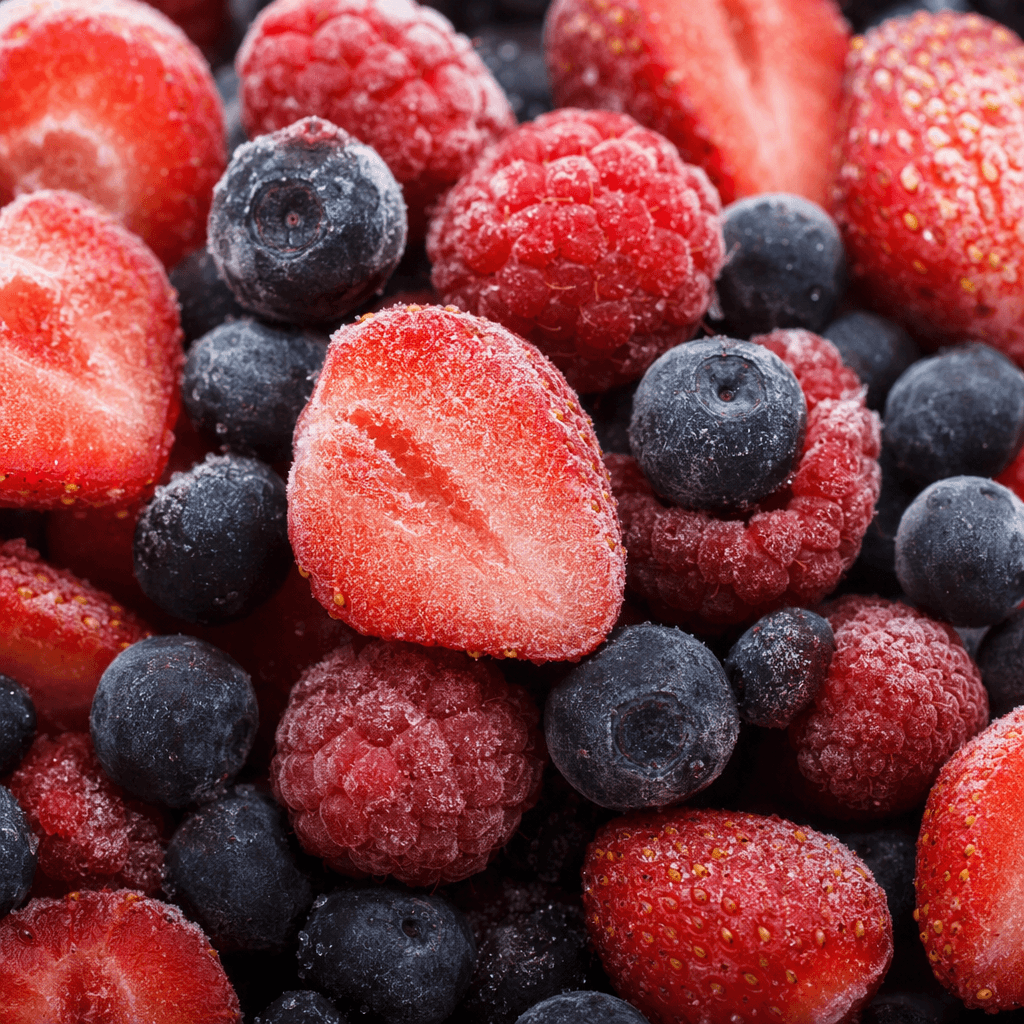
Mixed Frozen Berries Calories
Rich in antioxidants, low calorie, source of vitamin C
In season: Summer · Autumn · Winter · Spring
CALORIES
GI
POTASSIUM
FIBER
Quick answer
1 cup (medium) of Mixed Frozen Berries (140 g) has 70 calories. That works out to 50 calories per 100 g. It contains 16.8 g of carbs, 1.4 g of protein, 0.4 g of fat and 5.6 g of fiber. Its 49 mg of Vitamin C covers 54% of the Daily Value. Its glycemic index is 40 (low), so it raises blood sugar slowly.
What is Mixed Frozen Berries?
Mixed frozen berries here refers to a mix of blueberries and blackberries, picked and frozen for convenient storage. They can be added straight from the freezer to blended drinks or cooked dishes, or thawed for a softer, juicier texture.
Blueberries bring a gentle sweetness, while blackberries add a tangier flavour and noticeable seeds. Stir them into porridge or yoghurt, spoon over pancakes, or use them in crumbles and sauces. In nutritional terms, they are mostly fruit, with fibre and relatively few calories; 100 g provides 4 g of fibre. Pair a serving with yoghurt or oats for a more substantial breakfast, or thaw gently if you want them as a topping.
Mixed Frozen Berries Nutrition Facts
Selected: 100 g
50
KCAL / 100G
Carbs
12g
· 4% DV
Protein
1g
· 2% DV
Fat
0.3g
· 0% DV
Fiber
4g
· 14% DV
DV is the share of the daily value covered, on a 2,000 kcal reference diet.
Calories come from: Carbs 88% · Protein 7% · Fat 5%
Mixed Frozen Berries Vitamins & Minerals
Vitamins
Vitamin C
35mg · 39% DV
Vitamin K
20µg · 17% DV
Vitamin E
1mg · 7% DV
Folate
25µg · 6% DV
Minerals
Iron
1mg · 6% DV
Magnesium
15mg · 4% DV
Phosphorus
25mg · 4% DV
Potassium ⭐
120mg · 4% DV
How Nutritious Is Mixed Frozen Berries?
Nutrient density
Very high
How many vitamins, minerals and how much fiber this food carries per calorie. A high score means a lot of nutrition for few calories.
Satiety score
Medium
An EatBetter score computed from fiber, protein and calorie density. A high score means staying full longer on the same calories.
Both scores are calculated per 100 g and do not change with the selected portion. The satiety score is EatBetter's own calculation, not a clinical measure.
Mixed Frozen Berries Glycemic Index
GLYCEMIC INDEX
GLYCEMIC LOAD
Accounts for portion size — a more realistic measure than GI alone.
How to Burn Off Mixed Frozen Berries
To burn the 50 calories in 100 g:
🚶
Walking (5 km/h)
🏃
Running (8 km/h)
🚴
Cycling
🏊
Swimming
Times are calculated with the MET equation for a 70 kg adult. Actual burn varies with your weight, age and pace.
Is Mixed Frozen Berries Processed?
NOVA 2
Minimally Processed
1. Unprocessed
2. Minimally Processed
3. Processed
4. Ultra-Processed
NOVA classifies foods into 4 groups by industrial processing. NOVA 1 (unprocessed) is the healthiest.
Does Mixed Frozen Berries Contain Allergens?
No known major allergens
Which Diets Is Mixed Frozen Berries Good For?
Vegan
✓ Suitable
Vegetarian
✓ Suitable
Gluten-Free
✓ Suitable
Dairy-Free
— Not suitable
Mediterranean
✓ Suitable
Paleo
✓ Suitable
Whole30
— Not suitable
DASH
— Not suitable
Keto
— Not suitable
Low FODMAP
— Not suitable
Mixed Frozen Berries Fat Profile
SATURATED
0.02g
MONOUNSATURATED
0.05g
POLYUNSATURATED
0.08g
Omega 6:3 ratio 1.7:1
Below the ideal 4:1 — a good omega balance.
Compare Mixed Frozen Berries
Foods Similar to Mixed Frozen Berries
Frequently Asked Questions About Mixed Frozen Berries
Can you eat Mixed Frozen Berries straight from the freezer?
Yes, you can eat Mixed Frozen Berries without thawing if the package says they are ready to eat. They may be hard on your teeth, so let them soften briefly; follow any package instruction to cook the berries before eating.
Do Mixed Frozen Berries need to be cooked before eating?
Not always: many packaged Mixed Frozen Berries can be eaten as sold, but some products carry instructions to heat them first. Follow the package directions, especially if the berries are intended for cooking rather than direct consumption.
Can you bake with Mixed Frozen Berries without thawing them first?
Yes, add Mixed Frozen Berries to cakes, muffins, or cobblers straight from the freezer. Thawing first releases juice that can streak the batter and make it wetter; fold the frozen fruit in gently just before baking.
How do you stop Mixed Frozen Berries sinking in muffins?
Toss the frozen Mixed Frozen Berries lightly in flour before folding them into the batter. Add them at the end and avoid overmixing, which can break the fruit and release juice that weighs down the muffins.
Can you put Mixed Frozen Berries in overnight oats?
Yes, stir Mixed Frozen Berries into overnight oats before refrigerating. They thaw in the oats and release juice that flavors the mixture; add them on top instead if you want to keep the oats less colorful.
Are Mixed Frozen Berries as nutritious as fresh berries?
Generally, yes: Mixed Frozen Berries are frozen soon after harvest, which helps preserve many of their nutrients. Their texture changes as they thaw, but that matters less in smoothies, oatmeal, sauces, and other dishes where the fruit is blended or cooked.
Why do Mixed Frozen Berries turn mushy after thawing?
Mixed Frozen Berries turn soft because ice crystals formed during freezing can rupture the fruit's cells. Thaw them slowly in the refrigerator to limit extra damage, or use them while still partly frozen when you want them to hold their shape.
What berries are in Mixed Frozen Berries?
This blend is made with blueberries and blackberries. Check the product name and ingredients if you are comparing it with another berry mix, since the English name “Mixed Frozen Berries” can also be used for blends containing different fruits.
Can you make a smoothie bowl with Mixed Frozen Berries?
Yes, blend Mixed Frozen Berries with just a small splash of liquid to make a thick smoothie-bowl base. Use the fruit straight from the freezer, then add more liquid gradually only if your blender needs help moving the mixture.
Can you refreeze Mixed Frozen Berries after thawing?
You can refreeze Mixed Frozen Berries that thawed in the refrigerator, though they will be softer and better suited to cooking or blending afterward. Do not refreeze berries that have been left warm for an extended time; use those promptly instead.
Have another question about Mixed Frozen Berries?
Ask the AI nutrition coach — calories, portions, alternatives and more, answered in seconds in the app.

Scan calories with your camera
Instant AI nutrition analysis

Nutrition data compiled from USDA FoodData Central and scientific sources.