

Ready & Packaged Foods
All →Vegetables & Legumes
All →Desserts & Confectionery
All →Meat & Protein
All →Grains & Bakery
All →Beverages
All →Milk & Dairy
All →

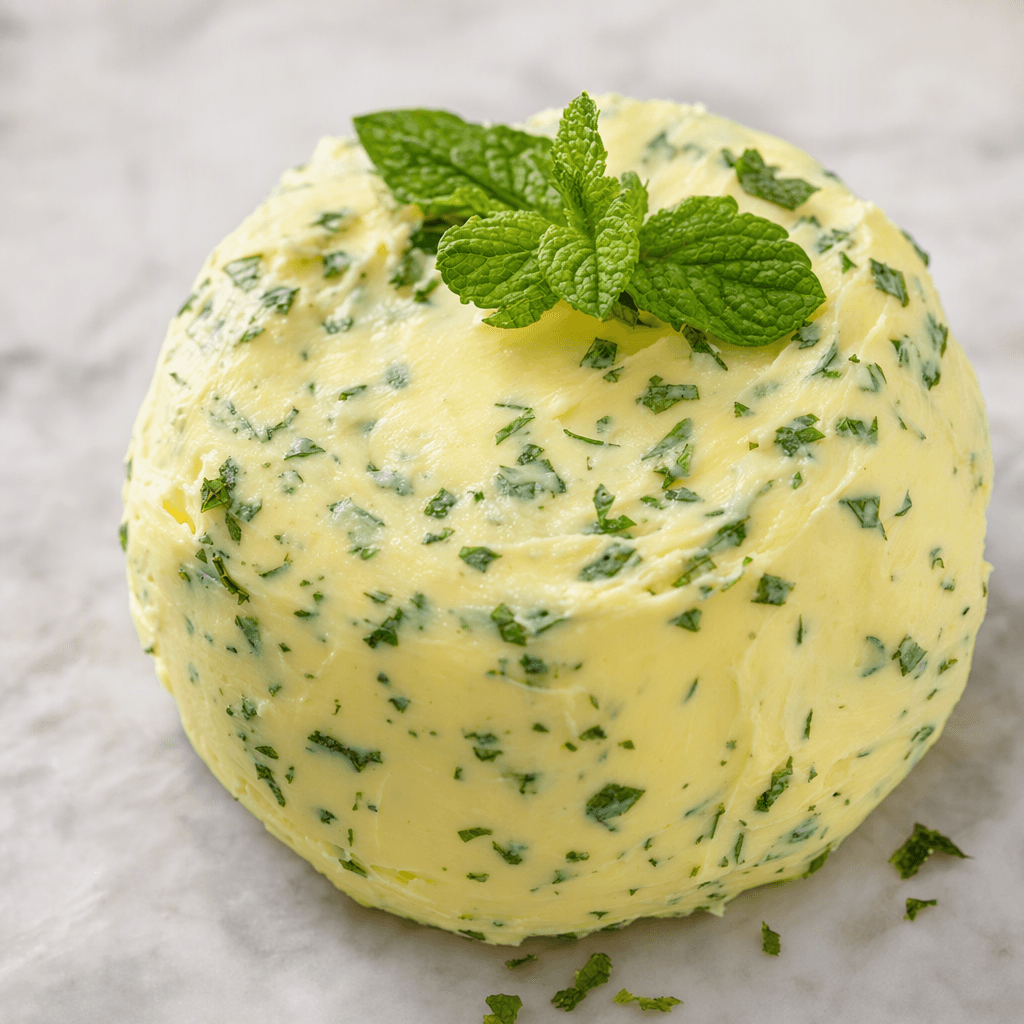
Mint butter Calories
Herb-flavored butter; high in fat
In season: Spring · Summer
CALORIES
GI
POTASSIUM
FIBER
Quick answer
1 tablespoon (medium) of Mint butter (14 g) has 100 calories. That works out to 716 calories per 100 g. It contains 0.1 g of carbs, 0.1 g of protein, 11.3 g of fat and 0 g of fiber. Its 95.8 µg of Vitamin A covers 11% of the Daily Value. Its glycemic index is 0 (low), so it raises blood sugar slowly.
What is Mint butter?
Mint butter is softened butter mixed with finely chopped mint, sometimes with a little salt. It is an easy herb butter to make at home rather than a dish tied to one particular region; fresh mint gives it a brighter aroma, while dried mint makes a more concentrated flavour.
It can be spread on warm bread, served alongside grilled meat, or melted over potatoes and vegetables. In Turkey, where butter is familiar at breakfast, it can also be enjoyed on bread at the breakfast table or with tea. Mint butter is rich in fat and contributes little protein or carbohydrate, so a small dab is often enough. For a lighter meal, use it sparingly and pair it with vegetables, or mix a little into olive oil for a looser topping.
Mint butter Nutrition Facts
Selected: 100 g
716
KCAL / 100G
Carbs
0.7g
· 0% DV
Protein
0.8g
· 2% DV
Fat
81g
· 104% DV
Fiber
0.2g
· 1% DV
DV is the share of the daily value covered, on a 2,000 kcal reference diet.
Calories come from: Carbs 0% · Protein 0% · Fat 100%
Mint butter Vitamins & Minerals
Vitamins
Vitamin A
684µg · 76% DV
Vitamin E
2.4mg · 16% DV
Vitamin D
1.5µg · 8% DV
B12
0.17µg · 7% DV
Minerals
Iodine
38µg · 25% DV
Phosphorus
24mg · 3% DV
Calcium
24mg · 2% DV
Selenium
1µg · 2% DV
How Nutritious Is Mint butter?
Nutrient density
Low
How many vitamins, minerals and how much fiber this food carries per calorie. A high score means a lot of nutrition for few calories.
Satiety score
Low
An EatBetter score computed from fiber, protein and calorie density. A high score means staying full longer on the same calories.
Both scores are calculated per 100 g and do not change with the selected portion. The satiety score is EatBetter's own calculation, not a clinical measure.
Mint butter Glycemic Index
GLYCEMIC INDEX
GLYCEMIC LOAD
Accounts for portion size — a more realistic measure than GI alone.
How to Burn Off Mint butter
To burn the 716 calories in 100 g:
🚶
Walking (5 km/h)
🏃
Running (8 km/h)
🚴
Cycling
🏊
Swimming
Times are calculated with the MET equation for a 70 kg adult. Actual burn varies with your weight, age and pace.
Is Mint butter Processed?
NOVA 2
Minimally Processed
1. Unprocessed
2. Minimally Processed
3. Processed
4. Ultra-Processed
NOVA classifies foods into 4 groups by industrial processing. NOVA 1 (unprocessed) is the healthiest.
Does Mint butter Contain Allergens?
Contains these allergens:
Which Diets Is Mint butter Good For?
Vegan
— Not suitable
Vegetarian
✓ Suitable
Gluten-Free
✓ Suitable
Dairy-Free
— Not suitable
Mediterranean
✓ Suitable
Paleo
— Not suitable
Whole30
— Not suitable
DASH
— Not suitable
Keto
✓ Suitable
Low FODMAP
— Not suitable
Mint butter Fat Profile
SATURATED
51.2g
MONOUNSATURATED
23.6g
POLYUNSATURATED
3g
Omega 6:3 ratio 5.8:1
Above the ideal 4:1 (5.8:1).
Compare Mint butter
Foods Similar to Mint butter
Frequently Asked Questions About Mint butter
What is mint butter used for?
Mint butter is used as a finishing butter for grilled meat, potatoes, vegetables, and warm bread. Add a small piece to hot food just before serving so it melts and releases its mint aroma without being exposed to prolonged high heat.
How do you make mint butter?
To make mint butter, mix finely chopped mint into softened butter until evenly combined. Season it if you like, then roll it in parchment or shape it in a small container and chill until firm. Slice or spoon it onto food to serve.
Can mint butter replace mint sauce with lamb?
Yes, mint butter can be served with lamb, but it is not the same as mint sauce. It melts into the meat and has a buttery richness, while mint sauce is usually tangier and spooned on as a separate condiment.
Can you use dried mint in mint butter?
Yes, dried mint works in mint butter, though the flavor is less fresh and can taste more concentrated. Stir in a little at a time, let the mixture rest so the mint can soften, and adjust to taste before serving.
Should you add salt to mint butter?
Salt is optional in mint butter. If the butter is already salted, taste the mixture before adding more; a little lemon zest or garlic can also add flavor without making the butter overly salty.
How long does mint butter keep in the fridge?
Keep mint butter tightly wrapped or in an airtight container in the refrigerator, and use it within a few days for the freshest mint flavor. Because it contains fresh herbs, avoid leaving it out at room temperature for extended periods.
Can you freeze mint butter?
Yes, mint butter freezes well. Wrap it tightly or portion it into an airtight container, then thaw it in the refrigerator when needed. The texture may be slightly less smooth after thawing, but it still works well melted over hot food.
When should you add mint butter to a steak?
Add mint butter to a steak after cooking, while the steak is resting or just before serving. The residual heat melts the butter and spreads its mint flavor without scorching the herbs in a hot pan.
Can mint butter be used on peas and potatoes?
Yes, mint butter works particularly well with peas and potatoes. Toss a small amount with hot, freshly cooked vegetables so it coats them evenly; add it at the end rather than cooking it over high heat.
Can mint butter replace regular butter in baking?
Usually, mint butter is not a good one-for-one substitute for plain butter in sweet baking because its mint flavor can change the result. It is better suited to savory dishes or recipes specifically designed to include mint.
Have another question about Mint butter?
Ask the AI nutrition coach — calories, portions, alternatives and more, answered in seconds in the app.

Scan calories with your camera
Instant AI nutrition analysis

Nutrition data compiled from USDA FoodData Central and scientific sources.