

Ready & Packaged Foods
All →Vegetables & Legumes
All →Desserts & Confectionery
All →Meat & Protein
All →Grains & Bakery
All →Beverages
All →Milk & Dairy
All →

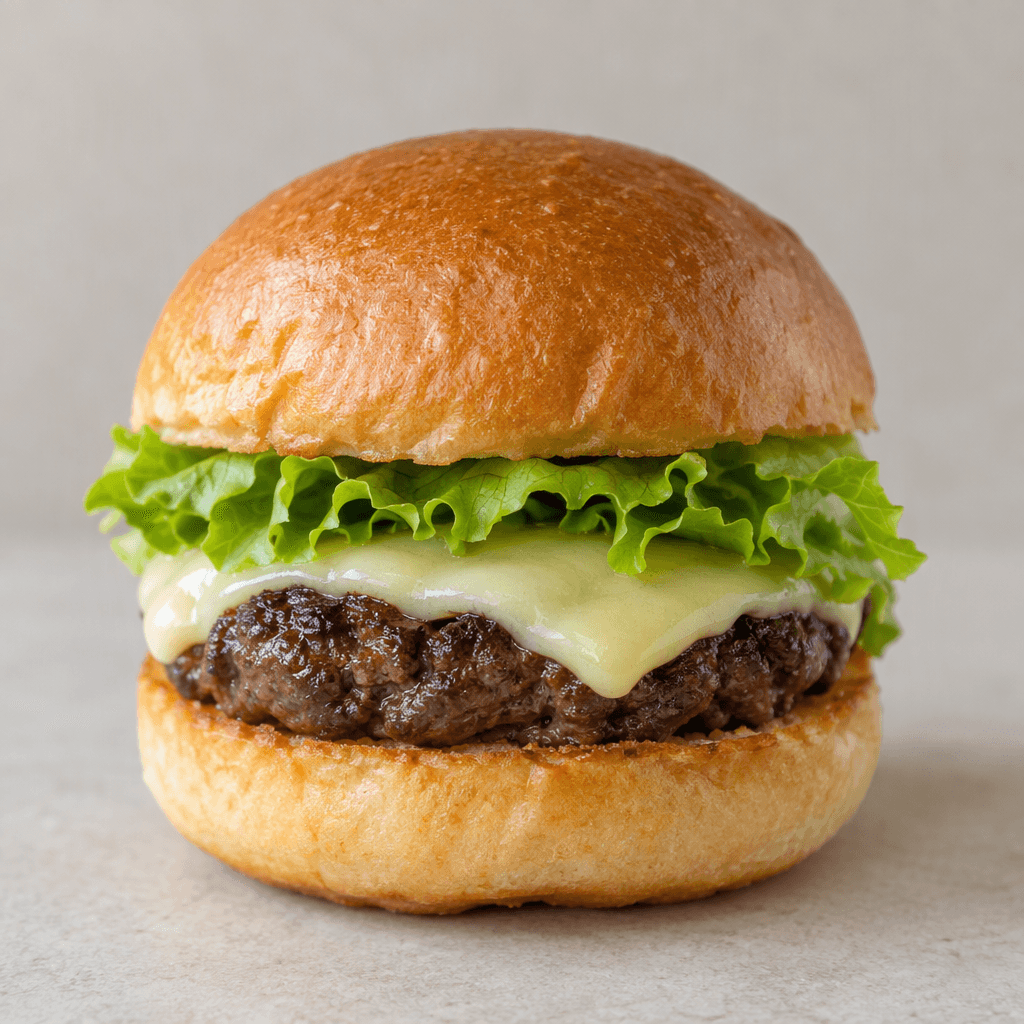
Mini Hamburger Calories
Small-sized hamburger, typically beef patty, small bun, minimal toppings and condiments.
In season: Spring · Summer · Autumn · Winter
CALORIES
GI
POTASSIUM
FIBER
Quick answer
1 piece (mini) of Mini Hamburger (60 g) has 147 calories. That works out to 245 calories per 100 g. It contains 13.2 g of carbs, 8.1 g of protein, 6.9 g of fat and 1 g of fiber. Its 0.4 µg of B12 covers 18% of the Daily Value. Its glycemic index is 60 (medium), so it raises blood sugar at a moderate pace.
What is Mini Hamburger?
A mini hamburger is a small burger made with a bun and usually a beef patty, with modest toppings such as cheese or lettuce. The hamburger became popular in the United States, while mini versions are often served as party bites, appetisers or a quick small meal.
Its soft bun contrasts with the browned, savoury patty; cheese, vegetables and condiments vary by recipe. It can be eaten on its own or alongside fries, salad or another simple side. Although the portion is smaller than a standard burger, it still combines bread, meat and often sauce, so it is more substantial than a light snack. For a lighter version, keep the condiments modest and add extra lettuce or other fresh vegetables.
Mini Hamburger Nutrition Facts
Selected: 100 g
245
KCAL / 100G
Carbs
22g
· 8% DV
Protein
13.5g
· 27% DV
Fat
11.5g
· 15% DV
Fiber
1.7g
· 6% DV
DV is the share of the daily value covered, on a 2,000 kcal reference diet.
Calories come from: Carbs 36% · Protein 22% · Fat 42%
Mini Hamburger Vitamins & Minerals
Vitamins
B12
0.7µg · 29% DV
B3
2.8mg · 18% DV
B2
0.15mg · 12% DV
B1
0.13mg · 11% DV
Minerals
Zinc
2mg · 18% DV
Sodium
390mg · 17% DV
Phosphorus
110mg · 16% DV
Selenium
8.5µg · 15% DV
How Nutritious Is Mini Hamburger?
Nutrient density
Low
How many vitamins, minerals and how much fiber this food carries per calorie. A high score means a lot of nutrition for few calories.
Satiety score
Medium
An EatBetter score computed from fiber, protein and calorie density. A high score means staying full longer on the same calories.
Both scores are calculated per 100 g and do not change with the selected portion. The satiety score is EatBetter's own calculation, not a clinical measure.
Mini Hamburger Glycemic Index
GLYCEMIC INDEX
GLYCEMIC LOAD
Accounts for portion size — a more realistic measure than GI alone.
How to Burn Off Mini Hamburger
To burn the 245 calories in 100 g:
🚶
Walking (5 km/h)
🏃
Running (8 km/h)
🚴
Cycling
🏊
Swimming
Times are calculated with the MET equation for a 70 kg adult. Actual burn varies with your weight, age and pace.
Is Mini Hamburger Processed?
NOVA 3
Processed
1. Unprocessed
2. Minimally Processed
3. Processed
4. Ultra-Processed
NOVA classifies foods into 4 groups by industrial processing. NOVA 1 (unprocessed) is the healthiest.
Does Mini Hamburger Contain Allergens?
Contains these allergens:
Which Diets Is Mini Hamburger Good For?
Vegan
— Not suitable
Vegetarian
— Not suitable
Gluten-Free
— Not suitable
Dairy-Free
— Not suitable
Mediterranean
— Not suitable
Paleo
— Not suitable
Whole30
— Not suitable
DASH
— Not suitable
Keto
— Not suitable
Low FODMAP
— Not suitable
Mini Hamburger Fat Profile
SATURATED
4.1g
MONOUNSATURATED
4.6g
POLYUNSATURATED
1.1g
Omega 6:3 ratio 3.3:1
Below the ideal 4:1 — a good omega balance.
Compare Mini Hamburger
Foods Similar to Mini Hamburger
Frequently Asked Questions About Mini Hamburger
How do you make a Mini Hamburger?
Make a Mini Hamburger by placing a cooked small patty and your chosen toppings inside a small bun. Shape the patties slightly wider than the buns, cook them in a pan or on a grill, then warm the buns and add cheese, lettuce, and sauce.
What is a Mini Hamburger called?
A Mini Hamburger is often called a slider, especially in the United States. The terms usually mean a small burger in a small bun, though “slider” can also refer to other small filled sandwiches served as party food.
How do you keep Mini Hamburger patties from falling apart?
To keep Mini Hamburger patties intact, shape the meat gently and chill the patties before cooking. Put them on a hot cooking surface and leave them undisturbed until the first side is browned; flipping too early can make small patties break.
Can you cook Mini Hamburger patties in the oven?
Yes, you can bake Mini Hamburger patties. Arrange them in a single layer on a lined baking tray and cook until the centers are fully done. Add cheese near the end, and warm the buns briefly before assembling so they do not dry out.
What toppings go well on a Mini Hamburger?
Cheese, lettuce, pickles, sliced tomato, and onion all work well on a Mini Hamburger. Because the bun and patty are small, use thin slices and modest amounts of sauce so the fillings stay in place and each bite remains easy to handle.
What should you serve with Mini Hamburgers?
Serve Mini Hamburgers with fries, roasted potatoes, coleslaw, or a green salad. For a party spread, offer pickles and a few sauces on the side; guests can choose their own additions without making the small burgers soggy before serving.
Can you make Mini Hamburgers ahead of time?
Yes, you can prepare Mini Hamburger patties and buns ahead, but store them separately and assemble close to serving time. Refrigerate cooked patties within two hours and use them within three to four days; reheat them until hot throughout.
Can you freeze Mini Hamburgers?
Yes, cooked Mini Hamburger patties freeze well when cooled and packed airtight, with baking paper between them to prevent sticking. Thaw them in the refrigerator and reheat thoroughly. Freeze buns separately, and add lettuce and other fresh toppings only after thawing.
Which cheese is best for a Mini Hamburger?
Cheddar is a popular choice for a Mini Hamburger because it melts easily and has a savory flavor. American-style cheese, Swiss, or another mild melting cheese also works; use a small slice so it fits the patty without overwhelming the other toppings.
Are Mini Hamburgers suitable for a party?
Yes, Mini Hamburgers are convenient party food because they are small and easy to serve as individual portions. Cook the patties in batches, keep them hot, and set out buns and toppings separately so the bread does not become soggy while guests wait.
Have another question about Mini Hamburger?
Ask the AI nutrition coach — calories, portions, alternatives and more, answered in seconds in the app.

Scan calories with your camera
Instant AI nutrition analysis

Nutrition data compiled from USDA FoodData Central and scientific sources.