

Ready & Packaged Foods
All →Vegetables & Legumes
All →Desserts & Confectionery
All →Meat & Protein
All →Grains & Bakery
All →Beverages
All →Milk & Dairy
All →

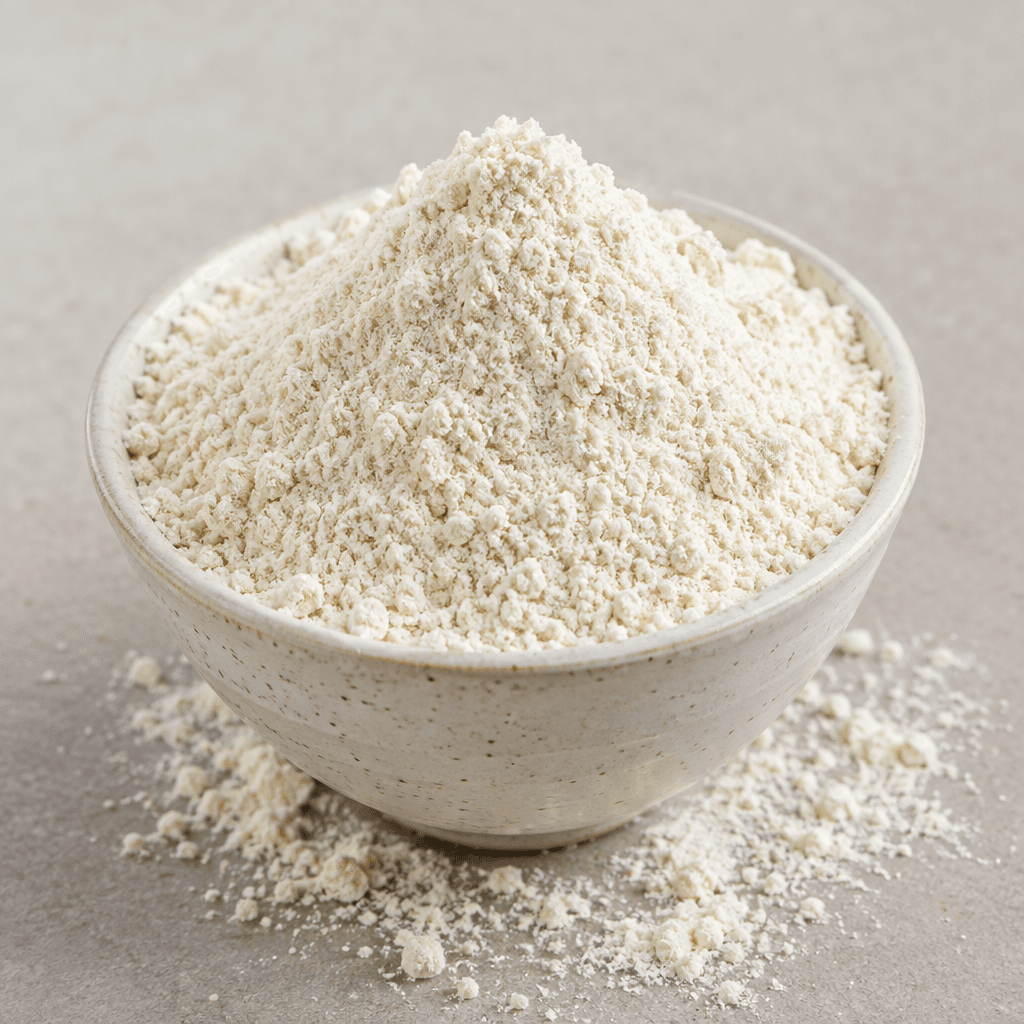
Milk Powder Calories
Dried milk, long shelf life, source of protein and calcium
In season: Spring · Summer · Autumn · Winter
CALORIES
GI
POTASSIUM
FIBER
Quick answer
2 tablespoon (medium) of Milk Powder (20 g) has 99 calories. That works out to 496 calories per 100 g. It contains 7.6 g of carbs, 5.2 g of protein, 5.4 g of fat and 0 g of fiber. Its 0.4 mg of B2 covers 28% of the Daily Value. Its glycemic index is 35 (low), so it raises blood sugar slowly.
What is Milk Powder?
Milk Powder is made by removing most of the water from milk, leaving a dry ingredient that is easy to store and transport. Stir it into water to make milk, or add it to baking, sauces, soups and desserts for a milky flavour. It is used in kitchens around the world; at home, it can also be handy for coffee or tea when fresh milk is not available.
Its flavour is gently milky and slightly sweet, while the powder feels fine and dry. It provides protein and calcium, with 26 g of protein per 100 g. For a drink, follow the pack’s directions for mixing it with water; in recipes, it can be added with the dry ingredients. Use it in custards or bread dough, or mix only what you need to avoid making more than you’ll use.
Milk Powder Nutrition Facts
Selected: 100 g
496
KCAL / 100G
Carbs
38g
· 14% DV
Protein
26g
· 52% DV
Fat
27g
· 35% DV
Fiber
0g
· 0% DV
DV is the share of the daily value covered, on a 2,000 kcal reference diet.
Calories come from: Carbs 30% · Protein 21% · Fat 49%
Milk Powder Vitamins & Minerals
Vitamins
B2
1.8mg · 138% DV
B12
2.4µg · 100% DV
B5
3.6mg · 72% DV
Vitamin A
310µg · 34% DV
Minerals
Phosphorus
700mg · 100% DV
Calcium
912mg · 91% DV
Zinc
4mg · 36% DV
Selenium
20µg · 36% DV
How Nutritious Is Milk Powder?
Nutrient density
High
How many vitamins, minerals and how much fiber this food carries per calorie. A high score means a lot of nutrition for few calories.
Satiety score
Low
An EatBetter score computed from fiber, protein and calorie density. A high score means staying full longer on the same calories.
Both scores are calculated per 100 g and do not change with the selected portion. The satiety score is EatBetter's own calculation, not a clinical measure.
Milk Powder Glycemic Index
GLYCEMIC INDEX
GLYCEMIC LOAD
Accounts for portion size — a more realistic measure than GI alone.
How to Burn Off Milk Powder
To burn the 496 calories in 100 g:
🚶
Walking (5 km/h)
🏃
Running (8 km/h)
🚴
Cycling
🏊
Swimming
Times are calculated with the MET equation for a 70 kg adult. Actual burn varies with your weight, age and pace.
Is Milk Powder Processed?
NOVA 3
Processed
1. Unprocessed
2. Minimally Processed
3. Processed
4. Ultra-Processed
NOVA classifies foods into 4 groups by industrial processing. NOVA 1 (unprocessed) is the healthiest.
Does Milk Powder Contain Allergens?
Contains these allergens:
Which Diets Is Milk Powder Good For?
Vegan
— Not suitable
Vegetarian
✓ Suitable
Gluten-Free
— Not suitable
Dairy-Free
— Not suitable
Mediterranean
— Not suitable
Paleo
— Not suitable
Whole30
— Not suitable
DASH
— Not suitable
Keto
— Not suitable
Low FODMAP
— Not suitable
Milk Powder Fat Profile
SATURATED
17.5g
MONOUNSATURATED
7g
POLYUNSATURATED
0.2g
Omega 6:3 ratio 1.3:1
Below the ideal 4:1 — a good omega balance.
Compare Milk Powder
Foods Similar to Milk Powder
Frequently Asked Questions About Milk Powder
What is milk powder made from?
Milk powder is made by removing most of the water from milk, usually through evaporation and spray-drying. The result is a shelf-stable powder that can be mixed with water or added directly to recipes; whole and skimmed versions are both sold.
How do you reconstitute milk powder?
Mix milk powder with drinking water using the proportions on its package. Stir or whisk the powder into a little water first, then add the rest to reduce lumps. The right amount varies by product, so one fixed ratio does not suit every brand.
Can you use milk powder in baking?
Yes, milk powder works well in baking and can add a fuller milk flavor and help baked goods brown. It can be mixed with the dry ingredients in bread, cakes, and cookies; follow the recipe’s liquid measurements rather than adding extra liquid automatically.
What is the difference between whole and skimmed milk powder?
Whole milk powder retains more of milk’s fat, while skimmed milk powder has most of that fat removed. Whole powder tends to give a richer taste and texture; skimmed powder is often chosen when a leaner milk ingredient is wanted.
Can milk powder replace fresh milk in recipes?
Yes, reconstituted milk powder can replace fresh milk in many recipes. Prepare it according to the package directions, then use it in the same way as liquid milk; for delicate sauces or drinks, check the texture as you mix.
Does milk powder need to be refrigerated after opening?
No, dry milk powder generally does not need refrigeration after opening. Keep it tightly sealed in a cool, dry cupboard, and use a clean, dry spoon each time; moisture can cause clumps and shorten its quality life.
Can you put milk powder in coffee?
Yes, milk powder can be stirred into coffee as a convenient milk addition. It may dissolve more smoothly if you first blend it with a small amount of warm water, then add that mixture to the coffee.
Why does milk powder become lumpy?
Milk powder usually clumps when it absorbs moisture, or when it is added too quickly to cold liquid. Store it in a dry, airtight container and whisk it into a small amount of liquid before adding the rest.
Is instant milk powder different from regular milk powder?
Yes, instant milk powder is processed to disperse and dissolve more easily in water. Regular milk powder may need more stirring, especially in cold liquids. Both are dried milk; the main practical difference is how readily they mix.
Is milk powder the same as infant formula?
No, ordinary milk powder is not infant formula. Formula is specifically designed to meet an infant’s nutritional needs, while milk powder is simply dried milk. Do not use it as a substitute for breast milk or formula for a baby under 12 months.
Have another question about Milk Powder?
Ask the AI nutrition coach — calories, portions, alternatives and more, answered in seconds in the app.

Scan calories with your camera
Instant AI nutrition analysis

Nutrition data compiled from USDA FoodData Central and scientific sources.