

Ready & Packaged Foods
All →Vegetables & Legumes
All →Desserts & Confectionery
All →Meat & Protein
All →Grains & Bakery
All →Beverages
All →Milk & Dairy
All →

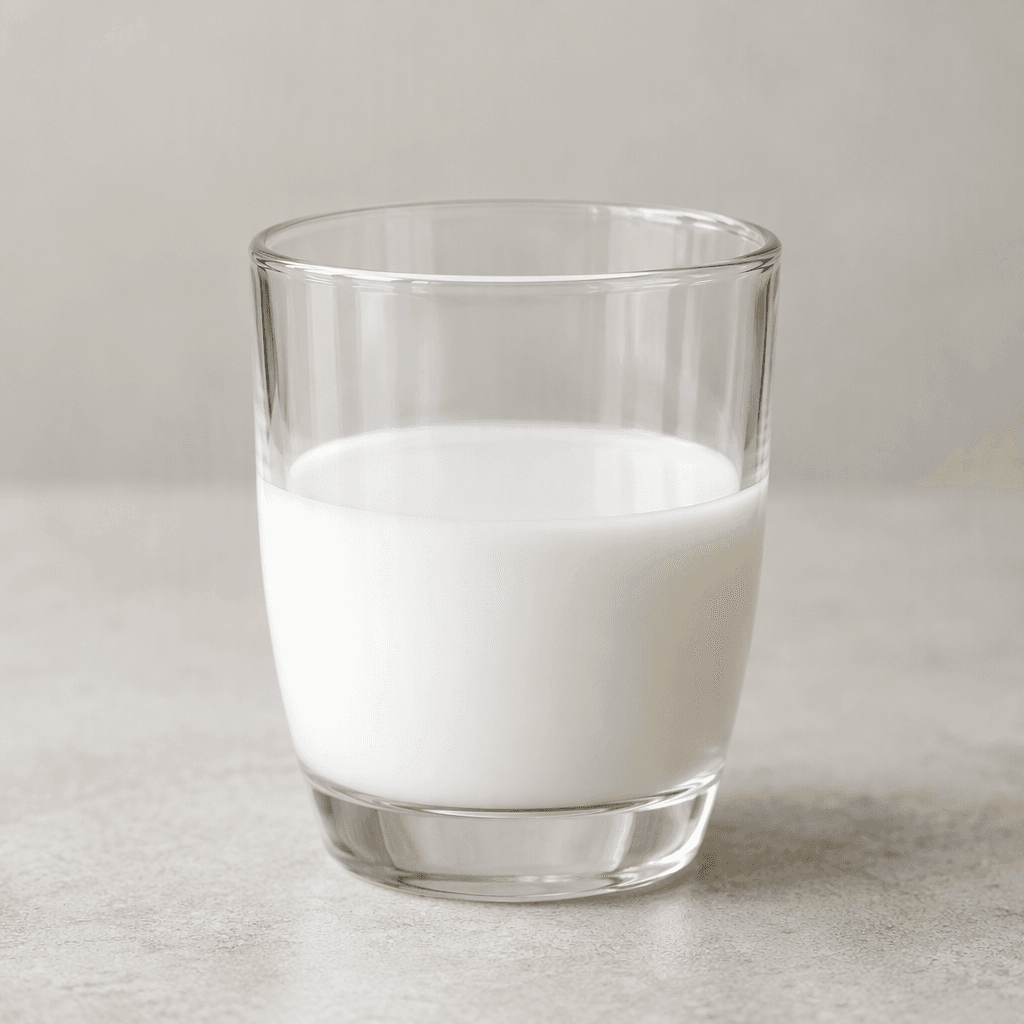
Milk (Half Cup) Calories
Source of calcium and protein, beneficial for bone health
In season: Spring · Summer · Autumn · Winter
CALORIES
GI
POTASSIUM
FIBER
Quick answer
1 cup (half) of Milk (Half Cup) (120 g) has 60 calories. That works out to 50 calories per 100 g. It contains 5.8 g of carbs, 4 g of protein, 1.2 g of fat and 0 g of fiber. Its 0.5 µg of B12 covers 23% of the Daily Value. Its glycemic index is 30 (low), so it raises blood sugar slowly.
What is Milk (Half Cup)?
Milk is the familiar liquid dairy staple, usually enjoyed as a drink or used in everyday cooking. A half cup is a handy small serving: pour it over cereal or oats, blend it into a smoothie, or use it in porridge, sauces and baking.
Its flavour is mild and slightly creamy, with a smooth texture. It is served cold or warmed, whether at breakfast, alongside a snack, or in a hot drink. Milk provides protein and calcium, while contributing some natural carbohydrate. For a simple, lighter-feeling option, drink it plain or add a splash to tea or coffee; it also pairs well with fruit or whole-grain cereal.
Milk (Half Cup) Nutrition Facts
Selected: 100 g
50
KCAL / 100G
Carbs
4.8g
· 2% DV
Protein
3.3g
· 7% DV
Fat
1g
· 1% DV
Fiber
0g
· 0% DV
DV is the share of the daily value covered, on a 2,000 kcal reference diet.
Calories come from: Carbs 46% · Protein 32% · Fat 22%
Milk (Half Cup) Vitamins & Minerals
Vitamins
B12
0.45µg · 19% DV
B2
0.18mg · 14% DV
Biotin
3.5µg · 12% DV
B5
0.36mg · 7% DV
Minerals
Phosphorus
95mg · 14% DV
Calcium
120mg · 12% DV
Iodine
16µg · 11% DV
Selenium
2.5µg · 5% DV
How Nutritious Is Milk (Half Cup)?
Nutrient density
High
How many vitamins, minerals and how much fiber this food carries per calorie. A high score means a lot of nutrition for few calories.
Satiety score
Medium
An EatBetter score computed from fiber, protein and calorie density. A high score means staying full longer on the same calories.
Both scores are calculated per 100 g and do not change with the selected portion. The satiety score is EatBetter's own calculation, not a clinical measure.
Milk (Half Cup) Glycemic Index
GLYCEMIC INDEX
GLYCEMIC LOAD
Accounts for portion size — a more realistic measure than GI alone.
How to Burn Off Milk (Half Cup)
To burn the 50 calories in 100 g:
🚶
Walking (5 km/h)
🏃
Running (8 km/h)
🚴
Cycling
🏊
Swimming
Times are calculated with the MET equation for a 70 kg adult. Actual burn varies with your weight, age and pace.
Is Milk (Half Cup) Processed?
NOVA 2
Minimally Processed
1. Unprocessed
2. Minimally Processed
3. Processed
4. Ultra-Processed
NOVA classifies foods into 4 groups by industrial processing. NOVA 1 (unprocessed) is the healthiest.
Does Milk (Half Cup) Contain Allergens?
Contains these allergens:
Which Diets Is Milk (Half Cup) Good For?
Vegan
— Not suitable
Vegetarian
✓ Suitable
Gluten-Free
— Not suitable
Dairy-Free
— Not suitable
Mediterranean
✓ Suitable
Paleo
— Not suitable
Whole30
— Not suitable
DASH
— Not suitable
Keto
— Not suitable
Low FODMAP
— Not suitable
Milk (Half Cup) Fat Profile
SATURATED
0.65g
MONOUNSATURATED
0.25g
POLYUNSATURATED
0.05g
Omega 6:3 ratio 1.5:1
Below the ideal 4:1 — a good omega balance.
Compare Milk (Half Cup)
Foods Similar to Milk (Half Cup)
Frequently Asked Questions About Milk (Half Cup)
Is milk good for you?
Yes, milk can be a nourishing part of a balanced diet, providing protein and calcium. It is especially useful when you enjoy and tolerate it, but it is not essential if you get these nutrients from other foods.
Can people with lactose intolerance drink milk?
Some can, but regular milk may trigger bloating, gas, or diarrhea because it contains lactose. Lactose-free milk or smaller portions with meals are often easier to tolerate; persistent or severe symptoms warrant medical advice.
How long does milk last in the fridge after opening?
Opened pasteurized milk usually keeps for about 2–3 days in a cold refrigerator, while opened UHT milk should also be refrigerated and used within a few days. Keep the container closed and return it to the fridge promptly.
Can you freeze milk?
Yes, milk can be frozen, although it may separate and become grainy after thawing. Thaw it in the refrigerator and shake it well; the changed texture is often less noticeable when you use it in cooking or baking.
Is raw milk safe to drink?
No. Raw milk can carry harmful bacteria that cause foodborne illness, including infections that may be severe. Choose pasteurized milk instead; boiling raw milk thoroughly reduces risk but does not make unsafe handling or storage harmless.
Does milk need to be boiled before drinking?
No, pasteurized and UHT milk do not need boiling before you drink them. Boiling is important for raw milk to reduce harmful microbes, but it does not improve the safety of milk that has already spoiled.
Does milk cause mucus or phlegm?
No, milk does not increase mucus production. Its creamy texture can leave a temporary coating in the mouth and throat that feels like thicker phlegm, but this sensation does not mean your body is making more mucus.
Is it good to drink milk before bed?
Yes, you can drink milk before bed if it feels comfortable, and a warm drink may be relaxing. Milk is not a proven treatment for insomnia, and having it late may worsen reflux for some people.
Does milk help build strong bones?
Milk can support bone health because it provides calcium and protein, and many varieties also contain added vitamin D. Bone strength also depends on overall nutrition, physical activity, and other factors; milk alone cannot prevent every bone problem.
How can you tell if milk has gone bad?
Spoiled milk often has a sour smell, curdled appearance, or an unusual texture. Discard it if you notice these signs rather than tasting it; milk left warm for too long can be unsafe even before obvious changes appear.
Have another question about Milk (Half Cup)?
Ask the AI nutrition coach — calories, portions, alternatives and more, answered in seconds in the app.

Scan calories with your camera
Instant AI nutrition analysis

Nutrition data compiled from USDA FoodData Central and scientific sources.