

Ready & Packaged Foods
All →Vegetables & Legumes
All →Desserts & Confectionery
All →Meat & Protein
All →Grains & Bakery
All →Beverages
All →Milk & Dairy
All →

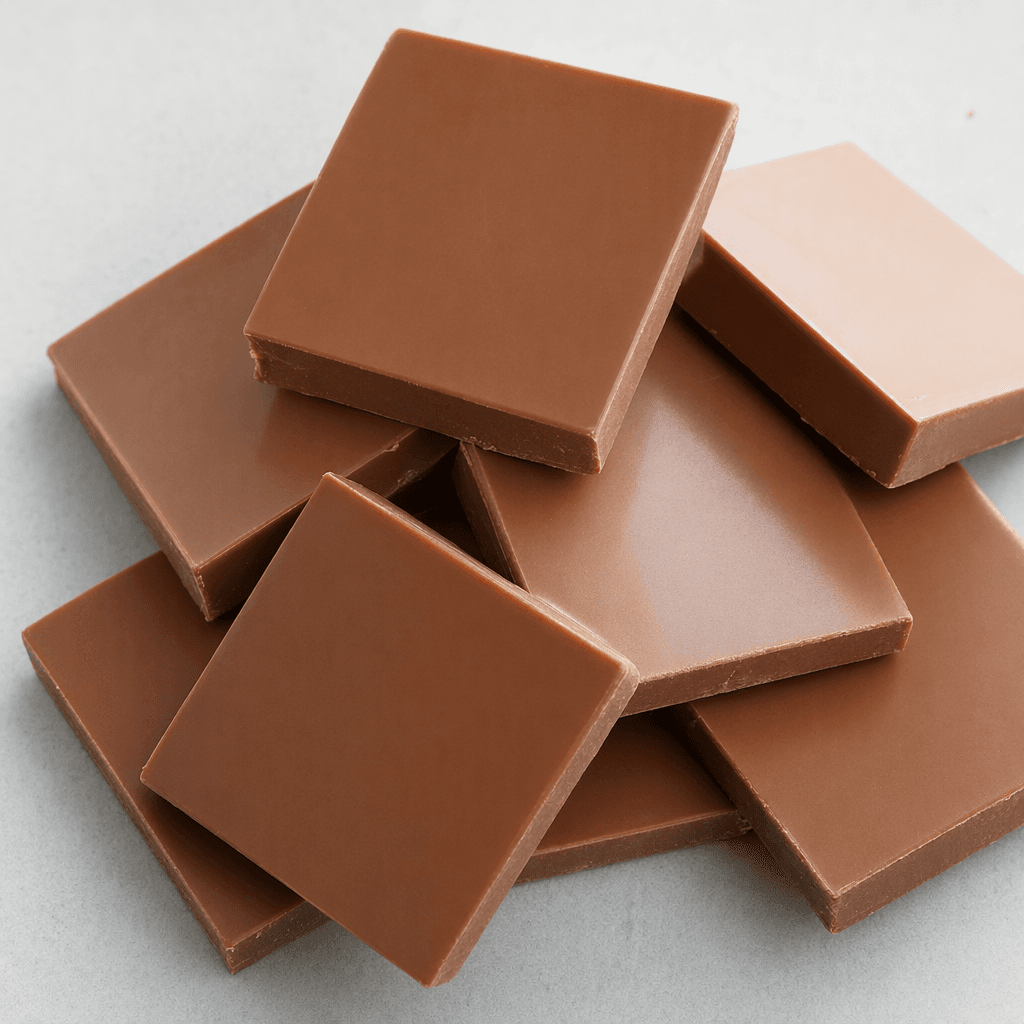
Milk couverture chocolate Calories
High cocoa butter, milky, sweet, ideal for baking
In season: Spring · Summer · Autumn · Winter
CALORIES · 100 G
GI
POTASSIUM · 100 G
FIBER · 100 G
Quick answer
1 piece (medium) of Milk couverture chocolate (20 g) has 108 calories. That works out to 540 calories per 100 g. It contains 10.4 g of carbs, 1.5 g of protein, 6.6 g of fat and 0.4 g of fiber. Its 0.1 mg of Copper covers 7% of the Daily Value. Its glycemic index is 45 (medium), so it raises blood sugar at a moderate pace.
Milk couverture chocolate Nutrition Facts
Selected: 1 piece (medium) · 20 g
108
KCAL / 20G
Carbs
10.4g
· 4% DV
Protein
1.5g
· 3% DV
Fat
6.6g
· 8% DV
Fiber
0.4g
· 1% DV
DV is the share of the daily value covered, on a 2,000 kcal reference diet.
Calories come from: Carbs 39% · Protein 6% · Fat 55%
Milk couverture chocolate nutrition facts table · 1 piece (medium) (20 g)
| Nutrient | Amount | % DV |
|---|---|---|
| Calories | 108 kcal | |
| Total fat | 6.6 g | 8% |
| Saturated fat | 4 g | 20% |
| Trans fat | 0.01 g | |
| Sodium | 16 mg | 1% |
| Total carbohydrate | 10.4 g | 4% |
| Fiber | 0.4 g | 1% |
| Protein | 1.5 g | 3% |
Calories: Calories measure energy. Average daily need is 2,000 kcal. Excess calories are stored as fat, too few cause weight loss.
Carbs: Your body's primary energy source. The brain runs exclusively on carbs. Daily need: 275g.
Protein: Essential for muscle repair and cell growth. Daily need: 50g. Keeps you full and boosts metabolism.
Fat: Needed for hormone production and vitamin absorption. Daily need: 78g. Limit saturated fats, choose unsaturated.
Fiber: Critical for digestive health and satiety. Daily need: 28g. Stabilizes blood sugar, lowers cholesterol.

Log this food in EatBetter
100,000+ people use it
- Get your daily calorie target
- Snap your meal, log it in seconds
- See every vitamin and mineral

📸 Scan the code to get the app free.

How Many Calories in 1 Medium Milk couverture chocolate?
| Serving | Amount | Calories |
|---|---|---|
| 1 piece (medium) | 20 g | 108 kcal |
| 1 piece (small) | 10 g | 54 kcal |
| 1 tablespoon (chopped) | 12 g | 65 kcal |
| 1 serving (medium) | 30 g | 162 kcal |
| 1 piece (large) | 40 g | 216 kcal |
| 1 serving (large) | 50 g | 270 kcal |
| 100 g | 100 g | 540 kcal |
| 1 pack (whole) | 100 g | 540 kcal |
| 1 cup (chopped) | 150 g | 810 kcal |
Calculated from 540 calories per 100 g.
Frequently Asked Questions About Milk couverture chocolate
What is milk couverture chocolate?
Milk couverture chocolate is a milk chocolate formulated with a relatively high cocoa butter content. That extra cocoa butter helps it melt fluidly, making it useful for dipping, molding, and coating baked goods.
Can you use milk couverture chocolate for baking?
Yes, milk couverture chocolate works well in brownies, cakes, cookies, ganache, and chocolate coatings. Its sweetness and fluid texture can affect a recipe, so reduce other sweet ingredients when the result would otherwise taste too sugary.
How do you melt milk couverture chocolate without burning it?
Chop milk couverture chocolate into small pieces and heat it gently, stirring often. Use short microwave bursts or a dry bowl over barely simmering water; milk chocolate scorches more readily than darker chocolate, so avoid high heat.
Does milk couverture chocolate need to be tempered?
Yes, temper milk couverture chocolate when you want molded pieces or a firm, glossy coating that snaps cleanly. Tempering stabilizes its cocoa butter crystals; simply melting it is usually enough when the chocolate will be mixed into a cake or batter.
Can milk couverture chocolate replace chocolate chips?
Yes, you can chop milk couverture chocolate and use it instead of chocolate chips. It may melt more readily and spread through cookies rather than keeping distinct chip shapes, so chill the dough if you want the pieces to hold better.
Why does milk couverture chocolate turn thick when melted?
Milk couverture chocolate can seize and become thick if even a little water gets into it. Keep utensils and bowls completely dry, and do not let steam from a double boiler enter the chocolate.
Why does milk couverture chocolate develop a white coating?
A whitish coating on milk couverture chocolate is often cocoa butter or sugar crystals that have migrated to the surface after temperature changes or exposure to moisture. It can affect appearance and texture, but does not automatically mean the chocolate is spoiled.
Is milk couverture chocolate suitable for chocolate molds?
Yes, milk couverture chocolate is well suited to chocolate molds when it is tempered first. Tempering helps the finished pieces release cleanly, look glossy, and stay firm at room temperature; untempered chocolate may be dull or soft.
How should you store milk couverture chocolate after opening?
Keep opened milk couverture chocolate tightly wrapped in a cool, dry place away from sunlight, strong odors, and humidity. A refrigerator can cause condensation when the chocolate warms up, so avoid it unless the room is unusually hot.
What is the difference between milk and dark couverture chocolate?
Milk couverture chocolate includes milk ingredients and generally tastes sweeter and creamier, while dark couverture has a more pronounced cocoa flavor. In recipes, milk couverture can make fillings and coatings sweeter, so it may call for less added sugar.
Milk couverture chocolate Vitamins & Minerals
Vitamins
B2
0.06mg · 5% DV
B12
0.08µg · 3% DV
B5
0.1mg · 2% DV
Biotin
0.42µg · 1% DV
Minerals
Copper
0.06mg · 7% DV
Phosphorus
42mg · 6% DV
Calcium
42mg · 4% DV
Magnesium
11mg · 3% DV
Potassium ⭐
68mg · 2% DV
Sodium
16mg · 1% DV
Milk couverture chocolate Glycemic Index
GLYCEMIC INDEX
GLYCEMIC LOAD
Accounts for portion size — a more realistic measure than GI alone.
How to Burn Off Milk couverture chocolate
To burn the 108 calories in 1 piece (medium) (20 g):
🚶
Walking (5 km/h)
🏃
Running (8 km/h)
🚴
Cycling
🏊
Swimming
Times are calculated with the MET equation for a 70 kg adult. Actual burn varies with your weight, age and pace.
What is Milk couverture chocolate?
Milk couverture chocolate is a milk chocolate made with cocoa solids, cocoa butter, milk ingredients and sugar. Its relatively high cocoa-butter content makes it useful in baking and confectionery: when melted carefully, it can flow smoothly and set with a glossy finish. It tastes sweet and creamy, with a softer cocoa flavour than dark couverture.
It is commonly melted for ganache, cake coatings, dipped fruit and other desserts, or enjoyed as a small piece alongside tea or coffee. It is energy-dense and relatively high in fat and sugar; 100 g provides 540 calories. For a lighter dessert, use a modest amount with fresh fruit, and melt it gently over a water bath to help prevent scorching.
How Nutritious Is Milk couverture chocolate?
Nutrient density
Low
How many vitamins, minerals and how much fiber this food carries per calorie. A high score means a lot of nutrition for few calories.
Satiety score
Low
An EatBetter score computed from fiber, protein and calorie density. A high score means staying full longer on the same calories.
Both scores are calculated per 100 g and do not change with the selected portion. The satiety score is EatBetter's own calculation, not a clinical measure.
Is Milk couverture chocolate Processed?
NOVA 3
Processed
1. Unprocessed
2. Minimally Processed
3. Processed
4. Ultra-Processed
NOVA classifies foods into 4 groups by industrial processing. NOVA 1 (unprocessed) is the healthiest.
Does Milk couverture chocolate Contain Allergens?
Contains these allergens:
Which Diets Is Milk couverture chocolate Good For?
Vegan
— Not suitable
Vegetarian
✓ Suitable
Gluten-Free
— Not suitable
Dairy-Free
— Not suitable
Mediterranean
✓ Suitable
Paleo
— Not suitable
Whole30
— Not suitable
DASH
— Not suitable
Keto
— Not suitable
Low FODMAP
— Not suitable
Milk couverture chocolate Fat Profile
SATURATED
4g
MONOUNSATURATED
2g
POLYUNSATURATED
0.24g
Omega 6:3 ratio 10:1
Above the ideal 4:1 (10:1).
Compare Milk couverture chocolate
Foods Similar to Milk couverture chocolate
Have another question about Milk couverture chocolate?
Ask the AI nutrition coach — calories, portions, alternatives and more, answered in seconds in the app.

Scan calories with your camera
Instant AI nutrition analysis

Nutrition data compiled from USDA FoodData Central and scientific sources.