

Ready & Packaged Foods
All →Vegetables & Legumes
All →Desserts & Confectionery
All →Meat & Protein
All →Grains & Bakery
All →Beverages
All →Milk & Dairy
All →

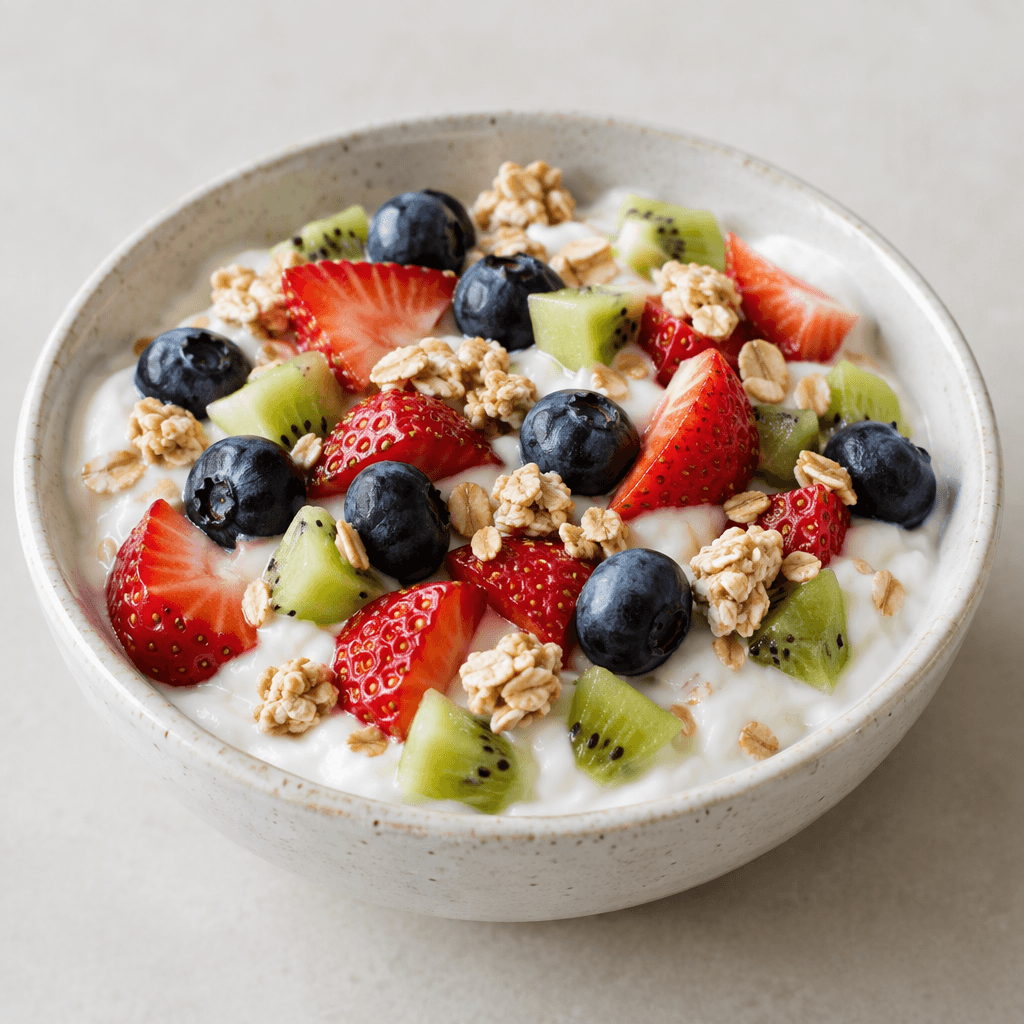
Fruit yogurt bowl Calories
Good source of protein and calcium, with natural sugars from fruit
In season: Spring · Summer · Autumn · Winter
CALORIES
GI
POTASSIUM
FIBER
Quick answer
1 bottle (medium) of Fruit yogurt bowl (250 g) has 238 calories. That works out to 95 calories per 100 g. It contains 33 g of carbs, 12 g of protein, 7 g of fat and 2.8 g of fiber. Its 1.1 µg of B12 covers 44% of the Daily Value. Its glycemic index is 38 (low), so it raises blood sugar slowly.
What is Fruit yogurt bowl?
A fruit yogurt bowl brings together yogurt and fresh fruit, often with oats or crunchy clusters on top. It has no single place of origin: it is a flexible breakfast and snack style found in many countries, made with whatever fruit is in season.
The yogurt’s gentle tang balances the sweet-tart fruit, while oats add a crisp contrast. Serve it for breakfast or as a quick snack; it can be prepared ahead, though adding the crunchy topping just before eating keeps it crisp. Yogurt contributes protein and calcium, and the fruit brings natural sugars and some fibre. For a less sweet bowl, choose plain yogurt and let ripe fruit provide the sweetness.
Fruit yogurt bowl Nutrition Facts
Selected: 100 g
95
KCAL / 100G
Carbs
13.2g
· 5% DV
Protein
4.8g
· 10% DV
Fat
2.8g
· 4% DV
Fiber
1.1g
· 4% DV
DV is the share of the daily value covered, on a 2,000 kcal reference diet.
Calories come from: Carbs 54% · Protein 20% · Fat 26%
Fruit yogurt bowl Vitamins & Minerals
Vitamins
B12
0.42µg · 18% DV
B2
0.18mg · 14% DV
B5
0.42mg · 8% DV
Vitamin C
6.8mg · 8% DV
Minerals
Phosphorus
122mg · 17% DV
Calcium
155mg · 16% DV
Zinc
1mg · 9% DV
Iodine
9µg · 6% DV
How Nutritious Is Fruit yogurt bowl?
Nutrient density
High
How many vitamins, minerals and how much fiber this food carries per calorie. A high score means a lot of nutrition for few calories.
Satiety score
Medium
An EatBetter score computed from fiber, protein and calorie density. A high score means staying full longer on the same calories.
Both scores are calculated per 100 g and do not change with the selected portion. The satiety score is EatBetter's own calculation, not a clinical measure.
Fruit yogurt bowl Glycemic Index
GLYCEMIC INDEX
GLYCEMIC LOAD
Accounts for portion size — a more realistic measure than GI alone.
How to Burn Off Fruit yogurt bowl
To burn the 95 calories in 100 g:
🚶
Walking (5 km/h)
🏃
Running (8 km/h)
🚴
Cycling
🏊
Swimming
Times are calculated with the MET equation for a 70 kg adult. Actual burn varies with your weight, age and pace.
Is Fruit yogurt bowl Processed?
NOVA 3
Processed
1. Unprocessed
2. Minimally Processed
3. Processed
4. Ultra-Processed
NOVA classifies foods into 4 groups by industrial processing. NOVA 1 (unprocessed) is the healthiest.
Does Fruit yogurt bowl Contain Allergens?
Contains these allergens:
Which Diets Is Fruit yogurt bowl Good For?
Vegan
— Not suitable
Vegetarian
✓ Suitable
Gluten-Free
✓ Suitable
Dairy-Free
— Not suitable
Mediterranean
✓ Suitable
Paleo
— Not suitable
Whole30
— Not suitable
DASH
— Not suitable
Keto
— Not suitable
Low FODMAP
— Not suitable
Fruit yogurt bowl Fat Profile
SATURATED
1.7g
MONOUNSATURATED
0.75g
POLYUNSATURATED
0.11g
Omega 6:3 ratio 2.7:1
Below the ideal 4:1 — a good omega balance.
Compare Fruit yogurt bowl
Foods Similar to Fruit yogurt bowl
Frequently Asked Questions About Fruit yogurt bowl
How do you make a fruit yogurt bowl?
Make a fruit yogurt bowl by spooning plain yogurt into a bowl and topping it with bite-sized fresh fruit. Add oats, nuts, or granola if you like; for the best texture, put crunchy toppings on just before eating.
What fruit goes best in a fruit yogurt bowl?
Strawberries, blueberries, kiwi, banana, peaches, and mango all work well in a fruit yogurt bowl. Mixing tart berries with sweeter fruit gives the bowl balance, while using ripe fruit can add sweetness without needing syrup.
What kind of yogurt is best for a fruit yogurt bowl?
Thick plain yogurt works especially well in a fruit yogurt bowl because it holds the toppings without becoming watery. Greek-style yogurt makes a thicker base, while regular plain yogurt gives a lighter texture; either pairs well with fresh fruit.
Can you make a fruit yogurt bowl the night before?
Yes, you can assemble a fruit yogurt bowl the night before, but juicy fruit may release liquid and oats or granola will soften. For a fresher texture, refrigerate the yogurt separately and add the fruit and crunchy toppings in the morning.
Is a fruit yogurt bowl a good breakfast?
Yes, a fruit yogurt bowl can make a convenient breakfast. Yogurt contributes protein and calcium, and fruit adds flavor and natural sugars; add oats, seeds, or nuts if you want a more substantial bowl.
Does a fruit yogurt bowl need added sugar?
No, a fruit yogurt bowl usually does not need added sugar. Ripe banana, berries, or mango can sweeten it naturally; taste the bowl before adding honey or syrup, especially if the yogurt or granola is already sweetened.
Can you use frozen fruit in a fruit yogurt bowl?
Yes, frozen fruit works in a fruit yogurt bowl, especially when thawed first so it is easier to eat. It can release juice as it warms, so add it just before serving or use it partly frozen for a colder, softer topping.
Should you use oats or granola in a fruit yogurt bowl?
Either oats or granola works in a fruit yogurt bowl. Oats give a softer, plainer topping, while granola adds crunch and may contain sweeteners; add either at serving time if you want it to stay distinct from the yogurt.
How long does a fruit yogurt bowl last in the fridge?
A prepared fruit yogurt bowl is best eaten the same day because cut fruit releases liquid and can soften the yogurt. Keep it covered and refrigerated, and store crunchy toppings separately so they do not turn soggy.
Can a fruit yogurt bowl help with weight loss?
A fruit yogurt bowl can fit into a weight-loss eating plan, particularly when it uses plain yogurt and whole fruit. Large amounts of sweetened granola, honey, or syrup can make the bowl more energy-dense, so keep those toppings modest.
Have another question about Fruit yogurt bowl?
Ask the AI nutrition coach — calories, portions, alternatives and more, answered in seconds in the app.

Scan calories with your camera
Instant AI nutrition analysis

Nutrition data compiled from USDA FoodData Central and scientific sources.