

Ready & Packaged Foods
All →Vegetables & Legumes
All →Desserts & Confectionery
All →Meat & Protein
All →Grains & Bakery
All →Beverages
All →Milk & Dairy
All →

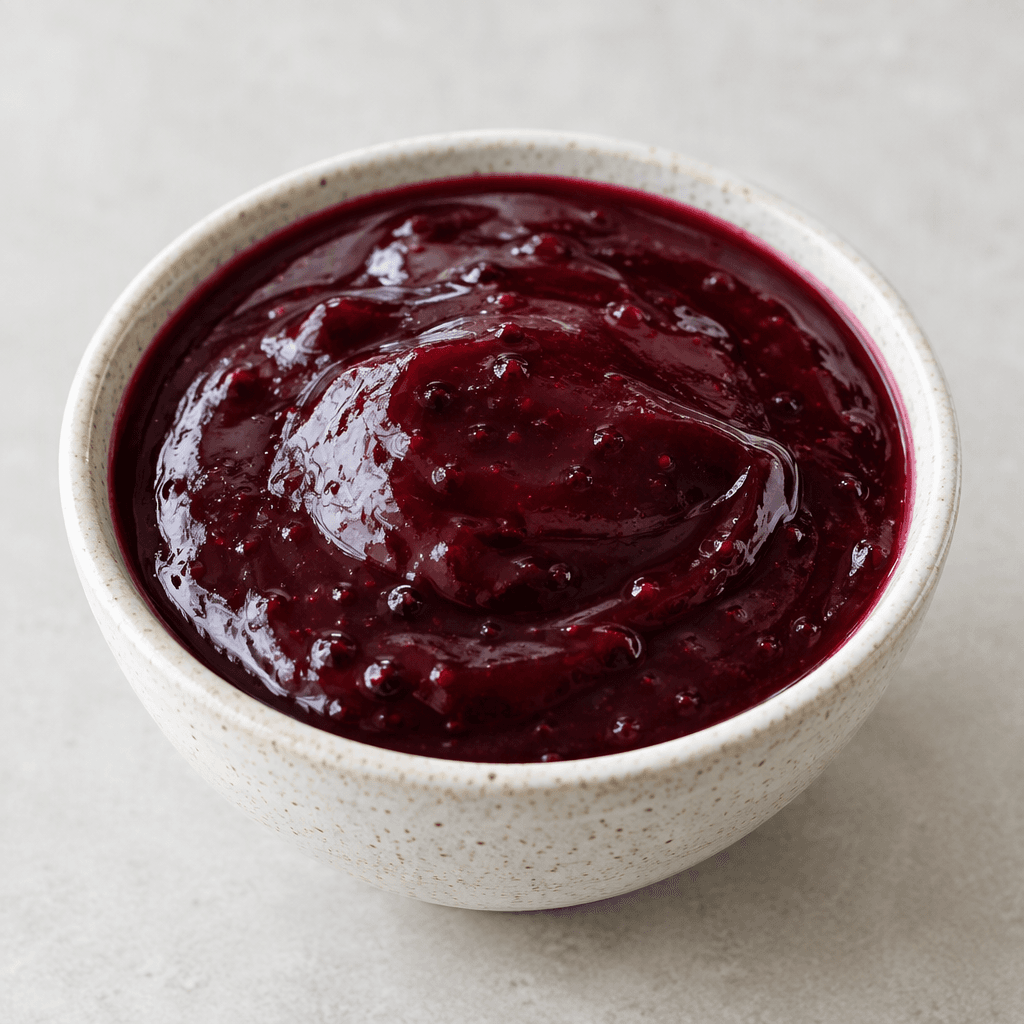
Fruit Sauce Calories
Fruity, low-fat sauce for desserts
In season: Spring · Summer · Autumn · Winter
CALORIES
GI
POTASSIUM
FIBER
Quick answer
2 tablespoon (medium) of Fruit Sauce (30 g) has 21 calories. That works out to 70 calories per 100 g. It contains 5.1 g of carbs, 0.2 g of protein, 0.1 g of fat and 0.4 g of fiber. Its glycemic index is 45 (medium), so it raises blood sugar at a moderate pace.
What is Fruit Sauce?
Fruit Sauce is a pourable topping made from crushed or cooked fruit, sometimes strained for a smooth texture. There is no single place of origin: recipes vary by fruit and may include added sugar. Berry versions are often deep red or purple, while the flavour can range from sweet to pleasantly tart.
It is served over ice cream, cheesecake, pancakes, yoghurt or other desserts, and is familiar in home kitchens as well as restaurant plating. Its soft, fruity texture adds moisture and a bright contrast to richer, creamy foods. It is low in fat and mostly contributes carbohydrates; 100 g provides 17 g of carbohydrates. For a lighter topping, choose or make a less-sweet version and use a modest spoonful.
Fruit Sauce Nutrition Facts
Selected: 100 g
70
KCAL / 100G
Carbs
17g
· 6% DV
Protein
0.5g
· 1% DV
Fat
0.2g
· 0% DV
Fiber
1.2g
· 4% DV
DV is the share of the daily value covered, on a 2,000 kcal reference diet.
Calories come from: Carbs 95% · Protein 3% · Fat 2%
Fruit Sauce Vitamins & Minerals
Vitamins
Vitamin C
8mg · 9% DV
B1
0.03mg · 3% DV
B2
0.02mg · 2% DV
B5
0.1mg · 2% DV
Minerals
Magnesium
7mg · 2% DV
Phosphorus
12mg · 2% DV
Potassium ⭐
60mg · 2% DV
Calcium
10mg · 1% DV
How Nutritious Is Fruit Sauce?
Nutrient density
Medium
How many vitamins, minerals and how much fiber this food carries per calorie. A high score means a lot of nutrition for few calories.
Satiety score
Medium
An EatBetter score computed from fiber, protein and calorie density. A high score means staying full longer on the same calories.
Both scores are calculated per 100 g and do not change with the selected portion. The satiety score is EatBetter's own calculation, not a clinical measure.
Fruit Sauce Glycemic Index
GLYCEMIC INDEX
GLYCEMIC LOAD
Accounts for portion size — a more realistic measure than GI alone.
How to Burn Off Fruit Sauce
To burn the 70 calories in 100 g:
🚶
Walking (5 km/h)
🏃
Running (8 km/h)
🚴
Cycling
🏊
Swimming
Times are calculated with the MET equation for a 70 kg adult. Actual burn varies with your weight, age and pace.
Is Fruit Sauce Processed?
NOVA 3
Processed
1. Unprocessed
2. Minimally Processed
3. Processed
4. Ultra-Processed
NOVA classifies foods into 4 groups by industrial processing. NOVA 1 (unprocessed) is the healthiest.
Does Fruit Sauce Contain Allergens?
No known major allergens
Which Diets Is Fruit Sauce Good For?
Vegan
✓ Suitable
Vegetarian
✓ Suitable
Gluten-Free
✓ Suitable
Dairy-Free
— Not suitable
Mediterranean
✓ Suitable
Paleo
— Not suitable
Whole30
— Not suitable
DASH
— Not suitable
Keto
— Not suitable
Low FODMAP
— Not suitable
Fruit Sauce Fat Profile
SATURATED
0.03g
MONOUNSATURATED
0.04g
POLYUNSATURATED
0.03g
Omega 6:3 ratio 2:1
Below the ideal 4:1 — a good omega balance.
Compare Fruit Sauce
Foods Similar to Fruit Sauce
Frequently Asked Questions About Fruit Sauce
What is fruit sauce used for?
Fruit sauce is used as a topping or accompaniment for desserts such as pancakes, waffles, ice cream, cheesecake, and yogurt. You can also swirl it into oatmeal or spoon it over cake. Add it just before serving if you want the dessert to stay crisp.
How do you make fruit sauce without cooking it?
You can make fruit sauce without cooking by blending ripe, soft fruit until smooth. Add a little lemon juice to brighten the flavor, and strain the puree if you want a finer texture. This uncooked version is best used soon and kept refrigerated.
Can fruit sauce be used as a cake filling?
Yes, fruit sauce can be used as a cake filling, but it should be thick enough not to soak through the layers. Simmer it until reduced or thicken it with a little cornstarch, then cool it completely before spreading.
How do you stop fruit sauce from making cheesecake watery?
To keep fruit sauce from making cheesecake watery, thicken and cool the sauce before adding it. Spread a thin layer on top shortly before serving rather than pouring warm, runny sauce over the cheesecake. A thicker sauce is also easier to slice cleanly.
Can you make fruit sauce with canned fruit?
Yes, canned fruit works for fruit sauce. Drain it first, especially if it is packed in syrup, then blend or simmer it until smooth. Since canned fruit may already be sweetened, taste the sauce before adding any extra sugar.
Should fruit sauce be served warm or cold?
Fruit sauce can be served warm or cold. Warm sauce pairs well with pancakes and waffles, while chilled sauce suits cheesecake, yogurt, and cold desserts. Let freshly cooked sauce cool before spooning it over foods that could melt or soften.
How do you make fruit sauce smooth?
Blend the fruit thoroughly, then press the sauce through a fine-mesh sieve to remove seeds, skins, or fibrous pieces. Straining is especially useful with raspberries and blackberries. For a thicker, more rustic sauce, skip the sieve and leave some fruit texture.
How long does fruit sauce last in the fridge?
Fruit sauce lasts about 3–4 days in the refrigerator when kept in a clean, covered container. Use a clean spoon each time you serve it, and discard it if its smell or appearance changes. Cool cooked sauce before refrigerating it.
Can fruit sauce be frozen?
Yes, fruit sauce can be frozen in airtight containers or freezer-safe portions. Leave a little room for expansion, thaw it in the refrigerator, and stir before serving. The texture may separate slightly after thawing, but mixing or gently warming it usually helps.
Does fruit sauce need sugar?
No, fruit sauce does not need added sugar if the fruit is ripe and sweet enough. Taste it before sweetening, since cooking concentrates the fruit’s flavor. Tart fruit may need a little sweetener, while ripe peaches or berries may need none.
Have another question about Fruit Sauce?
Ask the AI nutrition coach — calories, portions, alternatives and more, answered in seconds in the app.

Scan calories with your camera
Instant AI nutrition analysis

Nutrition data compiled from USDA FoodData Central and scientific sources.