

Ready & Packaged Foods
All →Vegetables & Legumes
All →Desserts & Confectionery
All →Meat & Protein
All →Grains & Bakery
All →Beverages
All →Milk & Dairy
All →

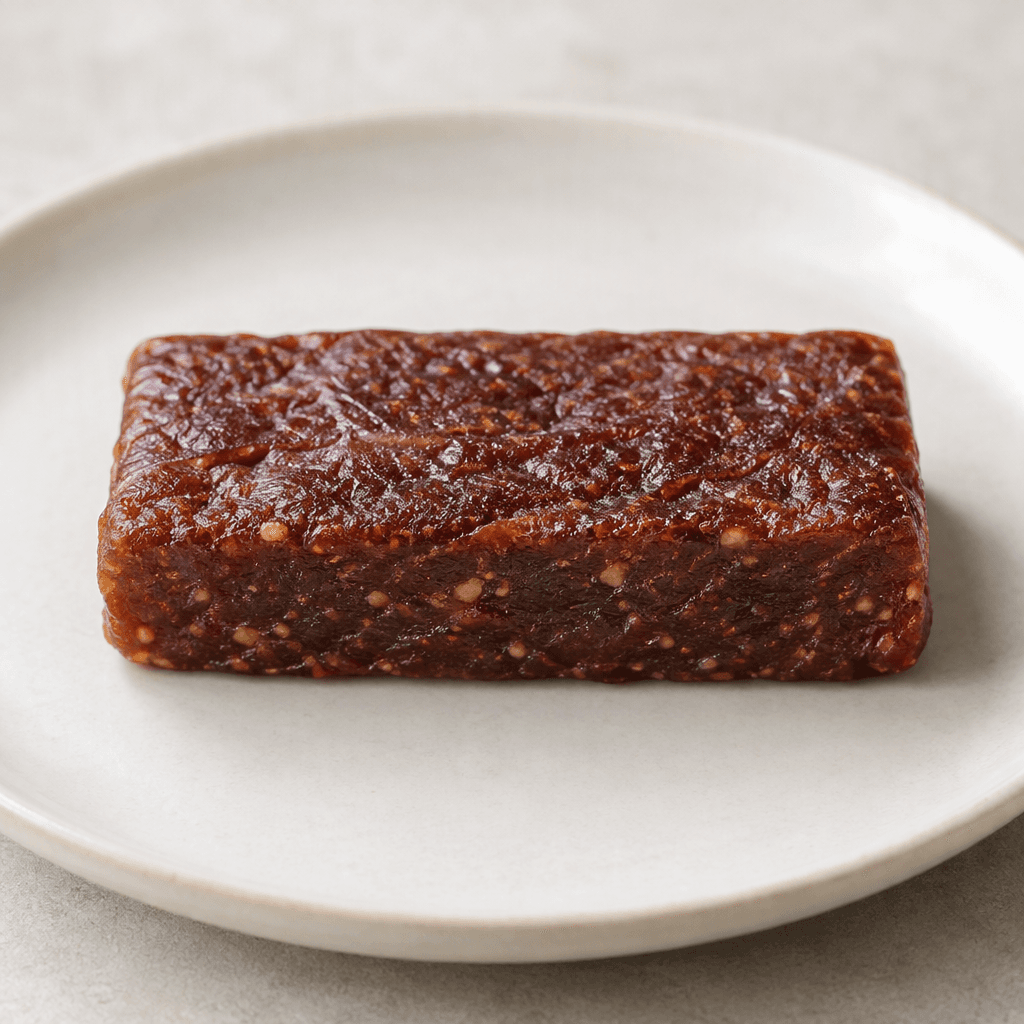
Fruit Bar Calories
Convenient energy source, contains fiber and vitamins
CALORIES
GI
POTASSIUM
FIBER
Quick answer
1 piece (medium) of Fruit Bar (35 g) has 112 calories. That works out to 320 calories per 100 g. It contains 25.2 g of carbs, 0.9 g of protein, 0.9 g of fat and 2.4 g of fiber. Its glycemic index is 60 (high), so it raises blood sugar quickly.
What is Fruit Bar?
A Fruit Bar is a compact, portable snack made by pressing fruit purée or chopped dried fruit into a chewy slab. Recipes vary: some include grains, nuts or other ingredients, while others keep the focus on fruit. Its sweet, concentrated flavour makes it easy to eat between meals, pack for a journey or enjoy alongside tea or coffee. The texture is usually dense and chewy rather than crisp.
It is mainly a source of carbohydrate, with some fibre; the amount depends on the recipe. For a more filling snack, pair it with plain yoghurt or a handful of nuts, or enjoy it on its own when you need something convenient. Check the ingredient details if you prefer a bar made mostly from fruit.
Fruit Bar Nutrition Facts
Selected: 100 g
320
KCAL / 100G
Carbs
72g
· 26% DV
Protein
2.5g
· 5% DV
Fat
2.5g
· 3% DV
Fiber
7g
· 25% DV
DV is the share of the daily value covered, on a 2,000 kcal reference diet.
Calories come from: Carbs 90% · Protein 3% · Fat 7%
Fruit Bar Vitamins & Minerals
Vitamins
Vitamin C
8mg · 9% DV
Biotin
1.5µg · 5% DV
B1
0.05mg · 4% DV
B5
0.2mg · 4% DV
Minerals
Iron
1mg · 6% DV
Potassium ⭐
220mg · 6% DV
Magnesium
18mg · 4% DV
Phosphorus
30mg · 4% DV
How Nutritious Is Fruit Bar?
Nutrient density
Medium
How many vitamins, minerals and how much fiber this food carries per calorie. A high score means a lot of nutrition for few calories.
Satiety score
Medium
An EatBetter score computed from fiber, protein and calorie density. A high score means staying full longer on the same calories.
Both scores are calculated per 100 g and do not change with the selected portion. The satiety score is EatBetter's own calculation, not a clinical measure.
Fruit Bar Glycemic Index
GLYCEMIC INDEX
GLYCEMIC LOAD
Accounts for portion size — a more realistic measure than GI alone.
How to Burn Off Fruit Bar
To burn the 320 calories in 100 g:
🚶
Walking (5 km/h)
🏃
Running (8 km/h)
🚴
Cycling
🏊
Swimming
Times are calculated with the MET equation for a 70 kg adult. Actual burn varies with your weight, age and pace.
Is Fruit Bar Processed?
NOVA 3
Processed
1. Unprocessed
2. Minimally Processed
3. Processed
4. Ultra-Processed
NOVA classifies foods into 4 groups by industrial processing. NOVA 1 (unprocessed) is the healthiest.
Does Fruit Bar Contain Allergens?
No known major allergens
Which Diets Is Fruit Bar Good For?
Vegan
— Not suitable
Vegetarian
✓ Suitable
Gluten-Free
— Not suitable
Dairy-Free
— Not suitable
Mediterranean
— Not suitable
Paleo
— Not suitable
Whole30
— Not suitable
DASH
— Not suitable
Keto
— Not suitable
Low FODMAP
— Not suitable
Fruit Bar Fat Profile
SATURATED
0.6g
MONOUNSATURATED
0.7g
POLYUNSATURATED
0.5g
Omega 6:3 ratio 4:1
Below the ideal 4:1 — a good omega balance.
Compare Fruit Bar
Foods Similar to Fruit Bar
Frequently Asked Questions About Fruit Bar
What is a Fruit Bar made of?
A Fruit Bar is usually made by pressing dried fruit or fruit purée into a compact shape. Depending on the product, it may also contain nuts, grains, or added sugar. The ingredient list is the best way to see what a particular bar includes.
Is a Fruit Bar a healthy snack?
A Fruit Bar can be a convenient snack and may provide fiber and nutrients from fruit. It is also a concentrated, often sweet food, and some versions contain added sugar. Consider it one snack option rather than a substitute for a varied diet.
How is a Fruit Bar different from dried fruit?
A Fruit Bar is typically made from fruit that has been mashed or puréed and pressed together, while dried fruit is often sold whole or in pieces. Bars may include other ingredients, so their texture and contents can differ from plain dried fruit.
Can you make a Fruit Bar at home?
Yes, you can make a Fruit Bar at home by blending soft dried fruit into a sticky mixture, pressing it into a lined pan, and chilling it until firm. Add the fruit gradually to get the texture right; extra sugar is not essential.
How should you store a Fruit Bar after opening it?
Seal a Fruit Bar in its wrapper or an airtight container and keep it in a cool, dry place after opening. If it comes in individually wrapped portions, open only what you plan to eat. Discard it if you notice mold or an unusual smell.
Can children eat a Fruit Bar?
Yes, children can have a Fruit Bar occasionally, but its dense, sticky texture can pose a choking risk for young children. Break it into age-appropriate pieces and supervise them while eating. Check the ingredients, especially if you are limiting added sugar.
Does a Fruit Bar raise blood sugar?
Yes, a Fruit Bar can raise blood sugar because it packs fruit carbohydrates into a small portion, and some bars also contain added sugar. If you have diabetes, the ingredients and portion matter; follow the eating plan agreed with your healthcare professional.
Can a Fruit Bar replace fresh fruit?
No, a Fruit Bar is not a complete substitute for fresh fruit. The fruit may be puréed or compressed, and the bar can contain additional ingredients. It is useful when fresh fruit is inconvenient, but it should not be your only source of fruit.
Is a Fruit Bar good to eat before a workout?
Yes, a Fruit Bar can be a portable source of carbohydrates before exercise. Its concentrated fruit can provide readily available energy, though the fiber and sticky texture may not suit everyone during a workout. Try it at a nonessential session before relying on it.
Do Fruit Bars expire or go bad?
Yes, Fruit Bars can go bad. Follow the package’s storage instructions and date, and avoid eating one if the wrapper is damaged or you notice mold, an unusual smell, or a major change in texture. Heat and moisture can shorten its shelf life.
Have another question about Fruit Bar?
Ask the AI nutrition coach — calories, portions, alternatives and more, answered in seconds in the app.

Scan calories with your camera
Instant AI nutrition analysis

Nutrition data compiled from USDA FoodData Central and scientific sources.