

Ready & Packaged Foods
All →Vegetables & Legumes
All →Desserts & Confectionery
All →Meat & Protein
All →Grains & Bakery
All →Beverages
All →Milk & Dairy
All →

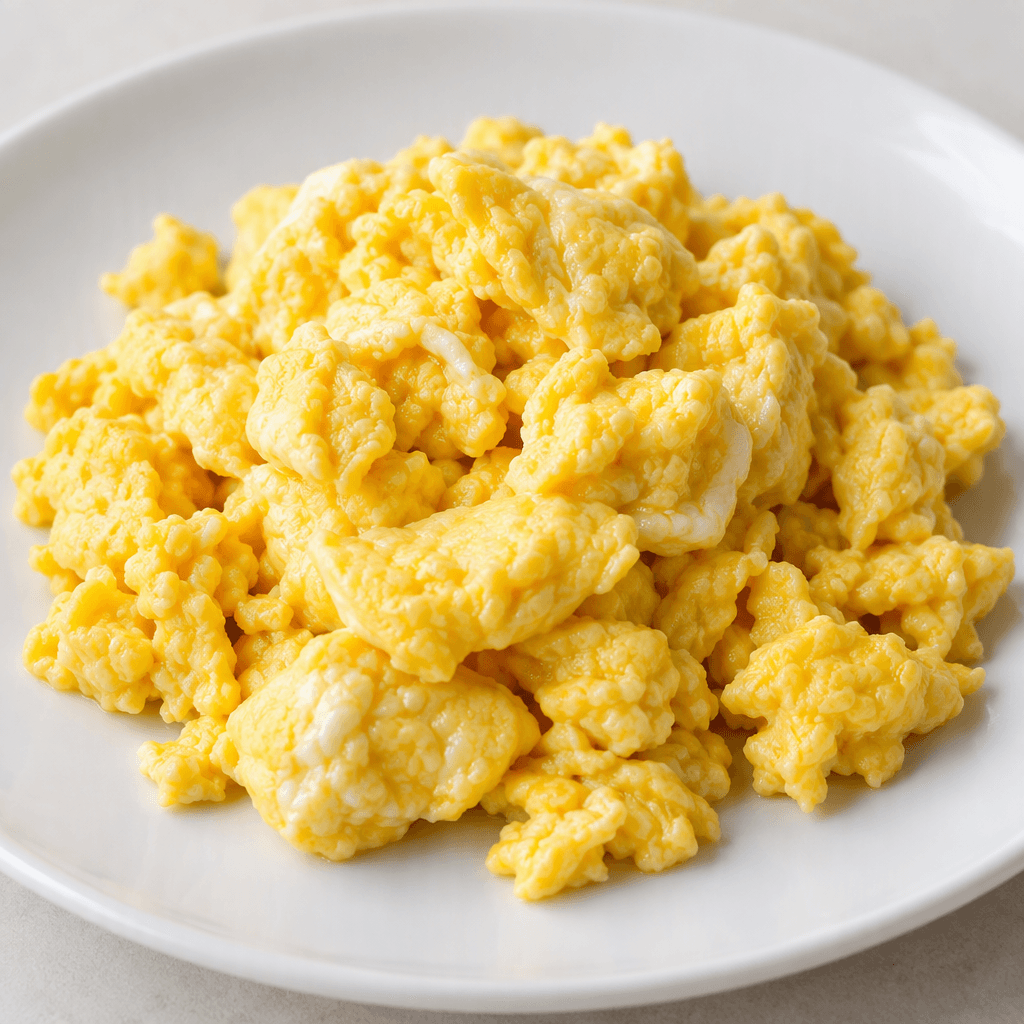
Scrambled Eggs Calories
Classic breakfast, rich in protein and vitamin B12.
In season: Spring · Summer · Autumn · Winter
CALORIES
GI
POTASSIUM
FIBER
Quick answer
1 serving (medium) of Scrambled Eggs (120 g) has 178 calories. That works out to 148 calories per 100 g. It contains 1.9 g of carbs, 12.2 g of protein, 12.8 g of fat and 0 g of fiber. Its 24 µg of Biotin covers 80% of the Daily Value. Its glycemic index is 0 (low), so it raises blood sugar slowly.
What is Scrambled Eggs?
Yumurtasız menemen is a Turkish, egg-free take on menemen, usually made by gently cooking tomatoes and green peppers in oil; some cooks add onion or spices. It is served warm, often at breakfast, with bread for scooping up the soft, juicy vegetables. The tomatoes bring gentle sweetness and tang, while the peppers add a fresh, savoury note. Though the name on this page is Scrambled Eggs, this dish is not scrambled eggs.
Its nutritional character comes mainly from vegetables and the oil used, rather than the protein associated with an egg-based breakfast. Use a modest amount of oil for a lighter pan, and serve with bread, olives or other breakfast sides.
Scrambled Eggs Nutrition Facts
Selected: 100 g
148
KCAL / 100G
Carbs
1.6g
· 1% DV
Protein
10.2g
· 20% DV
Fat
10.7g
· 14% DV
Fiber
0g
· 0% DV
DV is the share of the daily value covered, on a 2,000 kcal reference diet.
Calories come from: Carbs 4% · Protein 28% · Fat 68%
Scrambled Eggs Vitamins & Minerals
Vitamins
Biotin
20µg · 67% DV
B12
1.2µg · 50% DV
B2
0.37mg · 28% DV
B5
1.1mg · 22% DV
Minerals
Selenium
22µg · 40% DV
Phosphorus
172mg · 25% DV
Iodine
24µg · 16% DV
Zinc
1mg · 9% DV
How Nutritious Is Scrambled Eggs?
Nutrient density
High
How many vitamins, minerals and how much fiber this food carries per calorie. A high score means a lot of nutrition for few calories.
Satiety score
Medium
An EatBetter score computed from fiber, protein and calorie density. A high score means staying full longer on the same calories.
Both scores are calculated per 100 g and do not change with the selected portion. The satiety score is EatBetter's own calculation, not a clinical measure.
Scrambled Eggs Glycemic Index
GLYCEMIC INDEX
GLYCEMIC LOAD
Accounts for portion size — a more realistic measure than GI alone.
How to Burn Off Scrambled Eggs
To burn the 148 calories in 100 g:
🚶
Walking (5 km/h)
🏃
Running (8 km/h)
🚴
Cycling
🏊
Swimming
Times are calculated with the MET equation for a 70 kg adult. Actual burn varies with your weight, age and pace.
Is Scrambled Eggs Processed?
NOVA 2
Minimally Processed
1. Unprocessed
2. Minimally Processed
3. Processed
4. Ultra-Processed
NOVA classifies foods into 4 groups by industrial processing. NOVA 1 (unprocessed) is the healthiest.
Does Scrambled Eggs Contain Allergens?
Contains these allergens:
Which Diets Is Scrambled Eggs Good For?
Vegan
— Not suitable
Vegetarian
✓ Suitable
Gluten-Free
✓ Suitable
Dairy-Free
— Not suitable
Mediterranean
✓ Suitable
Paleo
— Not suitable
Whole30
— Not suitable
DASH
— Not suitable
Keto
✓ Suitable
Low FODMAP
— Not suitable
Scrambled Eggs Fat Profile
SATURATED
3.1g
MONOUNSATURATED
4.2g
POLYUNSATURATED
1.3g
Omega 6:3 ratio 12.2:1
Above the ideal 4:1 (12.2:1).
Compare Scrambled Eggs
Foods Similar to Scrambled Eggs
Frequently Asked Questions About Scrambled Eggs
What is eggless menemen?
Eggless menemen is a Turkish pan-cooked dish of tomatoes and peppers, made without the eggs found in classic menemen. It is commonly served hot at breakfast with bread, which is useful for scooping up the soft tomato sauce.
How do you make eggless menemen?
Cook chopped peppers in oil until softened, then add chopped or grated tomatoes to make eggless menemen. Simmer uncovered until the tomatoes become a thick sauce, stirring occasionally. Season with salt and, if you like, black pepper or chilli.
What is the difference between eggless menemen and shakshuka?
Eggless menemen is usually a simple Turkish tomato-and-pepper dish, while shakshuka often includes eggs poached in its sauce and may use a different blend of spices. Eggless menemen is typically cooked as a vegetable mixture rather than served with eggs nestled in it.
Should eggless menemen have onions?
Either version is common: you can make eggless menemen with or without onions. For an onion version, soften the chopped onion in oil before adding the peppers. Leaving it out gives the tomatoes and peppers a more prominent flavour.
Why is my eggless menemen watery?
Eggless menemen is often watery because the tomatoes release more liquid than the pan can evaporate. Simmer it uncovered until the sauce thickens, and avoid adding extra water. If your tomatoes are especially juicy, remove some of their watery seed pulp before cooking.
Which peppers are best for eggless menemen?
Mild green peppers, such as Turkish sivri or charliston peppers, are traditional choices for eggless menemen. Use a hot green pepper if you want heat, or combine mild and hot peppers to keep the spice balanced.
Can you make eggless menemen with canned tomatoes?
Yes, canned tomatoes work well in eggless menemen, especially when fresh tomatoes are out of season. Soften the peppers first, add the canned tomatoes, then simmer uncovered until the sauce thickens. Taste before adding salt because canned tomatoes can already be salty.
Do you peel tomatoes for eggless menemen?
No, peeling tomatoes is not necessary for eggless menemen. Leaving the skins on gives the dish a more rustic texture, while peeled or grated tomatoes make the sauce smoother. Choose based on the texture you prefer.
What do you serve with eggless menemen?
Serve eggless menemen with crusty bread, pita, or flatbread to scoop up the tomato sauce. For a Turkish-style breakfast, it also goes well with olives, cheese, and tea. It can be served as a light meal alongside rice or bulgur.
Can eggless menemen be vegan?
Yes, eggless menemen can be vegan if you cook it with plant-based oil and do not add butter, cheese, or other animal products. The basic tomato-and-pepper version needs no eggs or dairy, but optional toppings can change that.
Have another question about Scrambled Eggs?
Ask the AI nutrition coach — calories, portions, alternatives and more, answered in seconds in the app.

Scan calories with your camera
Instant AI nutrition analysis

Nutrition data compiled from USDA FoodData Central and scientific sources.