

Ready & Packaged Foods
All →Vegetables & Legumes
All →Desserts & Confectionery
All →Meat & Protein
All →Grains & Bakery
All →Beverages
All →Milk & Dairy
All →

Melon Calories
High water content, low calorie, source of vitamin C and potassium
In season: Summer
CALORIES
GI
POTASSIUM
FIBER
Quick answer
1 slice (medium) of Melon (150 g) has 51 calories. That works out to 34 calories per 100 g. It contains 12.3 g of carbs, 1.2 g of protein, 0.3 g of fat and 1.4 g of fiber. Its 27 mg of Vitamin C covers 30% of the Daily Value. Its glycemic index is 65 (medium), so it raises blood sugar at a moderate pace.
What is Melon?
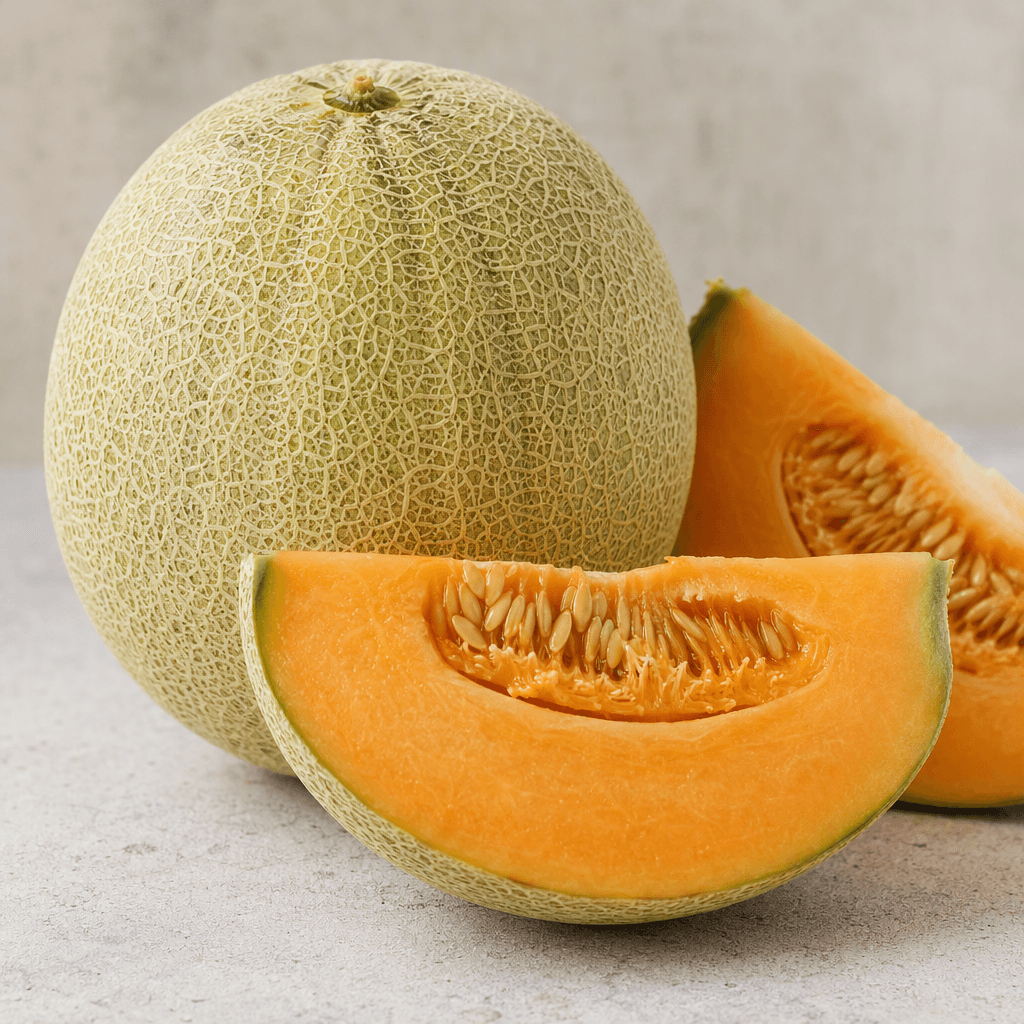
Melon is the sweet, seed-filled fruit of a trailing vine in the cucurbit family, grown in many warm regions. The name covers several familiar types, including netted cantaloupes and smooth-skinned honeydews, with flesh that can range from orange to pale green. To serve one, halve it, scoop out the central seeds and cut the flesh into wedges or cubes.
Ripe melon is fragrant, juicy and soft, and is usually enjoyed chilled, on its own or in fruit salads. Depending on local custom, it may also accompany breakfast or be served with savoury foods such as cured ham. It is mostly water and relatively low in calories, while providing vitamin C and potassium. For a light snack, pair a few slices with plain yoghurt or enjoy them without added sugar.
Melon Nutrition Facts
Selected: 100 g
34
KCAL / 100G
Carbs
8.2g
· 3% DV
Protein
0.8g
· 2% DV
Fat
0.2g
· 0% DV
Fiber
0.9g
· 3% DV
DV is the share of the daily value covered, on a 2,000 kcal reference diet.
Calories come from: Carbs 87% · Protein 8% · Fat 5%
Melon Vitamins & Minerals
Vitamins
Vitamin C
18mg · 20% DV
Vitamin A
169µg · 19% DV
Folate
21µg · 5% DV
B5
0.2mg · 4% DV
Minerals
Potassium ⭐
267mg · 8% DV
Magnesium
10mg · 2% DV
Phosphorus
15mg · 2% DV
Calcium
9mg · 1% DV
How Nutritious Is Melon?
Nutrient density
Medium
How many vitamins, minerals and how much fiber this food carries per calorie. A high score means a lot of nutrition for few calories.
Satiety score
Medium
An EatBetter score computed from fiber, protein and calorie density. A high score means staying full longer on the same calories.
Both scores are calculated per 100 g and do not change with the selected portion. The satiety score is EatBetter's own calculation, not a clinical measure.
Melon Glycemic Index
GLYCEMIC INDEX
GLYCEMIC LOAD
Accounts for portion size — a more realistic measure than GI alone.
How to Burn Off Melon
To burn the 34 calories in 100 g:
🚶
Walking (5 km/h)
🏃
Running (8 km/h)
🚴
Cycling
🏊
Swimming
Times are calculated with the MET equation for a 70 kg adult. Actual burn varies with your weight, age and pace.
Is Melon Processed?
NOVA 1
Unprocessed
1. Unprocessed
2. Minimally Processed
3. Processed
4. Ultra-Processed
NOVA classifies foods into 4 groups by industrial processing. NOVA 1 (unprocessed) is the healthiest.
Does Melon Contain Allergens?
No known major allergens
Which Diets Is Melon Good For?
Vegan
✓ Suitable
Vegetarian
✓ Suitable
Gluten-Free
✓ Suitable
Dairy-Free
— Not suitable
Mediterranean
✓ Suitable
Paleo
✓ Suitable
Whole30
— Not suitable
DASH
— Not suitable
Keto
— Not suitable
Low FODMAP
— Not suitable
Melon Fat Profile
SATURATED
0.05g
MONOUNSATURATED
0.03g
POLYUNSATURATED
0.07g
Omega 6:3 ratio 2:1
Below the ideal 4:1 — a good omega balance.
Compare Melon
Foods Similar to Melon
Frequently Asked Questions About Melon
How can you tell if a melon is ripe?
A ripe melon often smells sweet at the stem end and feels heavy for its size. The blossom end may give slightly when pressed, but the exact signs vary by variety, so avoid relying on rind color alone.
How do you cut a melon?
Wash and dry the whole melon first, then cut it in half with a clean, sturdy knife. Scoop out the seeds, place each half cut-side down for stability, and slice or cube the flesh; refrigerate any leftovers promptly.
How should you store a melon?
Keep an unripe melon at room temperature until it smells fragrant and yields slightly at the blossom end. Refrigerate a ripe whole melon, and store cut pieces covered in the fridge to protect them from contamination and drying out.
Can dogs eat melon?
Yes, most dogs can have a little plain melon flesh as an occasional treat. Remove the rind and seeds, cut the flesh into small pieces, and avoid offering it if your dog has a condition requiring restricted sugar.
Can you eat melon seeds?
Yes, melon seeds are edible, though people often discard them when preparing the fruit. Separate and rinse them, then dry and roast them if you like. Whole roasted seeds can be a choking hazard for young children.
Can you freeze melon?
Yes, melon freezes well enough for blended drinks, but thawed pieces become soft and watery. Cut the flesh into cubes, freeze the cubes on a tray, and transfer them to a sealed container once firm.
Does melon ripen after you buy it?
An intact melon may soften and become more fragrant at room temperature, but it usually does not become much sweeter after harvest. Once cut, it will not continue ripening, so choose a ripe melon before slicing.
Is melon safe to eat during pregnancy?
Yes, fresh melon is generally safe during pregnancy when the rind is washed thoroughly before cutting and the cut fruit is kept chilled. Avoid melon that has been left unrefrigerated for an extended period or shows signs of spoilage.
Can people with diabetes eat melon?
Yes, people with diabetes can include melon while accounting for its carbohydrates in the meal. Its natural sugars can raise blood glucose, so pair portion choices with your usual monitoring and individualized care plan.
Can you eat melon rind?
Melon rind is technically edible, but it is usually tough and not eaten like the flesh. If you plan to use it in a recipe, scrub the outside well before cutting so a knife does not carry surface contamination inward.
Have another question about Melon?
Ask the AI nutrition coach — calories, portions, alternatives and more, answered in seconds in the app.

Scan calories with your camera
Instant AI nutrition analysis

Nutrition data compiled from USDA FoodData Central and scientific sources.