

Ready & Packaged Foods
All →Vegetables & Legumes
All →Desserts & Confectionery
All →Meat & Protein
All →Grains & Bakery
All →Beverages
All →Milk & Dairy
All →

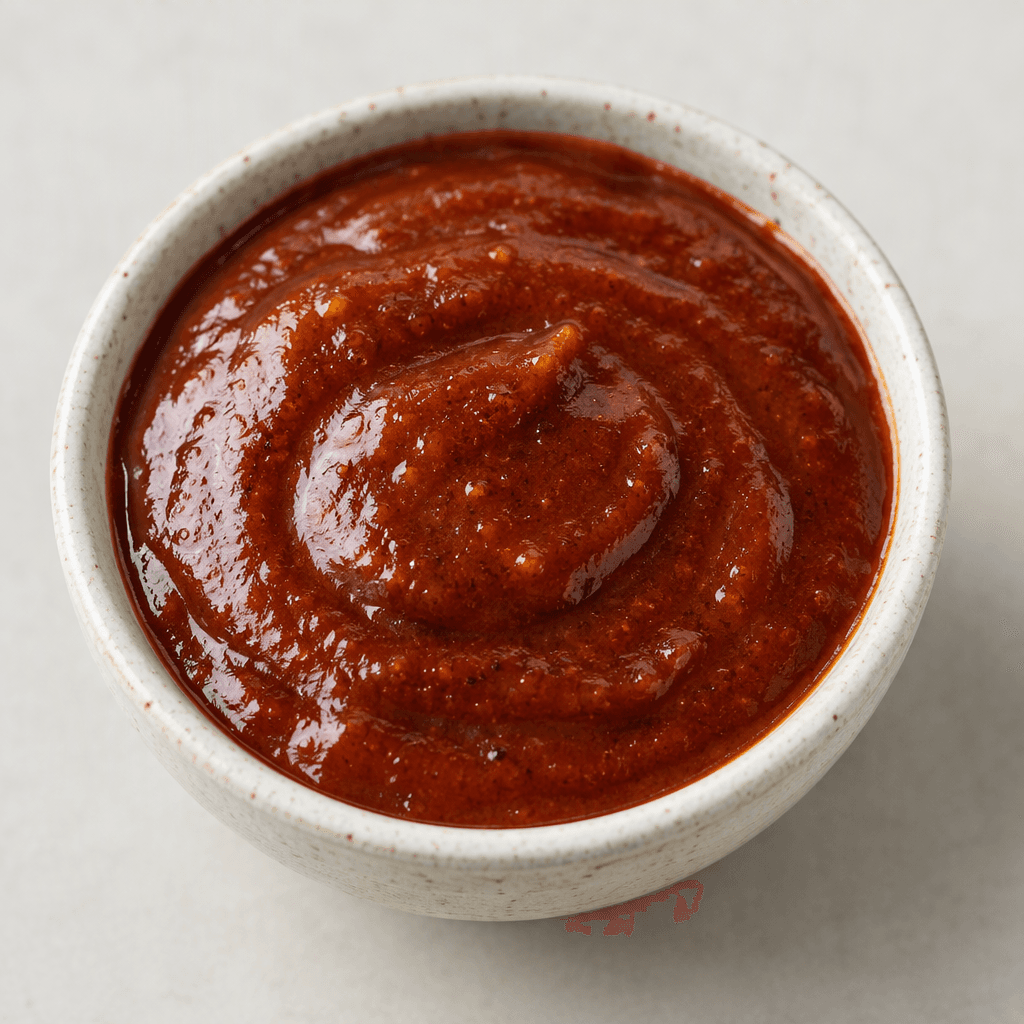
Meatball sauce Calories
Classic tomato-based sauce for meatballs
In season: Spring · Summer · Autumn · Winter
CALORIES
GI
POTASSIUM
FIBER
Quick answer
2 tablespoon (medium) of Meatball sauce (30 g) has 17 calories. That works out to 55 calories per 100 g. It contains 2.6 g of carbs, 0.5 g of protein, 0.6 g of fat and 0.5 g of fiber. Its glycemic index is 40 (low), so it raises blood sugar slowly.
What is Meatball sauce?
Meatball sauce here refers to a Turkish-style, tomato-based sauce served with köfte—seasoned meat patties that are popular across Turkey. It is commonly simmered with tomato or tomato paste, and recipes may add onion, pepper, garlic or spices for extra depth.
Glossy and thick, it balances a gentle tang and savoury seasoning, coating grilled or pan-cooked köfte without hiding its flavour. Serve it warm over meatballs, with rice or bread, or alongside a simple salad; similar tomato sauces are also familiar to English-speaking home cooks as a meatball accompaniment. It is relatively light compared with creamy sauces, with 55 calories per 100 g. Use a modest spoonful if you want the meatballs and their sides to remain the focus.
Meatball sauce Nutrition Facts
Selected: 100 g
55
KCAL / 100G
Carbs
8.5g
· 3% DV
Protein
1.5g
· 3% DV
Fat
2g
· 3% DV
Fiber
1.6g
· 6% DV
DV is the share of the daily value covered, on a 2,000 kcal reference diet.
Calories come from: Carbs 59% · Protein 10% · Fat 31%
Meatball sauce Vitamins & Minerals
Vitamins
Vitamin C
8mg · 9% DV
B6
0.08mg · 5% DV
B5
0.18mg · 4% DV
Biotin
1.2µg · 4% DV
Minerals
Sodium
320mg · 14% DV
Iron
1mg · 6% DV
Potassium ⭐
220mg · 6% DV
Magnesium
13mg · 3% DV
How Nutritious Is Meatball sauce?
Nutrient density
Low
How many vitamins, minerals and how much fiber this food carries per calorie. A high score means a lot of nutrition for few calories.
Satiety score
Medium
An EatBetter score computed from fiber, protein and calorie density. A high score means staying full longer on the same calories.
Both scores are calculated per 100 g and do not change with the selected portion. The satiety score is EatBetter's own calculation, not a clinical measure.
Meatball sauce Glycemic Index
GLYCEMIC INDEX
GLYCEMIC LOAD
Accounts for portion size — a more realistic measure than GI alone.
How to Burn Off Meatball sauce
To burn the 55 calories in 100 g:
🚶
Walking (5 km/h)
🏃
Running (8 km/h)
🚴
Cycling
🏊
Swimming
Times are calculated with the MET equation for a 70 kg adult. Actual burn varies with your weight, age and pace.
Is Meatball sauce Processed?
NOVA 3
Processed
1. Unprocessed
2. Minimally Processed
3. Processed
4. Ultra-Processed
NOVA classifies foods into 4 groups by industrial processing. NOVA 1 (unprocessed) is the healthiest.
Does Meatball sauce Contain Allergens?
No known major allergens
Which Diets Is Meatball sauce Good For?
Vegan
— Not suitable
Vegetarian
✓ Suitable
Gluten-Free
✓ Suitable
Dairy-Free
— Not suitable
Mediterranean
✓ Suitable
Paleo
— Not suitable
Whole30
— Not suitable
DASH
— Not suitable
Keto
— Not suitable
Low FODMAP
— Not suitable
Meatball sauce Fat Profile
SATURATED
0.3g
MONOUNSATURATED
0.6g
POLYUNSATURATED
0.4g
Omega 6:3 ratio 5:1
Above the ideal 4:1 (5:1).
Compare Meatball sauce
Foods Similar to Meatball sauce
Frequently Asked Questions About Meatball sauce
How do you make meatball sauce?
Meatball sauce is commonly made by gently cooking onion, tomato paste, and crushed or grated tomatoes, then simmering until thick and glossy. Add water if it gets too thick, and season to taste. The sauce can be served over cooked meatballs or simmered with them.
Is meatball sauce the same as marinara sauce?
No, meatball sauce is not always the same as marinara. Both can be tomato-based, but meatball sauce is often cooked with the meatballs and may include their browned juices, while marinara is usually prepared as a separate tomato sauce.
Should you cook meatballs in meatball sauce?
Yes, you can finish cooking browned meatballs in meatball sauce. Simmer them gently in the sauce until cooked through so their juices flavor it; avoid a vigorous boil, which can break delicate meatballs apart.
How do you thicken meatball sauce?
Simmer meatball sauce uncovered to evaporate excess liquid and concentrate its tomato flavor. Stir it occasionally to prevent sticking. If you need a quicker adjustment, mix in a little tomato paste and let it cook briefly so it loses its raw taste.
Why is my meatball sauce watery?
Meatball sauce is often watery because the tomatoes release liquid or the sauce has not simmered long enough. Cook it uncovered until some of that liquid evaporates. If meatballs are already in the pan, simmer gently so they stay intact.
What tomatoes are best for meatball sauce?
Canned whole or crushed tomatoes work well for meatball sauce because they cook down into a consistent, rich base. Fresh ripe tomatoes also work; grate or chop them and allow extra simmering time for their water to reduce.
What should you serve with meatball sauce?
Meatball sauce pairs well with pasta, rice, mashed potatoes, or crusty bread. These sides soak up the tomato sauce and make the meatballs a fuller meal. For an Italian-style plate, serve it with pasta; for a simpler meal, use bread.
Can you make meatball sauce ahead of time?
Yes, you can make meatball sauce ahead and refrigerate it in a covered container once cooled. Reheat it gently on the stove, stirring as it warms. If it thickens in storage, loosen it with a splash of water.
Can you freeze meatball sauce?
Yes, meatball sauce freezes well in an airtight container. Freeze it on its own or with cooked meatballs, leaving a little room for expansion. Thaw it in the refrigerator and reheat thoroughly; stir if the texture looks separated.
Can you make meatball sauce without sugar?
Yes, meatball sauce can be made without added sugar. Use ripe tomatoes and simmer the sauce long enough to bring out their natural sweetness. Sugar is optional, not essential; if the tomatoes taste sharp, balance the flavor with seasoning instead.
Have another question about Meatball sauce?
Ask the AI nutrition coach — calories, portions, alternatives and more, answered in seconds in the app.

Scan calories with your camera
Instant AI nutrition analysis

Nutrition data compiled from USDA FoodData Central and scientific sources.